An American Tragedy by Theodore Dreiser (i can read book club .TXT) 📕
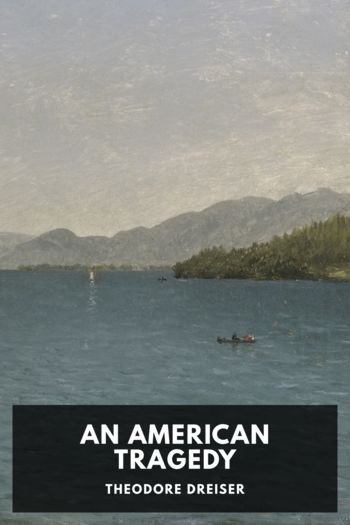
Description
Clyde Griffith’s parents are poor street-preachers, but Clyde doesn’t “believe,” and finds their work demeaning. At fifteen he gets a job and starts to ease out of their lives, eventually landing in some trouble that causes him to flee the town where they live. Two years later, Clyde meets his well-off uncle, who owns a large factory in upstate New York. Clyde talks his way into a job at the factory, and soon finds himself supervising a roomful of women. All alone, generally shunned by his uncle’s family, and starved for companionship, he breaks the factory’s rules and begins a relationship with a young woman who works for him. But Clyde has visions of marrying a high-society woman, and fortune smiles on him in the form of the daughter of one of his uncle’s neighbors. Soon Clyde finds himself in a love triangle of his own making, and one from which he seems incapable of extracting himself.
A newspaperman before he became a novelist, Theodore Dreiser collected crime stories for years of young men in relationships with young women of poorer means, where the young men found a richer, prettier girl who would go with him, and often took extreme measures to escape from the first girl. An American Tragedy, based on one of the most infamous of those real-life stories, is a study in lazy ambition, the very real class system in America, and how easy it is to drift into evil. It is populated with poor people who desire nothing more than to be rich, rich people whose only concern is to keep up with their neighbors and not be associated with the “wrong element,” and elements of both who care far more about appearances than reality. It offers further evidence that the world may be very different from 100 years ago, but the people in it are very much the same.
Read free book «An American Tragedy by Theodore Dreiser (i can read book club .TXT) 📕» - read online or download for free at americanlibrarybooks.com
- Author: Theodore Dreiser
Read book online «An American Tragedy by Theodore Dreiser (i can read book club .TXT) 📕». Author - Theodore Dreiser
The impact of this remark, a reflection of the exact truth, was not necessary to cause Clyde to gaze attentively, and even eagerly. For apart from her local position and means and taste in dress and manners, Sondra was of the exact order and spirit that most intrigued him—a somewhat refined (and because of means and position showered upon her) less savage, although scarcely less self-centered, Hortense Briggs. She was, in her small, intense way, a seeking Aphrodite, eager to prove to any who were sufficiently attractive the destroying power of her charm, while at the same time retaining her own personality and individuality free of any entangling alliance or compromise. However, for varying reasons which she could not quite explain to herself, Clyde appealed to her. He might not be anything socially or financially, but he was interesting to her.
Hence she was now keen, first to see if he were present, next to be sure that he gained no hint that she had seen him first, and lastly to act as grandly as possible for his benefit—a Hortensian procedure and type of thought that was exactly the thing best calculated to impress him. He gazed and there she was—tripping here and there in a filmy chiffon dance frock, shaded from palest yellow to deepest orange, which most enhanced her dark eyes and hair. And having exchanged a dozen or more “Oh, Hellos,” and references with one and another to this, that and the other local event, she at last condescended to evince awareness of his proximity.
“Oh, here you are. You decided to come after all. I wasn’t sure whether you would think it worth while. You’ve been introduced to everybody, of course?” She looked around as much as to say, that if he had not been she would proceed to serve him in this way. The others, not so very much impressed by Clyde, were still not a little interested by the fact that she seemed so interested in him.
“Yes, I met nearly everybody, I think.”
“Except Freddie Sells. He came in with me just now. Here you are, Freddie,” she called to a tall and slender youth, smooth of cheek and obviously becurled as to hair, who now came over and in his closely-fitting dress coat looked down on Clyde about as a spring rooster might look down on a sparrow.
“This is Clyde Griffiths, I was telling you about, Fred,” she began briskly. “Doesn’t he look a lot like Gilbert?”
“Why, you do at that,” exclaimed this amiable person, who seemed to be slightly troubled with weak eyes since he bent close. “I hear you’re a cousin of Gil’s. I know him well. We went through Princeton together. I used to be over here before I joined the General Electric over at Schenectady. But I’m around a good bit yet. You’re connected with the factory, I suppose.”
“Yes, I am,” said Clyde, who, before a youth of obviously so much more training and schooling than he possessed, felt not a little reduced. He began to fear that this individual would try to talk to him about things which he could not understand, things concerning which, having had no consecutive training of any kind, he had never been technically informed.
“In charge of some department, I suppose?”
“Yes, I am,” said Clyde, cautiously and nervously.
“You know,” went on Mr. Sells, briskly and interestingly, being of a commercial as well as technical turn, “I’ve always wondered just what, outside of money, there is to the collar business. Gil and I used to argue about that when we were down at college. He used to try to tell me that there was some social importance to making and distributing collars, giving polish and manner to people who wouldn’t otherwise have them, if it weren’t for cheap collars. I think he musta read that in a book somewhere. I always laughed at him.”
Clyde was about to attempt an answer, although already beyond his depth in regard to this. “Social importance.” Just what did he mean by that—some deep, scientific information that he had acquired at college. He was saved a noncommittal or totally uninformed answer by Sondra who, without thought or knowledge of the difficulty which was then and there before him, exclaimed: “Oh, no arguments, Freddie. That’s not interesting. Besides I want him to meet my brother and Bertine. You remember Miss Cranston. She was with me at your uncle’s last spring.”
Clyde turned, while Fred made the best of the rebuff by merely looking at Sondra, whom he admired so very much.
“Yes, of course,” Clyde began, for he had been studying these two along with others. To him, apart from Sondra, Bertine seemed exceedingly attractive, though quite beyond his understanding also. Being involved, insincere and sly, she merely evoked in him a troubled sense of ineffectiveness, and hence uncertainty, in so far as her particular world was concerned—no more.
“Oh, how do you do? It’s nice to see you again,” she drawled, the while her greenish-gray eyes went over him in a smiling and yet indifferent and quizzical way. She thought him attractive, but not nearly as shrewd and hard as she would have preferred him to be. “You’ve been terribly busy with your work, I suppose. But now that you’ve come out once, I suppose we’ll see more of you here and there.”
“Well, I hope so,” he replied, showing his even teeth.
Her eyes seemed to be saying that she did not believe what she was saying and that he did not either, but that it was necessary, possibly amusing, to say something of the sort.
And a related, though somewhat modified, version of this same type of treatment was accorded him by Stuart, Sondra’s brother.
“Oh, how do you do. Glad to know you. My sister has just been telling me about you. Going to stay in Lycurgus long? Hope you do. We’ll run into one another once in a while then, I


Comments (0)