Short Fiction by Anton Chekhov (libby ebook reader .txt) 📕
Description
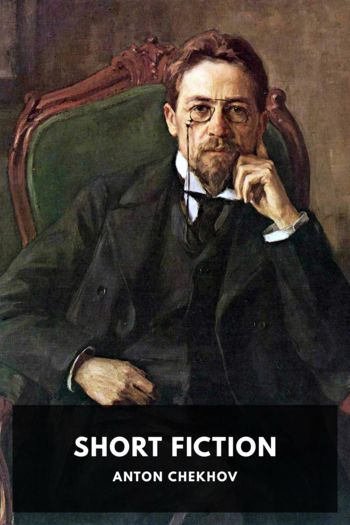
Anton Chekhov is widely considered to be one of the greatest short story writers in history. A physician by day, he’s famously quoted as saying, “Medicine is my lawful wife, and literature is my mistress.” Chekhov wrote nearly 300 short stories in his long writing career; while at first he wrote mainly to make a profit, as his interest in writing—and his skill—grew, he wrote stories that heavily influenced the modern development of the form.
His stories are famous for, among other things, their ambiguous morality and their often inconclusive nature. Chekhov was a firm believer that the role of the artist was to correctly pose a question, but not necessarily to answer it.
This collection contains all of his short stories and two novellas, all translated by Constance Garnett, and arranged by the date they were originally published.
Read free book «Short Fiction by Anton Chekhov (libby ebook reader .txt) 📕» - read online or download for free at americanlibrarybooks.com
- Author: Anton Chekhov
Read book online «Short Fiction by Anton Chekhov (libby ebook reader .txt) 📕». Author - Anton Chekhov
“I don’t understand anything about that,” Ivan Dmitritch replies morosely.
“But do you know what I shall attain to sooner or later?” the former sorter persists, screwing up his eyes slyly. “I shall certainly get the Swedish Polar Star. That’s an order it is worth working for, a white cross with a black ribbon. It’s very beautiful.”
Probably in no other place is life so monotonous as in this ward. In the morning the patients, except the paralytic and the fat peasant, wash in the entry at a big tab and wipe themselves with the skirts of their dressing-gowns; after that they drink tea out of tin mugs which Nikita brings them out of the main building. Everyone is allowed one mugful. At midday they have soup made out of sour cabbage and boiled grain, in the evening their supper consists of grain left from dinner. In the intervals they lie down, sleep, look out of window, and walk from one corner to the other. And so every day. Even the former sorter always talks of the same orders.
Fresh faces are rarely seen in Ward No. 6. The doctor has not taken in any new mental cases for a long time, and the people who are fond of visiting lunatic asylums are few in this world. Once every two months Semyon Lazaritch, the barber, appears in the ward. How he cuts the patients’ hair, and how Nikita helps him to do it, and what a trepidation the lunatics are always thrown into by the arrival of the drunken, smiling barber, we will not describe.
No one even looks into the ward except the barber. The patients are condemned to see day after day no one but Nikita.
A rather strange rumour has, however, been circulating in the hospital of late.
It is rumoured that the doctor has begun to visit Ward No. 6.
VA strange rumour!
Dr. Andrey Yefimitch Ragin is a strange man in his way. They say that when he was young he was very religious, and prepared himself for a clerical career, and that when he had finished his studies at the high school in 1863 he intended to enter a theological academy, but that his father, a surgeon and doctor of medicine, jeered at him and declared point-blank that he would disown him if he became a priest. How far this is true I don’t know, but Andrey Yefimitch himself has more than once confessed that he has never had a natural bent for medicine or science in general.
However that may have been, when he finished his studies in the medical faculty he did not enter the priesthood. He showed no special devoutness, and was no more like a priest at the beginning of his medical career than he is now.
His exterior is heavy—coarse like a peasant’s, his face, his beard, his flat hair, and his coarse, clumsy figure, suggest an overfed, intemperate, and harsh innkeeper on the highroad. His face is surly-looking and covered with blue veins, his eyes are little and his nose is red. With his height and broad shoulders he has huge hands and feet; one would think that a blow from his fist would knock the life out of anyone, but his step is soft, and his walk is cautious and insinuating; when he meets anyone in a narrow passage he is always the first to stop and make way, and to say, not in a bass, as one would expect, but in a high, soft tenor: “I beg your pardon!” He has a little swelling on his neck which prevents him from wearing stiff starched collars, and so he always goes about in soft linen or cotton shirts. Altogether he does not dress like a doctor. He wears the same suit for ten years, and the new clothes, which he usually buys at a Jewish shop, look as shabby and crumpled on him as his old ones; he sees patients and dines and pays visits all in the same coat; but this is not due to niggardliness, but to complete carelessness about his appearance.
When Andrey Yefimitch came to the town to take up his duties the “institution founded to the glory of God” was in a terrible condition. One could hardly breathe for the stench in the wards, in the passages, and in the courtyards of the hospital. The hospital servants, the nurses, and their children slept in the wards together with the patients. They complained that there was no living for beetles, bugs, and mice. The surgical wards were never free from erysipelas. There were only two scalpels and not one thermometer in the whole hospital; potatoes were kept in the baths. The superintendent, the housekeeper, and the medical assistant robbed the patients, and of the old doctor, Andrey Yefimitch’s predecessor, people declared that he secretly sold the hospital alcohol, and that he kept a regular harem consisting of nurses and female patients. These disorderly proceedings were perfectly well known in the town, and were even exaggerated, but people took them calmly; some justified them on the ground that there were only peasants and working men in the hospital, who could not be dissatisfied, since they were much worse off at home than in the hospital—they couldn’t be fed on woodcocks! Others said in excuse that the town alone, without help from the Zemstvo, was not equal to maintaining a good hospital; thank God for having one at all, even a poor one. And the newly formed Zemstvo did not open infirmaries either in the town or the neighbourhood, relying on the fact that the town already had its hospital.
After looking over the hospital Andrey Yefimitch came to the conclusion that it was an immoral institution and extremely prejudicial to the health of the townspeople. In




Comments (0)