The Merry Wives of Windsor by William Shakespeare (best books to read in your 20s .TXT) 📕
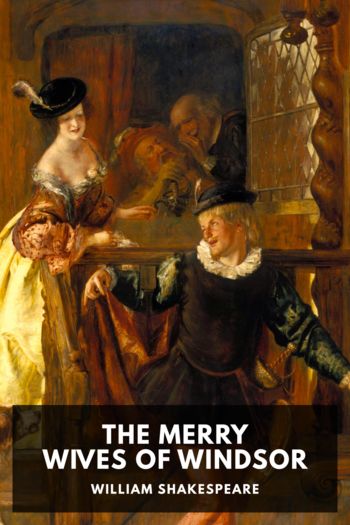
Description
First published in 1602 by William Shakespeare, The Merry Wives of Windsor features the popular figure Sir John Falstaff, who first appeared in Henry IV, Part 1 and Part 2. Some speculate that Merry Wives was written at the behest of Queen Elizabeth I, who wanted to see Falstaff in love; and that Shakespeare was forced to rush its creation as a result, and so it remains one of Shakespeare’s lesser-regarded plays.
The play revolves around two intertwined plots: the adventures of the rogue Falstaff who plans to seduce several local wives, and the story of young Anne Page who is being wooed by prominent citizens while she has her sights set on young Fenton. The wives come together to teach Falstaff a lesson, and in the end love triumphs.
The Merry Wives of Windsor is believed to have been first performed in 1597 and was subsequently published in quarto in 1602, in a second quarto in 1619, and then in the 1623 First Folio. Despite holding a lesser place in Shakespeare’s canon, it was one of the first Shakespearean plays to be performed in 1660, after the reinstatement of Charles II and theatre once again was permitted to be performed in London.
This Standard Ebooks production is based on Sir Arthur Quiller-Couch and John Dover Wilson’s 1923 Cambridge edition.
Read free book «The Merry Wives of Windsor by William Shakespeare (best books to read in your 20s .TXT) 📕» - read online or download for free at americanlibrarybooks.com
- Author: William Shakespeare
Read book online «The Merry Wives of Windsor by William Shakespeare (best books to read in your 20s .TXT) 📕». Author - William Shakespeare
A room in Page’s house.
Enter Fenton and Anne Page. FentonI see I cannot get thy father’s love;
Therefore no more turn me to him, sweet Nan.
Why, thou must be thyself.
He doth object, I am too great of birth;
And that my state being gall’d with my expense,
I seek to heal it only by his wealth.
Besides these, other bars he lays before me,
My riots past, my wild societies;
And tells me ’tis a thing impossible
I should love thee but as a property.
No, heaven so speed me in my time to come!
Albeit I will confess thy father’s wealth
Was the first motive that I wooed thee, Anne:
Yet, wooing thee, I found thee of more value
Than stamps in gold, or sums in sealéd bags;
And ’tis the very riches of thyself
That now I aim at.
Gentle Master Fenton,
Yet seek my father’s love; still seek it, sir.
If opportunity and humblest suit
Cannot attain it, why then—hark you hither.
I come to him. Aside.
This is my father’s choice.
O, what a world of vile ill-favour’d faults
Looks handsome in three hundred pounds a year!


Comments (0)