Short Fiction by Anton Chekhov (libby ebook reader .txt) 📕
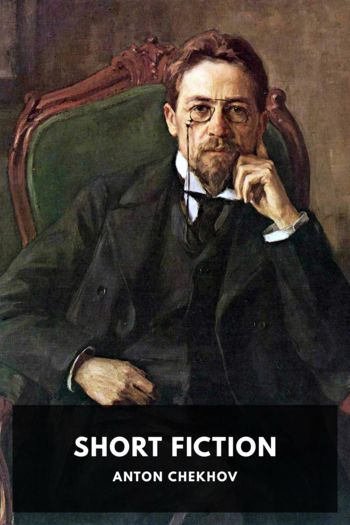
Description
Anton Chekhov is widely considered to be one of the greatest short story writers in history. A physician by day, he’s famously quoted as saying, “Medicine is my lawful wife, and literature is my mistress.” Chekhov wrote nearly 300 short stories in his long writing career; while at first he wrote mainly to make a profit, as his interest in writing—and his skill—grew, he wrote stories that heavily influenced the modern development of the form.
His stories are famous for, among other things, their ambiguous morality and their often inconclusive nature. Chekhov was a firm believer that the role of the artist was to correctly pose a question, but not necessarily to answer it.
This collection contains all of his short stories and two novellas, all translated by Constance Garnett, and arranged by the date they were originally published.
Read free book «Short Fiction by Anton Chekhov (libby ebook reader .txt) 📕» - read online or download for free at americanlibrarybooks.com
- Author: Anton Chekhov
Read book online «Short Fiction by Anton Chekhov (libby ebook reader .txt) 📕». Author - Anton Chekhov
“Some years later I was in Moscow. I was summoned there by a letter, in the mayor’s own handwriting, to undertake a work for which Moscow, in its newspapers, had been clamoring for over a hundred years. In the intervals of my work I delivered five public lectures, with a philanthropic object, in one of the museums there. One would have thought that was enough to make one known to the whole town for three days at least, wouldn’t one? But, alas! not a single Moscow gazette said a word about me. There was something about houses on fire, about an operetta, sleeping town councilors, drunken shop keepers—about everything; but about my work, my plans, my lectures—mum. And a nice set they are in Moscow! I got into a tram. … It was packed full; there were ladies and military men and students of both sexes, creatures of all sorts in couples.
“ ‘I am told the town council has sent for an engineer to plan such and such a work!’ I said to my neighbor, so loudly that all the tram could hear. ‘Do you know the name of the engineer?’
“My neighbor shook his head. The rest of the public took a cursory glance at me, and in all their eyes I read: ‘I don’t know.’
“ ‘I am told that there is someone giving lectures in such and such a museum?’ I persisted, trying to get up a conversation. ‘I hear it is interesting.’
“No one even nodded. Evidently they had not all of them heard of the lectures, and the ladies were not even aware of the existence of the museum. All that would not have mattered, but imagine, my dear sir, the people suddenly leaped to their feet and struggled to the windows. What was it? What was the matter?
“ ‘Look, look!’ my neighbor nudged me. ‘Do you see that dark man getting into that cab? That’s the famous runner, King!’
“And the whole tram began talking breathlessly of the runner who was then absorbing the brains of Moscow.
“I could give you ever so many other examples, but I think that is enough. Now let us assume that I am mistaken about myself, that I am a wretchedly boastful and incompetent person; but apart from myself I might point to many of my contemporaries, men remarkable for their talent and industry, who have nevertheless died unrecognized. Are Russian navigators, chemists, physicists, mechanicians, and agriculturists popular with the public? Do our cultivated masses know anything of Russian artists, sculptors, and literary men? Some old literary hack, hardworking and talented, will wear away the doorstep of the publishers’ offices for thirty-three years, cover reams of paper, be had up for libel twenty times, and yet not step beyond his ant-heap. Can you mention to me a single representative of our literature who would have become celebrated if the rumor had not been spread over the earth that he had been killed in a duel, gone out of his mind, been sent into exile, or had cheated at cards?”
The first-class passenger was so excited that he dropped his cigar out of his mouth and got up.
“Yes,” he went on fiercely, “and side by side with these people I can quote you hundreds of all sorts of singers, acrobats, buffoons, whose names are known to every baby. Yes!”
The door creaked, there was a draught, and an individual of forbidding aspect, wearing an Inverness coat, a top-hat, and blue spectacles, walked into the carriage. The individual looked round at the seats, frowned, and went on further.
“Do you know who that is?” there came a timid whisper from the furthest corner of the compartment.
“That is N. N., the famous Tula cardsharper who was had up in connection with the Y⸺ bank affair.”
“There you are!” laughed the first-class passenger. “He knows a Tula cardsharper, but ask him whether he knows Semiradsky, Tchaykovsky, or Solovyov the philosopher—he’ll shake his head. … It swinish!”
Three minutes passed in silence.
“Allow me in my turn to ask you a question,” said the vis-à-vis timidly, clearing his throat. “Do you know the name of Pushkov?”
“Pushkov? H’m! Pushkov. … No, I don’t know it!”
“That is my name, …” said the vis-à-vis, overcome with embarrassment. “Then you don’t know it? And yet I have been a professor at one of the Russian universities for thirty-five years, … a member of the Academy of Sciences, … have published more than one work. …”
The first-class passenger and the vis-à-vis looked at each other and burst out laughing.
TalentAn artist called Yegor Savvitch, who was spending his summer holidays at the house of an officer’s widow, was sitting on his bed, given up to the depression of morning. It was beginning to look like autumn out of doors. Heavy, clumsy clouds covered the sky in thick layers; there was a cold, piercing wind, and with a plaintive wail the trees were all bending on one side. He could see the yellow leaves whirling round in the air and on the earth. Farewell, summer! This melancholy of nature is beautiful and poetical in its own way, when it is looked at with the eyes of an artist, but Yegor Savvitch was in no humour to see beauty. He was devoured by ennui and his only consolation was the thought that by tomorrow he would not be there. The bed, the chairs, the



Comments (0)