Short Fiction by Anton Chekhov (libby ebook reader .txt) 📕
Description
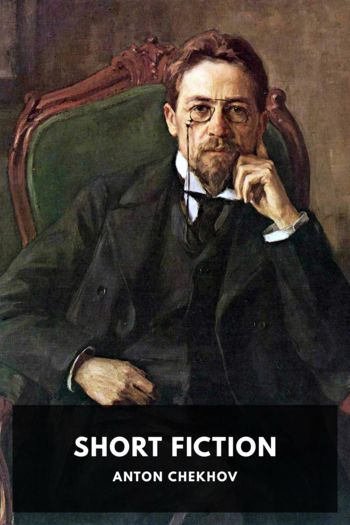
Anton Chekhov is widely considered to be one of the greatest short story writers in history. A physician by day, he’s famously quoted as saying, “Medicine is my lawful wife, and literature is my mistress.” Chekhov wrote nearly 300 short stories in his long writing career; while at first he wrote mainly to make a profit, as his interest in writing—and his skill—grew, he wrote stories that heavily influenced the modern development of the form.
His stories are famous for, among other things, their ambiguous morality and their often inconclusive nature. Chekhov was a firm believer that the role of the artist was to correctly pose a question, but not necessarily to answer it.
This collection contains all of his short stories and two novellas, all translated by Constance Garnett, and arranged by the date they were originally published.
Read free book «Short Fiction by Anton Chekhov (libby ebook reader .txt) 📕» - read online or download for free at americanlibrarybooks.com
- Author: Anton Chekhov
Read book online «Short Fiction by Anton Chekhov (libby ebook reader .txt) 📕». Author - Anton Chekhov
The examining magistrate turned quickly, facing the doctor, and screwing up his eyes, asked:
“And from what do you conclude that she poisoned herself?”
“I don’t conclude it, but I assume it. Was she on good terms with her husband?”
“H’m, not altogether. There had been misunderstandings soon after their marriage. There were unfortunate circumstances. She had found her husband on one occasion with a lady. She soon forgave him however.”
“And which came first, her husband’s infidelity or her idea of dying?”
The examining magistrate looked attentively at the doctor as though he were trying to imagine why he put that question.
“Excuse me,” he said, not quite immediately. “Let me try and remember.” The examining magistrate took off his hat and rubbed his forehead. “Yes, yes … it was very shortly after that incident that she began talking of death. Yes, yes.”
“Well, there, do you see? … In all probability it was at that time that she made up her mind to poison herself, but, as most likely she did not want to kill her child also, she put it off till after her confinement.”
“Not likely, not likely! … it’s impossible. She forgave him at the time.”
“That she forgave it quickly means that she had something bad in her mind. Young wives do not forgive quickly.”
The examining magistrate gave a forced smile, and, to conceal his too noticeable agitation, began lighting a cigarette.
“Not likely, not likely,” he went on. “No notion of anything of the sort being possible ever entered into my head. … And besides … he was not so much to blame as it seems. … He was unfaithful to her in rather a queer way, with no desire to be; he came home at night somewhat elevated, wanted to make love to somebody, his wife was in an interesting condition … then he came across a lady who had come to stay for three days—damnation take her—an empty-headed creature, silly and not good-looking. It couldn’t be reckoned as an infidelity. His wife looked at it in that way herself and soon … forgave it. Nothing more was said about it. …”
“People don’t die without a reason,” said the doctor.
“That is so, of course, but all the same … I cannot admit that she poisoned herself. But it is strange that the idea has never struck me before! And no one thought of it! Everyone was astonished that her prediction had come to pass, and the idea … of such a death was far from their mind. And indeed, it cannot be that she poisoned herself! No!”
The examining magistrate pondered. The thought of the woman who had died so strangely haunted him all through the inquest. As he noted down what the doctor dictated to him he moved his eyebrows gloomily and rubbed his forehead.
“And are there really poisons that kill one in a quarter of an hour, gradually, without any pain?” he asked the doctor while the latter was opening the skull.
“Yes, there are. Morphia for instance.”
“H’m, strange. I remember she used to keep something of the sort. … But it could hardly be.”
On the way back the examining magistrate looked exhausted, he kept nervously biting his moustache, and was unwilling to talk.
“Let us go a little way on foot,” he said to the doctor. “I am tired of sitting.”
After walking about a hundred paces, the examining magistrate seemed to the doctor to be overcome with fatigue, as though he had been climbing up a high mountain. He stopped and, looking at the doctor with a strange look in his eyes, as though he were drunk, said:
“My God, if your theory is correct, why it’s … it was cruel, inhuman! She poisoned herself to punish someone else! Why, was the sin so great? Oh, my God! And why did you make me a present of this damnable idea, doctor!”
The examining magistrate clutched at his head in despair, and went on:
“What I have told you was about my own wife, about myself. Oh, my God! I was to blame, I wounded her, but can it have been easier to die than to forgive? That’s typical feminine logic—cruel, merciless logic. Oh, even then when she was living she was cruel! I recall it all now! It’s all clear to me now!”
As the examining magistrate talked he shrugged his shoulders, then clutched at his head. He got back into the carriage, then walked again. The new idea the doctor had imparted to him seemed to have overwhelmed him, to have poisoned him; he was distracted, shattered in body and soul, and when he got back to the town he said goodbye to the doctor, declining to stay to dinner though he had promised the doctor the evening before to dine with him.
AboriginesBetween nine and ten in the morning. Ivan Lyashkevsky, a lieutenant of Polish origin, who has at some time or other been wounded in the head, and now lives on his pension in a town in one of the southern provinces, is sitting in his lodgings at the open window talking to Franz Stepanitch Finks, the town architect, who has come in to see him for a minute. Both have thrust their heads out of the window, and are looking in the direction of the gate near which Lyashkevsky’s landlord, a plump little native with pendulous perspiring cheeks, in full, blue trousers, is sitting on a bench with his waistcoat unbuttoned. The native is plunged in deep thought, and is absentmindedly prodding the toe of his boot with a stick.
“Extraordinary people, I tell you,” grumbled Lyashkevsky, looking angrily at the native, “here he has sat down on the bench, and so he will sit, damn the fellow, with his hands folded till evening. They do absolutely nothing. The wastrels and loafers! It would be all right, you scoundrel, if you had money lying in the bank, or had a farm of your own where others would be working for you, but here you have not a penny to



Comments (0)