Short Fiction by Anton Chekhov (libby ebook reader .txt) 📕
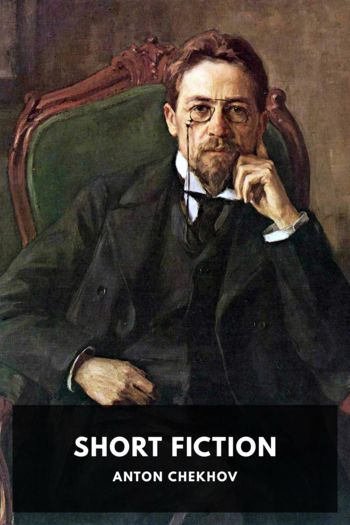
Description
Anton Chekhov is widely considered to be one of the greatest short story writers in history. A physician by day, he’s famously quoted as saying, “Medicine is my lawful wife, and literature is my mistress.” Chekhov wrote nearly 300 short stories in his long writing career; while at first he wrote mainly to make a profit, as his interest in writing—and his skill—grew, he wrote stories that heavily influenced the modern development of the form.
His stories are famous for, among other things, their ambiguous morality and their often inconclusive nature. Chekhov was a firm believer that the role of the artist was to correctly pose a question, but not necessarily to answer it.
This collection contains all of his short stories and two novellas, all translated by Constance Garnett, and arranged by the date they were originally published.
Read free book «Short Fiction by Anton Chekhov (libby ebook reader .txt) 📕» - read online or download for free at americanlibrarybooks.com
- Author: Anton Chekhov
Read book online «Short Fiction by Anton Chekhov (libby ebook reader .txt) 📕». Author - Anton Chekhov
“There’s no effect without a cause,” said the doctor. “If there’s a death there must be a cause for it. But as for predicting it there’s nothing very marvellous in that. All our ladies—all our females, in fact—have a turn for prophecies and presentiments.”
“Just so, but my lady, doctor, was quite a special case. There was nothing like the ladies’ or other females’ presentiments about her prediction and her death. She was a young woman, healthy and clever, with no superstitions of any sort. She had such clear, intelligent, honest eyes; an open, sensible face with a faint, typically Russian look of mockery in her eyes and on her lips. There was nothing of the fine lady or of the female about her, except—if you like—her beauty! She was graceful, elegant as that birch tree; she had wonderful hair. That she may be intelligible to you, I will add, too, that she was a person of the most infectious gaiety and carelessness and that intelligent, good sort of frivolity which is only found in good-natured, lighthearted people with brains. Can one talk of mysticism, spiritualism, a turn for presentiment, or anything of that sort, in this case? She used to laugh at all that.”
The doctor’s chaise stopped by a well. The examining magistrate and the doctor drank some water, stretched, and waited for the coachman to finish watering the horses.
“Well, what did the lady die of?” asked the doctor when the chaise was rolling along the road again.
“She died in a strange way. One fine day her husband went in to her and said that it wouldn’t be amiss to sell their old coach before the spring and to buy something rather newer and lighter instead, and that it might be as well to change the left trace horse and to put Bobtchinsky (that was the name of one of her husband’s horses) in the shafts.
“His wife listened to him and said:
“ ‘Do as you think best, but it makes no difference to me now. Before the summer I shall be in the cemetery.’
“Her husband, of course, shrugged his shoulders and smiled.
“ ‘I am not joking,’ she said. ‘I tell you in earnest that I shall soon be dead.’
“ ‘What do you mean by soon?’
“ ‘Directly after my confinement. I shall bear my child and die.’
“The husband attached no significance to these words. He did not believe in presentiments of any sort, and he knew that ladies in an interesting condition are apt to be fanciful and to give way to gloomy ideas generally. A day later his wife spoke to him again of dying immediately after her confinement, and then every day she spoke of it and he laughed and called her a silly woman, a fortune-teller, a crazy creature. Her approaching death became an idée fixe with his wife. When her husband would not listen to her she would go into the kitchen and talk of her death to the nurse and the cook.
“ ‘I haven’t long to live now, nurse,’ she would say. ‘As soon as my confinement is over I shall die. I did not want to die so early, but it seems it’s my fate.’
“The nurse and the cook were in tears, of course. Sometimes the priest’s wife or some lady from a neighbouring estate would come and see her and she would take them aside and open her soul to them, always harping on the same subject, her approaching death. She spoke gravely with an unpleasant smile, even with an angry face which would not allow any contradiction. She had been smart and fashionable in her dress, but now in view of her approaching death she became slovenly; she did not read, she did not laugh, she did not dream aloud. What was more she drove with her aunt to the cemetery and selected a spot for her tomb. Five days before her confinement she made her will. And all this, bear in mind, was done in the best of health, without the faintest hint of illness or danger. A confinement is a difficult affair and sometimes fatal, but in the case of which I am telling you every indication was favourable, and there was absolutely nothing to be afraid of. Her husband was sick of the whole business at last. He lost his temper one day at dinner and asked her:
“ ‘Listen, Natasha, when is there going to be an end of this silliness?’
“ ‘It’s not silliness, I am in earnest.’
“ ‘Nonsense, I advise you to give over being silly that you may not feel ashamed of it afterwards.’
“Well, the confinement came. The husband got the very best midwife from the town. It was his wife’s first confinement, but it could not have gone better. When it was all over she asked to look at her baby. She looked at it and said:
“ ‘Well, now I can die.’
“She said goodbye, shut her eyes, and half an hour later gave up her soul to God. She was fully conscious up to the last moment. Anyway when they gave her milk instead of water she whispered softly:
“ ‘Why are you giving me milk instead of water?’
“So that is what happened. She died as she predicted.”
The examining magistrate paused, gave a sigh and said:
“Come, explain why she died. I assure you on my honour, this is not invented, it’s a fact.”
The doctor looked at the sky meditatively.
“You ought to have had an inquest on her,” he said.
“Why?”
“Why, to find out the cause of her



Comments (0)