Short Fiction by Anton Chekhov (libby ebook reader .txt) 📕
Description
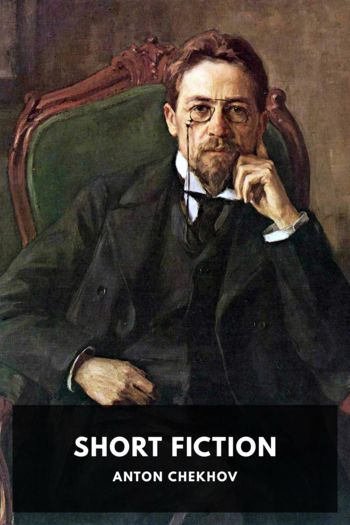
Anton Chekhov is widely considered to be one of the greatest short story writers in history. A physician by day, he’s famously quoted as saying, “Medicine is my lawful wife, and literature is my mistress.” Chekhov wrote nearly 300 short stories in his long writing career; while at first he wrote mainly to make a profit, as his interest in writing—and his skill—grew, he wrote stories that heavily influenced the modern development of the form.
His stories are famous for, among other things, their ambiguous morality and their often inconclusive nature. Chekhov was a firm believer that the role of the artist was to correctly pose a question, but not necessarily to answer it.
This collection contains all of his short stories and two novellas, all translated by Constance Garnett, and arranged by the date they were originally published.
Read free book «Short Fiction by Anton Chekhov (libby ebook reader .txt) 📕» - read online or download for free at americanlibrarybooks.com
- Author: Anton Chekhov
Read book online «Short Fiction by Anton Chekhov (libby ebook reader .txt) 📕». Author - Anton Chekhov
When the brigade reached their halting-place in the evening, and the officers were resting in their tents, Ryabovitch, Merzlyakov, and Lobytko were sitting round a box having supper. Merzlyakov ate without haste, and, as he munched deliberately, read the Vyestnik Evropi, which he held on his knees. Lobytko talked incessantly and kept filling up his glass with beer, and Ryabovitch, whose head was confused from dreaming all day long, drank and said nothing. After three glasses he got a little drunk, felt weak, and had an irresistible desire to impart his new sensations to his comrades.
“A strange thing happened to me at those Von Rabbeks’,” he began, trying to put an indifferent and ironical tone into his voice. “You know I went into the billiard room. …”
He began describing very minutely the incident of the kiss, and a moment later relapsed into silence. … In the course of that moment he had told everything, and it surprised him dreadfully to find how short a time it took him to tell it. He had imagined that he could have been telling the story of the kiss till next morning. Listening to him, Lobytko, who was a great liar and consequently believed no one, looked at him sceptically and laughed. Merzlyakov twitched his eyebrows and, without removing his eyes from the Vyestnik Evropi, said:
“That’s an odd thing! How strange! … throws herself on a man’s neck, without addressing him by name. … She must be some sort of hysterical neurotic.”
“Yes, she must,” Ryabovitch agreed.
“A similar thing once happened to me,” said Lobytko, assuming a scared expression. “I was going last year to Kovno. … I took a second-class ticket. The train was crammed, and it was impossible to sleep. I gave the guard half a rouble; he took my luggage and led me to another compartment. … I lay down and covered myself with a rug. … It was dark, you understand. Suddenly I felt someone touch me on the shoulder and breathe in my face. I made a movement with my hand and felt somebody’s elbow. … I opened my eyes and only imagine—a woman. Black eyes, lips red as a prime salmon, nostrils breathing passionately—a bosom like a buffer. …”
“Excuse me,” Merzlyakov interrupted calmly, “I understand about the bosom, but how could you see the lips if it was dark?”
Lobytko began trying to put himself right and laughing at Merzlyakov’s unimaginativeness. It made Ryabovitch wince. He walked away from the box, got into bed, and vowed never to confide again.
Camp life began. … The days flowed by, one very much like another. All those days Ryabovitch felt, thought, and behaved as though he were in love. Every morning when his orderly handed him water to wash with, and he sluiced his head with cold water, he thought there was something warm and delightful in his life.
In the evenings when his comrades began talking of love and women, he would listen, and draw up closer; and he wore the expression of a soldier when he hears the description of a battle in which he has taken part. And on the evenings when the officers, out on the spree with the setter—Lobytko—at their head, made Don Juan excursions to the “suburb,” and Ryabovitch took part in such excursions, he always was sad, felt profoundly guilty, and inwardly begged her forgiveness. … In hours of leisure or on sleepless nights, when he felt moved to recall his childhood, his father and mother—everything near and dear, in fact, he invariably thought of Myestetchki, the strange horse, Von Rabbek, his wife who was like the Empress Eugénie, the dark room, the crack of light at the door. …
On the thirty-first of August he went back from the camp, not with the whole brigade, but with only two batteries of it. He was dreaming and excited all the way, as though he were going back to his native place. He had an intense longing to see again the strange horse, the church, the insincere family of the Von Rabbeks, the dark room. The “inner voice,” which so often deceives lovers, whispered to him for some reason that he would be sure to see her … and he was tortured by the questions, How he should meet her? What he would talk to her about? Whether she had forgotten the kiss? If the worst came to the worst, he thought, even if he did not meet her, it would be a pleasure to him merely to go through the dark room and recall the past. …
Towards evening there appeared on the horizon the familiar church and white granaries. Ryabovitch’s heart beat. … He did not hear the officer who was riding beside him and saying something to him, he forgot everything, and looked eagerly at the river shining in the distance, at the roof of the house, at the dovecote round which the pigeons were circling in the light of the setting sun.
When they reached the church and were listening to the billeting orders, he expected every second that a man on horseback would come round the church enclosure and invite the officers to tea, but … the billeting orders were read, the officers were in haste to go on to the village, and the man on horseback did not appear.
“Von Rabbek will hear at once from the peasants that we have come and will send for us,” thought Ryabovitch, as he went into the hut, unable to understand why a comrade was lighting a candle and why the orderlies were hurriedly setting samovars. …
A painful uneasiness took possession of him. He lay down, then got up and looked out of the window to see whether the messenger were coming. But there was no sign of him.
He lay down again, but half an hour later he got up, and, unable to restrain his uneasiness, went into the street and strode towards the church. It was dark and deserted in the square near the church. … Three soldiers were standing




Comments (0)