Short Fiction by Anton Chekhov (libby ebook reader .txt) 📕
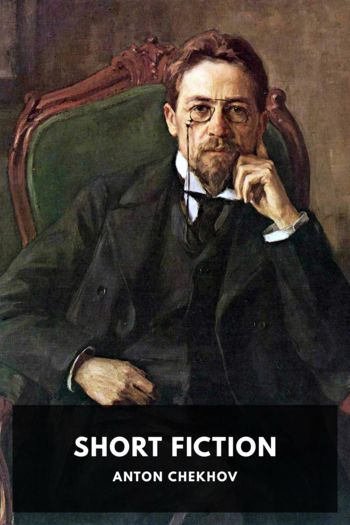
Description
Anton Chekhov is widely considered to be one of the greatest short story writers in history. A physician by day, he’s famously quoted as saying, “Medicine is my lawful wife, and literature is my mistress.” Chekhov wrote nearly 300 short stories in his long writing career; while at first he wrote mainly to make a profit, as his interest in writing—and his skill—grew, he wrote stories that heavily influenced the modern development of the form.
His stories are famous for, among other things, their ambiguous morality and their often inconclusive nature. Chekhov was a firm believer that the role of the artist was to correctly pose a question, but not necessarily to answer it.
This collection contains all of his short stories and two novellas, all translated by Constance Garnett, and arranged by the date they were originally published.
Read free book «Short Fiction by Anton Chekhov (libby ebook reader .txt) 📕» - read online or download for free at americanlibrarybooks.com
- Author: Anton Chekhov
Read book online «Short Fiction by Anton Chekhov (libby ebook reader .txt) 📕». Author - Anton Chekhov
I walked about the room to conceal my emotion.
“Natalie,” I went on a minute later, “before I go away, I beg of you as a special favour, help me to do something for the starving peasants!”
“What can I do?” said my wife, shrugging her shoulders. “Here’s the subscription list.”
She rummaged among the papers and found the subscription list.
“Subscribe some money,” she said, and from her tone I could see that she did not attach great importance to her subscription list; “that is the only way in which you can take part in the work.”
I took the list and wrote: “Anonymous, 5,000.”
In this “anonymous” there was something wrong, false, conceited, but I only realized that when I noticed that my wife flushed very red and hurriedly thrust the list into the heap of papers. We both felt ashamed; I felt that I must at all costs efface this clumsiness at once, or else I should feel ashamed afterwards, in the train and at Petersburg. But how efface it? What was I to say?
“I fully approve of what you are doing, Natalie,” I said genuinely, “and I wish you every success. But allow me at parting to give you one piece of advice, Natalie; be on your guard with Sobol, and with your assistants generally, and don’t trust them blindly. I don’t say they are not honest, but they are not gentlefolks; they are people with no ideas, no ideals, no faith, with no aim in life, no definite principles, and the whole object of their life is comprised in the rouble. Rouble, rouble, rouble!” I sighed. “They are fond of getting money easily, for nothing, and in that respect the better educated they are the more they are to be dreaded.”
My wife went to the couch and lay down.
“Ideas,” she brought out, listlessly and reluctantly, “ideas, ideals, objects of life, principles … you always used to use those words when you wanted to insult or humiliate someone, or say something unpleasant. Yes, that’s your way: if with your views and such an attitude to people you are allowed to take part in anything, you would destroy it from the first day. It’s time you understand that.”
She sighed and paused.
“It’s coarseness of character, Pavel Andreitch,” she said. “You are well-bred and educated, but what a … Scythian you are in reality! That’s because you lead a cramped life full of hatred, see no one, and read nothing but your engineering books. And, you know, there are good people, good books! Yes … but I am exhausted and it wearies me to talk. I ought to be in bed.”
“So I am going away, Natalie,” I said.
“Yes … yes. … Merci. …”
I stood still for a little while, then went upstairs. An hour later—it was half-past one—I went downstairs again with a candle in my hand to speak to my wife. I didn’t know what I was going to say to her, but I felt that I must say some thing very important and necessary. She was not in her study, the door leading to her bedroom was closed.
“Natalie, are you asleep?” I asked softly.
There was no answer.
I stood near the door, sighed, and went into the drawing room. There I sat down on the sofa, put out the candle, and remained sitting in the dark till the dawn.
VII went to the station at ten o’clock in the morning. There was no frost, but snow was falling in big wet flakes and an unpleasant damp wind was blowing.
We passed a pond and then a birch copse, and then began going uphill along the road which I could see from my window. I turned round to take a last look at my house, but I could see nothing for the snow. Soon afterwards dark huts came into sight ahead of us as in a fog. It was Pestrovo.
“If I ever go out of my mind, Pestrovo will be the cause of it,” I thought. “It persecutes me.”
We came out into the village street. All the roofs were intact, not one of them had been pulled to pieces; so my bailiff had told a lie. A boy was pulling along a little girl and a baby in a sledge. Another boy of three, with his head wrapped up like a peasant woman’s and with huge mufflers on his hands, was trying to catch the flying snowflakes on his tongue, and laughing. Then a wagon loaded with fagots came toward us and a peasant walking beside it, and there was no telling whether his beard was white or whether it was covered with snow. He recognized my coachman, smiled at him and said something, and mechanically took off his hat to me. The dogs ran out of the yards and looked inquisitively at my horses. Everything was quiet, ordinary, as usual. The emigrants had returned, there was no bread; in the huts “some were laughing, some were delirious”; but it all looked so ordinary that one could not believe it really was so. There were no distracted faces, no voices whining for help, no weeping, nor abuse, but all around was stillness, order, life, children, sledges, dogs with dishevelled tails. Neither the children nor the peasant we met were troubled; why was I so troubled?
Looking at the smiling peasant, at the boy with the huge mufflers, at the huts, remembering my wife, I realized there was no calamity that could daunt this people; I felt as though there were already a breath of victory in the air. I felt proud and felt ready to cry out that I was with them too; but the horses were carrying us away from the village into the open country, the snow was whirling, the wind was howling, and I was left alone with my thoughts. Of the million people working for the peasantry, life itself had cast me out as



Comments (0)