Short Fiction by Anton Chekhov (libby ebook reader .txt) 📕
Description
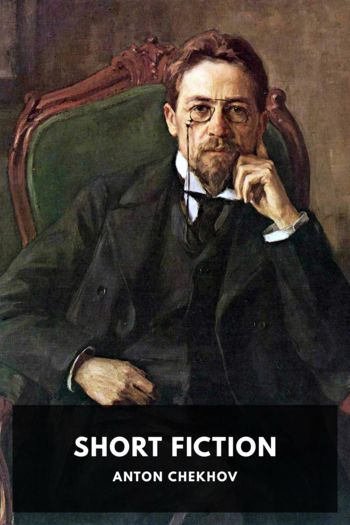
Anton Chekhov is widely considered to be one of the greatest short story writers in history. A physician by day, he’s famously quoted as saying, “Medicine is my lawful wife, and literature is my mistress.” Chekhov wrote nearly 300 short stories in his long writing career; while at first he wrote mainly to make a profit, as his interest in writing—and his skill—grew, he wrote stories that heavily influenced the modern development of the form.
His stories are famous for, among other things, their ambiguous morality and their often inconclusive nature. Chekhov was a firm believer that the role of the artist was to correctly pose a question, but not necessarily to answer it.
This collection contains all of his short stories and two novellas, all translated by Constance Garnett, and arranged by the date they were originally published.
Read free book «Short Fiction by Anton Chekhov (libby ebook reader .txt) 📕» - read online or download for free at americanlibrarybooks.com
- Author: Anton Chekhov
Read book online «Short Fiction by Anton Chekhov (libby ebook reader .txt) 📕». Author - Anton Chekhov
“Come to supper, gentlemen.”
As before, Olga Ivanovna hunted celebrities, found them, was not satisfied, and went in pursuit of fresh ones. As before, she came back late every night; but now Dymov was not, as last year, asleep, but sitting in his study at work of some sort. He went to bed at three o’clock and got up at eight.
One evening when she was getting ready to go to the theatre and standing before the pier glass, Dymov came into her bedroom, wearing his dress-coat and a white tie. He was smiling gently and looked into his wife’s face joyfully, as in old days; his face was radiant.
“I have just been defending my thesis,” he said, sitting down and smoothing his knees.
“Defending?” asked Olga Ivanovna.
“Oh, oh!” he laughed, and he craned his neck to see his wife’s face in the mirror, for she was still standing with her back to him, doing up her hair. “Oh, oh,” he repeated, “do you know it’s very possible they may offer me the Readership in General Pathology? It seems like it.”
It was evident from his beaming, blissful face that if Olga Ivanovna had shared with him his joy and triumph he would have forgiven her everything, both the present and the future, and would have forgotten everything, but she did not understand what was meant by a “readership” or by “general pathology”; besides, she was afraid of being late for the theatre, and she said nothing.
He sat there another two minutes, and with a guilty smile went away.
VIIIt had been a very troubled day.
Dymov had a very bad headache; he had no breakfast, and did not go to the hospital, but spent the whole time lying on his sofa in the study. Olga Ivanovna went as usual at midday to see Ryabovsky, to show him her still-life sketch, and to ask him why he had not been to see her the evening before. The sketch seemed to her worthless, and she had painted it only in order to have an additional reason for going to the artist.
She went in to him without ringing, and as she was taking off her goloshes in the entry she heard a sound as of something running softly in the studio, with a feminine rustle of skirts; and as she hastened to peep in she caught a momentary glimpse of a bit of brown petticoat, which vanished behind a big picture draped, together with the easel, with black calico, to the floor. There could be no doubt that a woman was hiding there. How often Olga Ivanovna herself had taken refuge behind that picture!
Ryabovsky, evidently much embarrassed, held out both hands to her, as though surprised at her arrival, and said with a forced smile:
“Aha! Very glad to see you! Anything nice to tell me?”
Olga Ivanovna’s eyes filled with tears. She felt ashamed and bitter, and would not for a million roubles have consented to speak in the presence of the outsider, the rival, the deceitful woman who was standing now behind the picture, and probably giggling malignantly.
“I have brought you a sketch,” she said timidly in a thin voice, and her lips quivered. “Nature morte.”
“Ah—ah! … A sketch?”
The artist took the sketch in his hands, and as he examined it walked, as it were mechanically, into the other room.
Olga Ivanovna followed him humbly.
“Nature morte … first-rate sort,” he muttered, falling into rhyme. “Kurort … sport … port …”
From the studio came the sound of hurried footsteps and the rustle of a skirt.
So she had gone. Olga Ivanovna wanted to scream aloud, to hit the artist on the head with something heavy, but she could see nothing through her tears, was crushed by her shame, and felt herself, not Olga Ivanovna, not an artist, but a little insect.
“I am tired …” said the artist languidly, looking at the sketch and tossing his head as though struggling with drowsiness. “It’s very nice, of course, but here a sketch today, a sketch last year, another sketch in a month … I wonder you are not bored with them. If I were you I should give up painting and work seriously at music or something. You’re not an artist, you know, but a musician. But you can’t think how tired I am! I’ll tell them to bring us some tea, shall I?”
He went out of the room, and Olga Ivanovna heard him give some order to his footman. To avoid farewells and explanations, and above all to avoid bursting into sobs, she ran as fast as she could, before Ryabovsky came back, to the entry, put on her goloshes, and went out into the street; then she breathed easily, and felt she was free forever from Ryabovsky and from painting and from the burden of shame which had so crushed her in the studio. It was all over!
She drove to her dressmaker’s; then to see Barnay, who had only arrived the day before; from Barnay to a music-shop, and all the time she was thinking how she would write Ryabovsky a cold, cruel letter full of personal dignity, and how in the spring or the summer she would go with Dymov to the Crimea, free herself finally from the past there, and begin a new life.
On getting home late in the evening she sat down in the drawing room, without taking off her things, to begin the letter. Ryabovsky had told her she was not an artist, and to pay him out she wrote to him now that he painted the same thing every year, and said exactly the same thing every day; that he was at a standstill, and that nothing more would come of him than had come already. She wanted to write, too, that he owed a great deal to her good influence, and that if he was going wrong it was only because her influence was paralysed by various dubious persons like the one who had been hiding behind the picture that day.
“Little mother!” Dymov



Comments (0)