Short Fiction by Anton Chekhov (libby ebook reader .txt) 📕
Description
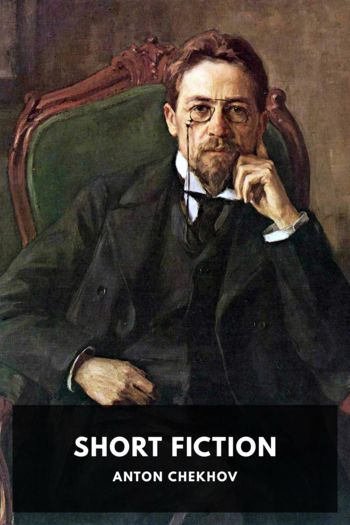
Anton Chekhov is widely considered to be one of the greatest short story writers in history. A physician by day, he’s famously quoted as saying, “Medicine is my lawful wife, and literature is my mistress.” Chekhov wrote nearly 300 short stories in his long writing career; while at first he wrote mainly to make a profit, as his interest in writing—and his skill—grew, he wrote stories that heavily influenced the modern development of the form.
His stories are famous for, among other things, their ambiguous morality and their often inconclusive nature. Chekhov was a firm believer that the role of the artist was to correctly pose a question, but not necessarily to answer it.
This collection contains all of his short stories and two novellas, all translated by Constance Garnett, and arranged by the date they were originally published.
Read free book «Short Fiction by Anton Chekhov (libby ebook reader .txt) 📕» - read online or download for free at americanlibrarybooks.com
- Author: Anton Chekhov
Read book online «Short Fiction by Anton Chekhov (libby ebook reader .txt) 📕». Author - Anton Chekhov
“H—m … Ah! …” the assistant said slowly, and he heaved a sigh. “Influenza and possibly fever. There’s typhus in the town now. Well, the old woman has lived her life, thank God. … How old is she?”
“She’ll be seventy in another year, Maxim Nikolaitch.”
“Well, the old woman has lived her life, it’s time to say goodbye.”
“You are quite right in what you say, of course, Maxim Nikolaitch,” said Yakov, smiling from politeness, “and we thank you feelingly for your kindness, but allow me to say every insect wants to live.”
“To be sure,” said the assistant, in a tone which suggested that it depended upon him whether the woman lived or died. “Well, then, my good fellow, put a cold compress on her head, and give her these powders twice a day, and so goodbye. Bonjour.”
From the expression of his face Yakov saw that it was a bad case, and that no sort of powders would be any help; it was clear to him that Marfa would die very soon, if not today, tomorrow. He nudged the assistant’s elbow, winked at him, and said in a low voice:
“If you would just cup her, Maxim Nikolaitch.”
“I have no time, I have no time, my good fellow. Take your old woman and go in God’s name. Goodbye.”
“Be so gracious,” Yakov besought him. “You know yourself that if, let us say, it were her stomach or her inside that were bad, then powders or drops, but you see she had got a chill! In a chill the first thing is to let blood, Maxim Nikolaitch.”
But the assistant had already sent for the next patient, and a peasant woman came into the consulting room with a boy.
“Go along! go along,” he said to Yakov, frowning. “It’s no use to—”
“In that case put on leeches, anyway! Make us pray for you forever.”
The assistant flew into a rage and shouted:
“You speak to me again! You blockhead. …”
Yakov flew into a rage too, and he turned crimson all over, but he did not utter a word. He took Marfa on his arm and led her out of the room. Only when they were sitting in the cart he looked morosely and ironically at the hospital, and said:
“A nice set of artists they have settled here! No fear, but he would have cupped a rich man, but even a leech he grudges to the poor. The Herods!”
When they got home and went into the hut, Marfa stood for ten minutes holding on to the stove. It seemed to her that if she were to lie down Yakov would talk to her about his losses, and scold her for lying down and not wanting to work. Yakov looked at her drearily and thought that tomorrow was St. John the Divine’s, and next day St. Nikolay the Wonder-worker’s, and the day after that was Sunday, and then Monday, an unlucky day. For four days he would not be able to work, and most likely Marfa would die on one of those days; so he would have to make the coffin today. He picked up his iron rule, went up to the old woman and took her measure. Then she lay down, and he crossed himself and began making the coffin.
When the coffin was finished Bronze put on his spectacles and wrote in his book: “Marfa Ivanov’s coffin, two roubles, forty kopecks.”
And he heaved a sigh. The old woman lay all the time silent with her eyes closed. But in the evening, when it got dark, she suddenly called the old man.
“Do you remember, Yakov,” she asked, looking at him joyfully. “Do you remember fifty years ago God gave us a little baby with flaxen hair? We used always to be sitting by the river then, singing songs … under the willows,” and laughing bitterly, she added: “The baby girl died.”
Yakov racked his memory, but could not remember the baby or the willows.
“It’s your fancy,” he said.
The priest arrived; he administered the sacrament and extreme unction. Then Marfa began muttering something unintelligible, and towards morning she died. Old women, neighbours, washed her, dressed her, and laid her in the coffin. To avoid paying the sacristan, Yakov read the psalms over the body himself, and they got nothing out of him for the grave, as the gravedigger was a crony of his. Four peasants carried the coffin to the graveyard, not for money, but from respect. The coffin was followed by old women, beggars, and a couple of crazy saints, and the people who met it crossed themselves piously. … And Yakov was very much pleased that it was so creditable, so decorous, and so cheap, and no offence to anyone. As he took his last leave of Marfa he touched the coffin and thought: “A good piece of work!”
But as he was going back from the cemetery he was overcome by acute depression. He didn’t feel quite well: his breathing was laboured and feverish, his legs felt weak, and he had a craving for drink. And thoughts of all sorts forced themselves on his mind. He remembered again that all his life he had never felt for Marfa, had never been affectionate to her. The fifty-two years they had lived in the same hut had dragged on a long, long time, but it had somehow happened that in all that time he had never once thought of her, had paid no attention to her, as though she had been a cat or a dog. And yet, every day, she had lighted the stove had cooked and baked, had gone for the water, had chopped the wood, had slept with him in the same bed, and when he came home drunk from the weddings always reverently hung his fiddle on the wall and put him to bed, and all this in silence, with a timid, anxious expression.
Rothschild, smiling and bowing, came to meet Yakov.
“I was looking





Comments (0)