Short Fiction by Anton Chekhov (libby ebook reader .txt) 📕
Description
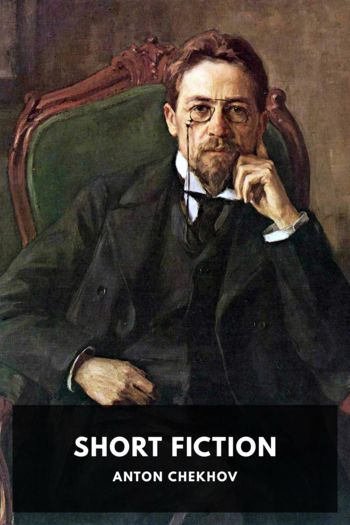
Anton Chekhov is widely considered to be one of the greatest short story writers in history. A physician by day, he’s famously quoted as saying, “Medicine is my lawful wife, and literature is my mistress.” Chekhov wrote nearly 300 short stories in his long writing career; while at first he wrote mainly to make a profit, as his interest in writing—and his skill—grew, he wrote stories that heavily influenced the modern development of the form.
His stories are famous for, among other things, their ambiguous morality and their often inconclusive nature. Chekhov was a firm believer that the role of the artist was to correctly pose a question, but not necessarily to answer it.
This collection contains all of his short stories and two novellas, all translated by Constance Garnett, and arranged by the date they were originally published.
Read free book «Short Fiction by Anton Chekhov (libby ebook reader .txt) 📕» - read online or download for free at americanlibrarybooks.com
- Author: Anton Chekhov
Read book online «Short Fiction by Anton Chekhov (libby ebook reader .txt) 📕». Author - Anton Chekhov
“You despise me, and if only you knew how miserable it makes me,” she said uncertainly, knowing beforehand that he would not believe her. “And if you only knew how I want to change, to begin another life! I think of it with enthusiasm!” and tears of enthusiasm actually came into her eyes. “To be good, honest, pure, not to be lying; to have an object in life.”
“Come, come, come, please don’t be affected! I don’t like it!” said Volodya, and an ill-humoured expression came into his face. “Upon my word, you might be on the stage. Let us behave like simple people.”
To prevent him from getting cross and going away, she began defending herself, and forced herself to smile to please him; and again she began talking of Olga, and of how she longed to solve the problem of her life and to become something real.
“Ta-ra-ra-boomdee-ay,” he hummed. “Ta-ra-ra-boom-dee-ay!”
And all at once he put his arm round her waist, while she, without knowing what she was doing, laid her hands on his shoulders and for a minute gazed with ecstasy, almost intoxication, at his clever, ironical face, his brow, his eyes, his handsome beard.
“You have known that I love you for ever so long,” she confessed to him, and she blushed painfully, and felt that her lips were twitching with shame. “I love you. Why do you torture me?”
She shut her eyes and kissed him passionately on the lips, and for a long while, a full minute, could not take her lips away, though she knew it was unseemly, that he might be thinking the worse of her, that a servant might come in.
“Oh, how you torture me!” she repeated.
When half an hour later, having got all that he wanted, he was sitting at lunch in the dining room, she was kneeling before him, gazing greedily into his face, and he told her that she was like a little dog waiting for a bit of ham to be thrown to it. Then he sat her on his knee, and dancing her up and down like a child, hummed:
“Tara-raboom-dee-ay. … Tara-raboom-dee-ay.” And when he was getting ready to go she asked him in a passionate whisper:
“When? Today? Where?” And held out both hands to his mouth as though she wanted to seize his answer in them.
“Today it will hardly be convenient,” he said after a minute’s thought. “Tomorrow, perhaps.”
And they parted. Before dinner Sofya Lvovna went to the nunnery to see Olga, but there she was told that Olga was reading the psalter somewhere over the dead. From the nunnery she went to her father’s and found that he, too, was out. Then she took another sledge and drove aimlessly about the streets till evening. And for some reason she kept thinking of the aunt whose eyes were red with crying, and who could find no peace anywhere.
And at night they drove out again with three horses to a restaurant out of town and listened to the gipsies. And driving back past the nunnery again, Sofya Lvovna thought of Olga, and she felt aghast at the thought that for the girls and women of her class there was no solution but to go on driving about and telling lies, or going into a nunnery to mortify the flesh. … And next day she met her lover, and again Sofya Lvovna drove about the town alone in a hired sledge thinking about her aunt.
A week later Volodya threw her over. And after that life went on as before, uninteresting, miserable, and sometimes even agonising. The Colonel and Volodya spent hours playing billiards and picquet, Rita told anecdotes in the same languid, tasteless way, and Sofya Lvovna went about alone in hired sledges and kept begging her husband to take her for a good drive with three horses.
Going almost every day to the nunnery, she wearied Olga, complaining of her unbearable misery, weeping, and feeling as she did so that she brought with her into the cell something impure, pitiful, shabby. And Olga repeated to her mechanically as though a lesson learnt by rote, that all this was of no consequence, that it would all pass and God would forgive her.
Rothschild’s FiddleThe town was a little one, worse than a village, and it was inhabited by scarcely any but old people who died with an infrequency that was really annoying. In the hospital and in the prison fortress very few coffins were needed. In fact business was bad. If Yakov Ivanov had been an undertaker in the chief town of the province he would certainly have had a house of his own, and people would have addressed him as Yakov Matveyitch; here in this wretched little town people called him simply Yakov; his nickname in the street was for some reason “Bronze,” and he lived in a poor way like a humble peasant, in a little old hut in which there was only one room, and in this room he and Marfa, the stove, a double bed, the coffins, his bench, and all their belongings were crowded together.
Yakov made good, solid coffins. For peasants and working people he made them to fit himself, and this was never unsuccessful, for there were none taller and stronger than he, even in the prison, though he was seventy. For gentry and for women he made them to measure, and used an iron foot-rule for the purpose. He was very unwilling to take orders for children’s coffins, and made them straight off without measurements, contemptuously, and when he was paid for the work he always said:
“I must confess I don’t like trumpery jobs.”
Apart from his trade, playing the fiddle brought him in a small income.
The Jews’ orchestra conducted by Moisey Ilyitch Shahkes, the tinsmith, who took more than half their receipts for himself, played as a rule at weddings in the town. As Yakov played very well on



Comments (0)