Short Fiction by Anton Chekhov (libby ebook reader .txt) 📕
Description
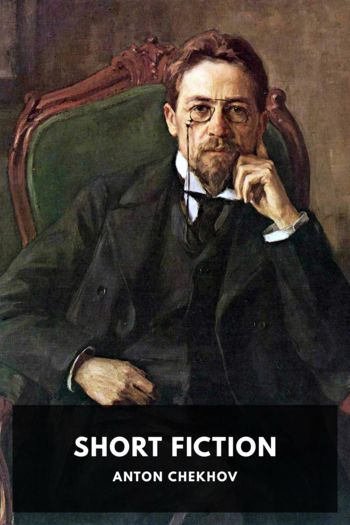
Anton Chekhov is widely considered to be one of the greatest short story writers in history. A physician by day, he’s famously quoted as saying, “Medicine is my lawful wife, and literature is my mistress.” Chekhov wrote nearly 300 short stories in his long writing career; while at first he wrote mainly to make a profit, as his interest in writing—and his skill—grew, he wrote stories that heavily influenced the modern development of the form.
His stories are famous for, among other things, their ambiguous morality and their often inconclusive nature. Chekhov was a firm believer that the role of the artist was to correctly pose a question, but not necessarily to answer it.
This collection contains all of his short stories and two novellas, all translated by Constance Garnett, and arranged by the date they were originally published.
Read free book «Short Fiction by Anton Chekhov (libby ebook reader .txt) 📕» - read online or download for free at americanlibrarybooks.com
- Author: Anton Chekhov
Read book online «Short Fiction by Anton Chekhov (libby ebook reader .txt) 📕». Author - Anton Chekhov
Besides Big Volodya, Little Volodya, and Sofya Lvovna, there was a fourth person in the sledge—Margarita Alexandrovna, or, as everyone called her, Rita, a cousin of Madame Yagitch—a very pale girl over thirty, with black eyebrows and a pince-nez, who was forever smoking cigarettes, even in the bitterest frost, and who always had her knees and the front of her blouse covered with cigarette ash. She spoke through her nose, drawling every word, was of a cold temperament, could drink any amount of wine and liquor without being drunk, and used to tell scandalous anecdotes in a languid and tasteless way. At home she spent her days reading thick magazines, covering them with cigarette ash, or eating frozen apples.
“Sonia, give over fooling,” she said, drawling. “It’s really silly.”
As they drew near the city gates they went more slowly, and began to pass people and houses. Sofya Lvovna subsided, nestled up to her husband, and gave herself up to her thoughts. Little Volodya sat opposite. By now her lighthearted and cheerful thoughts were mingled with gloomy ones. She thought that the man sitting opposite knew that she loved him, and no doubt he believed the gossip that she married the Colonel par dépit. She had never told him of her love; she had not wanted him to know, and had done her best to hide her feeling, but from her face she knew that he understood her perfectly—and her pride suffered. But what was most humiliating in her position was that, since her wedding, Volodya had suddenly begun to pay her attention, which he had never done before, spending hours with her, sitting silent or chattering about trifles; and even now in the sledge, though he did not talk to her, he touched her foot with his and pressed her hand a little. Evidently that was all he wanted, that she should be married; and it was evident that he despised her and that she only excited in him an interest of a special kind as though she were an immoral and disreputable woman. And when the feeling of triumph and love for her husband were mingled in her soul with humiliation and wounded pride, she was overcome by a spirit of defiance, and longed to sit on the box, to shout and whistle to the horses.
Just as they passed the nunnery the huge hundred-ton bell rang out. Rita crossed herself.
“Our Olga is in that nunnery,” said Sofya Lvovna, and she, too, crossed herself and shuddered.
“Why did she go into the nunnery?” said the Colonel.
“Par dépit,” Rita answered crossly, with obvious allusion to Sofya’s marrying Yagitch. “Par dépit is all the fashion nowadays. Defiance of all the world. She was always laughing, a desperate flirt, fond of nothing but balls and young men, and all of a sudden off she went—to surprise everyone!”
“That’s not true,” said Volodya, turning down the collar of his fur coat and showing his handsome face. “It wasn’t a case of par dépit; it was simply horrible, if you like. Her brother Dmitri was sent to penal servitude, and they don’t know where he is now. And her mother died of grief.”
He turned up his collar again.
“Olga did well,” he added in a muffled voice. “Living as an adopted child, and with such a paragon as Sofya Lvovna—one must take that into consideration too!”
Sofya Lvovna heard a tone of contempt in his voice, and longed to say something rude to him, but she said nothing. The spirit of defiance came over her again; she stood up again and shouted in a tearful voice:
“I want to go to the early service! Driver, back! I want to see Olga.”
They turned back. The nunnery bell had a deep note, and Sofya Lvovna fancied there was something in it that reminded her of Olga and her life. The other church bells began ringing too. When the driver stopped the horses, Sofya Lvovna jumped out of the sledge and, unescorted and alone, went quickly up to the gate.
“Make haste, please!” her husband called to her. “It’s late already.”
She went in at the dark gateway, then by the avenue that led from the gate to the chief church. The snow crunched under her feet, and the ringing was just above her head, and seemed to vibrate through her whole being. Here was the church door, then three steps down, and an anteroom with icons of the saints on both sides, a fragrance of juniper and incense, another door, and a dark figure opening it and bowing very low. The service had not yet begun. One nun was walking by the icon-screen and lighting the candles on the tall standard candlesticks, another was lighting the chandelier. Here and there, by the columns and the side chapels, there stood black, motionless figures. “I



Comments (0)