Short Fiction by Anton Chekhov (libby ebook reader .txt) 📕
Description
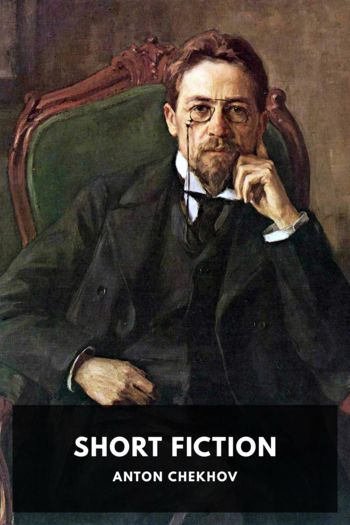
Anton Chekhov is widely considered to be one of the greatest short story writers in history. A physician by day, he’s famously quoted as saying, “Medicine is my lawful wife, and literature is my mistress.” Chekhov wrote nearly 300 short stories in his long writing career; while at first he wrote mainly to make a profit, as his interest in writing—and his skill—grew, he wrote stories that heavily influenced the modern development of the form.
His stories are famous for, among other things, their ambiguous morality and their often inconclusive nature. Chekhov was a firm believer that the role of the artist was to correctly pose a question, but not necessarily to answer it.
This collection contains all of his short stories and two novellas, all translated by Constance Garnett, and arranged by the date they were originally published.
Read free book «Short Fiction by Anton Chekhov (libby ebook reader .txt) 📕» - read online or download for free at americanlibrarybooks.com
- Author: Anton Chekhov
Read book online «Short Fiction by Anton Chekhov (libby ebook reader .txt) 📕». Author - Anton Chekhov
“Please change your things, your honour,” he said softly. “Here is your bed; come this way,” he added, pointing to an empty bedstead which had obviously recently been brought into the ward. “It’s all right; please God, you will recover.”
Andrey Yefimitch understood it all. Without saying a word he crossed to the bed to which Nikita pointed and sat down; seeing that Nikita was standing waiting, he undressed entirely and he felt ashamed. Then he put on the hospital clothes; the drawers were very short, the shirt was long, and the dressing-gown smelt of smoked fish.
“Please God, you will recover,” repeated Nikita, and he gathered up Andrey Yefimitch’s clothes into his arms, went out, and shut the door after him.
“No matter …” thought Andrey Yefimitch, wrapping himself in his dressing-gown in a shamefaced way and feeling that he looked like a convict in his new costume. “It’s no matter. … It does not matter whether it’s a dress-coat or a uniform or this dressing-gown.”
But how about his watch? And the notebook that was in the side-pocket? And his cigarettes? Where had Nikita taken his clothes? Now perhaps to the day of his death he would not put on trousers, a waistcoat, and high boots. It was all somehow strange and even incomprehensible at first. Andrey Yefimitch was even now convinced that there was no difference between his landlady’s house and Ward No. 6, that everything in this world was nonsense and vanity of vanities. And yet his hands were trembling, his feet were cold, and he was filled with dread at the thought that soon Ivan Dmitritch would get up and see that he was in a dressing-gown. He got up and walked across the room and sat down again.
Here he had been sitting already half an hour, an hour, and he was miserably sick of it: was it really possible to live here a day, a week, and even years like these people? Why, he had been sitting here, had walked about and sat down again; he could get up and look out of window and walk from corner to corner again, and then what? Sit so all the time, like a post, and think? No, that was scarcely possible.
Andrey Yefimitch lay down, but at once got up, wiped the cold sweat from his brow with his sleeve and felt that his whole face smelt of smoked fish. He walked about again.
“It’s some misunderstanding …” he said, turning out the palms of his hands in perplexity. “It must be cleared up. There is a misunderstanding.”
Meanwhile Ivan Dmitritch woke up; he sat up and propped his cheeks on his fists. He spat. Then he glanced lazily at the doctor, and apparently for the first minute did not understand; but soon his sleepy face grew malicious and mocking.
“Aha! so they have put you in here, too, old fellow?” he said in a voice husky from sleepiness, screwing up one eye. “Very glad to see you. You sucked the blood of others, and now they will suck yours. Excellent!”
“It’s a misunderstanding …” Andrey Yefimitch brought out, frightened by Ivan Dmitritch’s words; he shrugged his shoulders and repeated: “It’s some misunderstanding.”
Ivan Dmitritch spat again and lay down.
“Cursed life,” he grumbled, “and what’s bitter and insulting, this life will not end in compensation for our sufferings, it will not end with apotheosis as it would in an opera, but with death; peasants will come and drag one’s dead body by the arms and the legs to the cellar. Ugh! Well, it does not matter. … We shall have our good time in the other world. … I shall come here as a ghost from the other world and frighten these reptiles. I’ll turn their hair grey.”
Moiseika returned, and, seeing the doctor, held out his hand.
“Give me one little kopeck,” he said.
XVIIIAndrey Yefimitch walked away to the window and looked out into the open country. It was getting dark, and on the horizon to the right a cold crimson moon was mounting upwards. Not far from the hospital fence, not much more than two hundred yards away, stood a tall white house shut in by a stone wall. This was the prison.
“So this is real life,” thought Andrey Yefimitch, and he felt frightened.
The moon and the prison, and the nails on the fence, and the faraway flames at the bone-charring factory were all terrible. Behind him there was the sound of a sigh. Andrey Yefimitch looked round and saw a man with glittering stars and orders on his breast, who was smiling and slyly winking. And this, too, seemed terrible.
Andrey Yefimitch assured himself that there was nothing special about the moon or the prison, that even sane persons wear orders, and that everything in time will decay and turn to earth, but he was suddenly overcome with desire; he clutched at the grating with both hands and shook it with all his might. The strong grating did not yield.
Then that it might not be so dreadful he went to Ivan Dmitritch’s bed and sat down.
“I have lost heart, my dear fellow,” he muttered, trembling and wiping away the cold sweat, “I have lost heart.”
“You should be philosophical,” said Ivan Dmitritch ironically.
“My God, my God. … Yes, yes. … You were pleased to say once that there was no philosophy in Russia, but that all people, even the paltriest, talk philosophy. But you know the philosophizing of the paltriest does not harm anyone,” said Andrey Yefimitch in a tone as if he wanted to cry and complain. “Why, then, that malignant laugh, my friend, and how can these paltry creatures help philosophizing if they are not satisfied? For an intelligent, educated man, made in God’s image, proud and loving freedom, to have no alternative but to be a doctor in a filthy, stupid, wretched little town, and to spend his whole life among bottles, leeches, mustard plasters! Quackery, narrowness, vulgarity! Oh, my God!”
“You are talking nonsense. If you don’t like being




Comments (0)