Short Fiction by Anton Chekhov (libby ebook reader .txt) 📕
Description
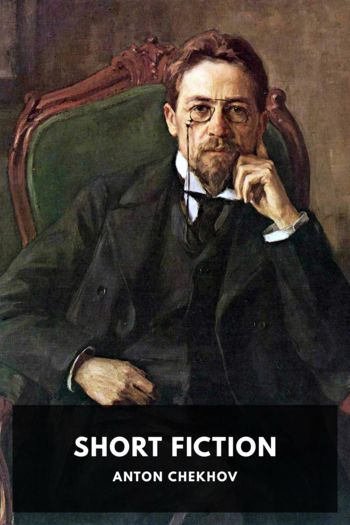
Anton Chekhov is widely considered to be one of the greatest short story writers in history. A physician by day, he’s famously quoted as saying, “Medicine is my lawful wife, and literature is my mistress.” Chekhov wrote nearly 300 short stories in his long writing career; while at first he wrote mainly to make a profit, as his interest in writing—and his skill—grew, he wrote stories that heavily influenced the modern development of the form.
His stories are famous for, among other things, their ambiguous morality and their often inconclusive nature. Chekhov was a firm believer that the role of the artist was to correctly pose a question, but not necessarily to answer it.
This collection contains all of his short stories and two novellas, all translated by Constance Garnett, and arranged by the date they were originally published.
Read free book «Short Fiction by Anton Chekhov (libby ebook reader .txt) 📕» - read online or download for free at americanlibrarybooks.com
- Author: Anton Chekhov
Read book online «Short Fiction by Anton Chekhov (libby ebook reader .txt) 📕». Author - Anton Chekhov
“Wretches! Good-for-nothing boys! You have spoiled the instrument!”
In the evening Anna’s husband played cards with his colleagues, who lived under the same roof in the government quarters. The wives of these gentlemen would come in—ugly, tastelessly dressed women, as coarse as cooks—and gossip would begin in the flat as tasteless and unattractive as the ladies themselves. Sometimes Modest Alexevitch would take Anna to the theatre. In the intervals he would never let her stir a step from his side, but walked about arm in arm with her through the corridors and the foyer. When he bowed to someone, he immediately whispered to Anna: “A civil councillor … visits at His Excellency’s”; or, “A man of means … has a house of his own.” When they passed the buffet Anna had a great longing for something sweet; she was fond of chocolate and apple cakes, but she had no money, and she did not like to ask her husband. He would take a pear, pinch it with his fingers, and ask uncertainly:
“How much?”
“Twenty-five kopecks!”
“I say!” he would reply, and put it down; but as it was awkward to leave the buffet without buying anything, he would order some seltzer water and drink the whole bottle himself, and tears would come into his eyes. And Anna hated him at such times.
And suddenly flushing crimson, he would say to her rapidly:
“Bow to that old lady!”
“But I don’t know her.”
“No matter. That’s the wife of the director of the local treasury! Bow, I tell you,” he would grumble insistently. “Your head won’t drop off.”
Anna bowed and her head certainly did not drop off, but it was agonizing. She did everything her husband wanted her to, and was furious with herself for having let him deceive her like the veriest idiot. She had only married him for his money, and yet she had less money now than before her marriage. In old days her father would sometimes give her twenty kopecks, but now she had not a farthing.
To take money by stealth or ask for it, she could not; she was afraid of her husband, she trembled before him. She felt as though she had been afraid of him for years. In her childhood the director of the high school had always seemed the most impressive and terrifying force in the world, sweeping down like a thunderstorm or a steam-engine ready to crush her; another similar force of which the whole family talked, and of which they were for some reason afraid, was His Excellency; then there were a dozen others, less formidable, and among them the teachers at the high school, with shaven upper lips, stern, implacable; and now finally, there was Modest Alexeitch, a man of principle, who even resembled the director in the face. And in Anna’s imagination all these forces blended together into one, and, in the form of a terrible, huge white bear, menaced the weak and erring such as her father. And she was afraid to say anything in opposition to her husband, and gave a forced smile, and tried to make a show of pleasure when she was coarsely caressed and defiled by embraces that excited her terror. Only once Pyotr Leontyitch had the temerity to ask for a loan of fifty roubles in order to pay some very irksome debt, but what an agony it had been!
“Very good; I’ll give it to you,” said Modest Alexeitch after a moment’s thought; “but I warn you I won’t help you again till you give up drinking. Such a failing is disgraceful in a man in the government service! I must remind you of the well-known fact that many capable people have been ruined by that passion, though they might possibly, with temperance, have risen in time to a very high position.”
And long-winded phrases followed: “inasmuch as … ,” “following upon which proposition … ,” “in view of the aforesaid contention …”; and Pyotr Leontyitch was in agonies of humiliation and felt an intense craving for alcohol.
And when the boys came to visit Anna, generally in broken boots and threadbare trousers, they, too, had to listen to sermons.
“Every man ought to have his duties!” Modest Alexeitch would say to them.
And he did not give them money. But he did give Anna bracelets, rings, and brooches, saying that these things would come in useful for a rainy day. And he often unlocked her drawer and made an inspection to see whether they were all safe.
IIMeanwhile winter came on. Long before Christmas there was an announcement in the local papers that the usual winter ball would take place on the twenty-ninth of December in the Hall of Nobility. Every evening after cards Modest Alexeitch was excitedly whispering with his colleagues’ wives and glancing at Anna, and then paced up and down the room for a long while, thinking. At last, late one evening, he stood still, facing Anna, and said:
“You ought to get yourself a ball dress. Do you understand? Only please consult Marya Grigoryevna and Natalya Kuzminishna.”
And he gave her a hundred roubles. She took the money, but she did not consult anyone when she ordered the ball dress; she spoke to no one but her father, and tried to imagine how her mother would have dressed for a ball. Her mother had always dressed in the latest fashion and had always taken trouble over Anna, dressing her elegantly like a doll, and had taught her to speak French and dance the mazurka superbly (she had been a governess for five years before her marriage). Like her mother, Anna could make a new dress out of an old one, clean gloves with benzine, hire jewels; and, like her mother, she knew how to screw up her eyes, lisp, assume graceful attitudes, fly into raptures when necessary, and throw a mournful and enigmatic look into her eyes. And from her father she had inherited the dark colour of her



Comments (0)