Short Fiction by Anton Chekhov (libby ebook reader .txt) 📕
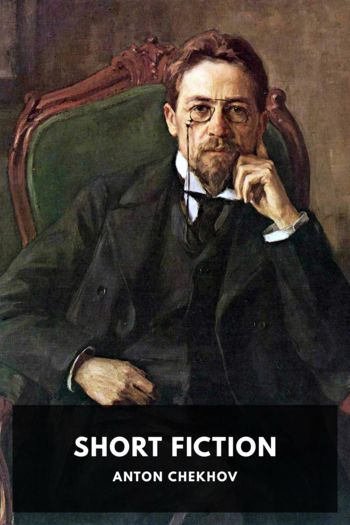
Description
Anton Chekhov is widely considered to be one of the greatest short story writers in history. A physician by day, he’s famously quoted as saying, “Medicine is my lawful wife, and literature is my mistress.” Chekhov wrote nearly 300 short stories in his long writing career; while at first he wrote mainly to make a profit, as his interest in writing—and his skill—grew, he wrote stories that heavily influenced the modern development of the form.
His stories are famous for, among other things, their ambiguous morality and their often inconclusive nature. Chekhov was a firm believer that the role of the artist was to correctly pose a question, but not necessarily to answer it.
This collection contains all of his short stories and two novellas, all translated by Constance Garnett, and arranged by the date they were originally published.
Read free book «Short Fiction by Anton Chekhov (libby ebook reader .txt) 📕» - read online or download for free at americanlibrarybooks.com
- Author: Anton Chekhov
Read book online «Short Fiction by Anton Chekhov (libby ebook reader .txt) 📕». Author - Anton Chekhov
And Anna went on driving about with three horses, going out hunting with Artynov, playing in one-act dramas, going out to supper, and was more and more rarely with her own family; they dined now alone. Pyotr Leontyitch was drinking more heavily than ever; there was no money, and the harmonium had been sold long ago for debt. The boys did not let him go out alone in the street now, but looked after him for fear he might fall down; and whenever they met Anna driving in Staro-Kievsky Street with a pair of horses and Artynov on the box instead of a coachman, Pyotr Leontyitch took off his top-hat, and was about to shout to her, but Petya and Andrusha took him by the arm, and said imploringly:
“You mustn’t, father. Hush, father!”
WhitebrowA hungry she-wolf got up to go hunting. Her cubs, all three of them, were sound asleep, huddled in a heap and keeping each other warm. She licked them and went off.
It was already March, a month of spring, but at night the trees snapped with the cold, as they do in December, and one could hardly put one’s tongue out without its being nipped. The wolf-mother was in delicate health and nervous; she started at the slightest sound, and kept hoping that no one would hurt the little ones at home while she was away. The smell of the tracks of men and horses, logs, piles of faggots, and the dark road with horse-dung on it frightened her; it seemed to her that men were standing behind the trees in the darkness, and that dogs were howling somewhere beyond the forest.
She was no longer young and her scent had grown feebler, so that it sometimes happened that she took the track of a fox for that of a dog, and even at times lost her way, a thing that had never been in her youth. Owing to the weakness of her health she no longer hunted calves and big sheep as she had in old days, and kept her distance now from mares with colts; she fed on nothing but carrion; fresh meat she tasted very rarely, only in the spring when she would come upon a hare and take away her young, or make her way into a peasant’s stall where there were lambs.
Some three miles from her lair there stood a winter hut on the posting road. There lived the keeper Ignat, an old man of seventy, who was always coughing and talking to himself; at night he was usually asleep, and by day he wandered about the forest with a single-barrelled gun, whistling to the hares. He must have worked among machinery in early days, for before he stood still he always shouted to himself: “Stop the machine!” and before going on: “Full speed!” He had a huge black dog of indeterminate breed, called Arapka. When it ran too far ahead he used to shout to it: “Reverse action!” Sometimes he used to sing, and as he did so staggered violently, and often fell down (the wolf thought the wind blew him over), and shouted: “Run off the rails!”
The wolf remembered that, in the summer and autumn, a ram and two ewes were pasturing near the winter hut, and when she had run by not so long ago she fancied that she had heard bleating in the stall. And now, as she got near the place, she reflected that it was already March, and, by that time, there would certainly be lambs in the stall. She was tormented by hunger, she thought with what greediness she would eat a lamb, and these thoughts made her teeth snap, and her eyes glitter in the darkness like two sparks of light.
Ignat’s hut, his barn, cattle-stall, and well were surrounded by high snowdrifts. All was still. Arapka was, most likely, asleep in the barn.
The wolf clambered over a snowdrift on to the stall, and began scratching away the thatched roof with her paws and her nose. The straw was rotten and decaying, so that the wolf almost fell through; all at once a smell of warm steam, of manure, and of sheep’s milk floated straight to her nostrils. Down below, a lamb, feeling the cold, bleated softly. Leaping through the hole, the wolf fell with her four paws and chest on something soft and warm, probably a sheep, and at the same moment, something in the stall suddenly began whining, barking, and going off into a shrill little yap; the sheep huddled against the wall, and the wolf, frightened, snatched the first thing her teeth fastened on, and dashed away. …
She ran at her utmost speed, while Arapka, who by now had scented the wolf, howled furiously, the frightened hens cackled, and Ignat, coming out into the porch, shouted: “Full speed! Blow the whistle!”
And he whistled like a steam-engine, and then shouted: “Ho-ho-ho-ho!” and all this noise was repeated by the forest echo. When, little by little, it all died away, the wolf somewhat recovered herself, and began to notice that the prey she held in her teeth and dragged along the snow was heavier and, as it were, harder than lambs usually were at that season; and it smelt somehow different, and uttered strange sounds. … The wolf stopped and laid her burden on the snow, to rest and begin eating it, then all at once she leapt back in disgust. It was not a lamb, but a black puppy, with a big head and long legs, of a large breed, with a white patch on his brow, like Arapka’s. Judging from his manners he was a simple, ignorant, yard-dog. He licked his crushed and wounded back, and, as though nothing was the matter, wagged his tail and barked at the wolf. She growled like a dog, and



Comments (0)