Short Fiction by Anton Chekhov (libby ebook reader .txt) 📕
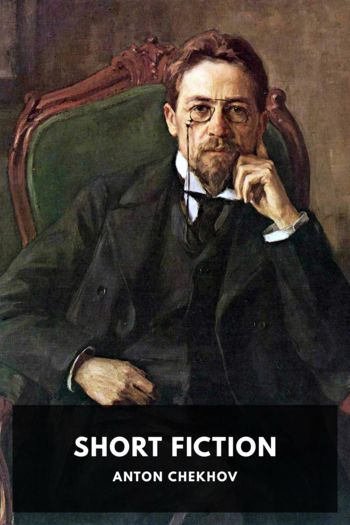
Description
Anton Chekhov is widely considered to be one of the greatest short story writers in history. A physician by day, he’s famously quoted as saying, “Medicine is my lawful wife, and literature is my mistress.” Chekhov wrote nearly 300 short stories in his long writing career; while at first he wrote mainly to make a profit, as his interest in writing—and his skill—grew, he wrote stories that heavily influenced the modern development of the form.
His stories are famous for, among other things, their ambiguous morality and their often inconclusive nature. Chekhov was a firm believer that the role of the artist was to correctly pose a question, but not necessarily to answer it.
This collection contains all of his short stories and two novellas, all translated by Constance Garnett, and arranged by the date they were originally published.
Read free book «Short Fiction by Anton Chekhov (libby ebook reader .txt) 📕» - read online or download for free at americanlibrarybooks.com
- Author: Anton Chekhov
Read book online «Short Fiction by Anton Chekhov (libby ebook reader .txt) 📕». Author - Anton Chekhov
The first to break the silence was Nikandr Sapozhnikov, who had not till then let fall a single word. Whether he envied the tramp’s transparent happiness, or whether he felt in his heart that dreams of happiness were out of keeping with the grey fog and the dirty brown mud—anyway, he looked sternly at the tramp and said:
“It’s all very well, to be sure, only you won’t reach those plenteous regions, brother. How could you? Before you’d gone two hundred miles you’d give up your soul to God. Just look what a weakling you are! Here you’ve hardly gone five miles and you can’t get your breath.”
The tramp turned slowly toward Nikandr, and the blissful smile vanished from his face. He looked with a scared and guilty air at the peasant’s staid face, apparently remembered something, and bent his head. A silence followed again. … All three were pondering. The peasants were racking their brains in the effort to grasp in their imagination what can be grasped by none but God—that is, the vast expanse dividing them from the land of freedom. Into the tramp’s mind thronged clear and distinct pictures more terrible than that expanse. Before him rose vividly the picture of the long legal delays and procrastinations, the temporary and permanent prisons, the convict boats, the wearisome stoppages on the way, the frozen winters, illnesses, deaths of companions. …
The tramp blinked guiltily, wiped the tiny drops of sweat from his forehead with his sleeve, drew a deep breath as though he had just leapt out of a very hot bath, then wiped his forehead with the other sleeve and looked round fearfully.
“That’s true; you won’t get there!” Ptaha agreed. “You are not much of a walker! Look at you—nothing but skin and bone! You’ll die, brother!”
“Of course he’ll die! What could he do?” said Nikandr. “He’s fit for the hospital now. … For sure!”
The man who had forgotten his name looked at the stern, unconcerned faces of his sinister companions, and without taking off his cap, hurriedly crossed himself, staring with wide-open eyes. … He trembled, his head shook, and he began twitching all over, like a caterpillar when it is stepped upon. …
“Well, it’s time to go,” said Nikandr, getting up; “we’ve had a rest.”
A minute later they were stepping along the muddy road. The tramp was more bent than ever, and he thrust his hands further up his sleeves. Ptaha was silent.
Hush!Ivan Yegoritch Krasnyhin, a fourth-rate journalist, returns home late at night, grave and careworn, with a peculiar air of concentration. He looks like a man expecting a police-raid or contemplating suicide. Pacing about his rooms he halts abruptly, ruffles up his hair, and says in the tone in which Laertes announces his intention of avenging his sister:
“Shattered, soul-weary, a sick load of misery on the heart … and then to sit down and write. And this is called life! How is it nobody has described the agonizing discord in the soul of a writer who has to amuse the crowd when his heart is heavy or to shed tears at the word of command when his heart is light? I must be playful, coldly unconcerned, witty, but what if I am weighed down with misery, what if I am ill, or my child is dying or my wife in anguish!”
He says this, brandishing his fists and rolling his eyes. … Then he goes into the bedroom and wakes his wife.
“Nadya,” he says, “I am sitting down to write. … Please don’t let anyone interrupt me. I can’t write with children crying or cooks snoring. … See, too, that there’s tea and … steak or something. … You know that I can’t write without tea. … Tea is the one thing that gives me the energy for my work.”
Returning to his room he takes off his coat, waistcoat, and boots. He does this very slowly; then, assuming an expression of injured innocence, he sits down to his table.
There is nothing casual, nothing ordinary on his writing-table, down to the veriest trifle everything bears the stamp of a stern, deliberately planned programme. Little busts and photographs of distinguished writers, heaps of rough manuscripts, a volume of Byelinsky with a page turned down, part of a skull by way of an ashtray, a sheet of newspaper folded carelessly, but so that a passage is uppermost, boldly marked in blue pencil with the word “disgraceful.” There are a dozen sharply-pointed pencils and several penholders fitted with new nibs, put in readiness that no accidental breaking of a pen may for a single second interrupt the flight of his creative fancy.
Ivan Yegoritch throws himself back in his chair, and closing his eyes concentrates himself on his subject. He hears his wife shuffling about in her slippers and splitting shavings to heat the samovar. She is hardly awake, that is apparent from the way the knife and the lid of the samovar keep dropping from her hands. Soon the hissing of the samovar and the spluttering of the frying meat reaches him. His wife is still splitting shavings and rattling with the doors and blowers of the stove.
All at once Ivan Yegoritch starts, opens frightened eyes, and begins to sniff the air.
“Heavens! the stove is smoking!” he groans, grimacing with a face of agony. “Smoking! That insufferable woman makes a point of trying to poison me! How, in God’s Name, am I to write in such surroundings, kindly tell me that?”
He rushes into the kitchen and breaks into a theatrical wail. When a little later, his wife, stepping cautiously on tiptoe, brings him in a glass of tea, he is sitting in an easy chair as before with his eyes closed, absorbed in his article. He does not stir, drums lightly on his forehead with two fingers, and pretends he is not aware of his wife’s presence. … His face wears an expression of injured innocence.
Like a girl who has been presented with a costly fan, he



Comments (0)