Short Fiction by Anton Chekhov (libby ebook reader .txt) 📕
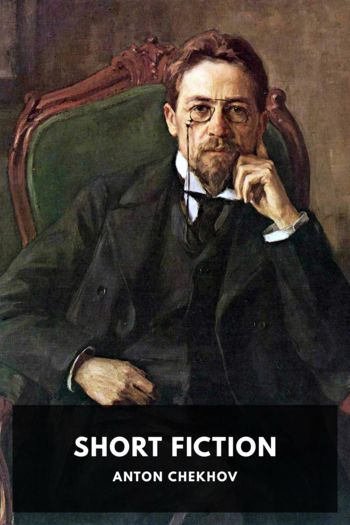
Description
Anton Chekhov is widely considered to be one of the greatest short story writers in history. A physician by day, he’s famously quoted as saying, “Medicine is my lawful wife, and literature is my mistress.” Chekhov wrote nearly 300 short stories in his long writing career; while at first he wrote mainly to make a profit, as his interest in writing—and his skill—grew, he wrote stories that heavily influenced the modern development of the form.
His stories are famous for, among other things, their ambiguous morality and their often inconclusive nature. Chekhov was a firm believer that the role of the artist was to correctly pose a question, but not necessarily to answer it.
This collection contains all of his short stories and two novellas, all translated by Constance Garnett, and arranged by the date they were originally published.
Read free book «Short Fiction by Anton Chekhov (libby ebook reader .txt) 📕» - read online or download for free at americanlibrarybooks.com
- Author: Anton Chekhov
Read book online «Short Fiction by Anton Chekhov (libby ebook reader .txt) 📕». Author - Anton Chekhov
“What would be left?”
“Bashi-Bazouke and brothels. In my next article I’ll talk about that perhaps. Thank you for reminding me.”
And a week later my friend kept his promise. That was just at the period—in the eighties—when people were beginning to talk and write of nonresistance, of the right to judge, to punish, to make war; when some people in our set were beginning to do without servants, to retire into the country, to work on the land, and to renounce animal food and carnal love.
After reading her brother’s article, Vera Semyonovna pondered and hardly perceptibly shrugged her shoulders.
“Very nice!” she said. “But still there’s a great deal I don’t understand. For instance, in Leskov’s story Belonging to the Cathedral there is a queer gardener who sows for the benefit of all—for customers, for beggars, and any who care to steal. Did he behave sensibly?”
From his sister’s tone and expression Vladimir Semyonitch saw that she did not like his article, and, almost for the first time in his life, his vanity as an author sustained a shock. With a shade of irritation he answered:
“Theft is immoral. To sow for thieves is to recognise the right of thieves to existence. What would you think if I were to establish a newspaper and, dividing it into sections, provide for blackmailing as well as for liberal ideas? Following the example of that gardener, I ought, logically, to provide a section for blackmailers, the intellectual scoundrels? Yes.”
Vera Semyonovna made no answer. She got up from the table, moved languidly to the sofa and lay down.
“I don’t know, I know nothing about it,” she said musingly. “You are probably right, but it seems to me, I feel somehow, that there’s something false in our resistance to evil, as though there were something concealed or unsaid. God knows, perhaps our methods of resisting evil belong to the category of prejudices which have become so deeply rooted in us, that we are incapable of parting with them, and therefore cannot form a correct judgment of them.”
“How do you mean?”
“I don’t know how to explain to you. Perhaps man is mistaken in thinking that he is obliged to resist evil and has a right to do so, just as he is mistaken in thinking, for instance, that the heart looks like an ace of hearts. It is very possible in resisting evil we ought not to use force, but to use what is the very opposite of force—if you, for instance, don’t want this picture stolen from you, you ought to give it away rather than lock it up. …”
“That’s clever, very clever! If I want to marry a rich, vulgar woman, she ought to prevent me from such a shabby action by hastening to make me an offer herself!”
The brother and sister talked till midnight without understanding each other. If any outsider had overheard them he would hardly have been able to make out what either of them was driving at.
They usually spent the evening at home. There were no friends’ houses to which they could go, and they felt no need for friends; they only went to the theatre when there was a new play—such was the custom in literary circles—they did not go to concerts, for they did not care for music.
“You may think what you like,” Vera Semyonovna began again the next day, “but for me the question is to a great extent settled. I am firmly convinced that I have no grounds for resisting evil directed against me personally. If they want to kill me, let them. My defending myself will not make the murderer better. All I have now to decide is the second half of the question: how I ought to behave to evil directed against my neighbours?”
“Vera, mind you don’t become rabid!” said Vladimir Semyonitch, laughing. “I see nonresistance is becoming your idée fixe!”
He wanted to turn off these tedious conversations with a jest, but somehow it was beyond a jest; his smile was artificial and sour. His sister gave up sitting beside his table and gazing reverently at his writing hand, and he felt every evening that behind him on the sofa lay a person who did not agree with him. And his back grew stiff and numb, and there was a chill in his soul. An author’s vanity is vindictive, implacable, incapable of forgiveness, and his sister was the first and only person who had laid bare and disturbed that uneasy feeling, which is like a big box of crockery, easy to unpack but impossible to pack up again as it was before.
Weeks and months passed by, and his sister clung to her ideas, and did not sit down by the table. One spring evening Vladimir Semyonitch was sitting at his table writing an article. He was reviewing a novel which described how a village schoolmistress refused the man whom she loved and who loved her, a man both wealthy and intellectual, simply because marriage made her work as a schoolmistress impossible. Vera Semyonovna lay on the sofa and brooded.
“My God, how slow it is!” she said, stretching. “How insipid and empty life is! I don’t know what to do with myself, and you are wasting your best years in goodness knows what. Like some alchemist, you are rummaging in old rubbish that nobody wants. My God!”
Vladimir Semyonitch dropped his pen and slowly looked round at his sister.
“It’s depressing to look at you!” said his sister. “Wagner in Faust dug up worms, but he was looking for a treasure, anyway, and you are looking for worms for the sake of the worms.”
“That’s vague!”
“Yes, Volodya; all these days I’ve been thinking, I’ve been thinking painfully for a long time, and I have come to the conclusion that you are hopelessly reactionary and conventional. Come, ask yourself what is the object of your zealous, conscientious work?





Comments (0)