Short Fiction by Anton Chekhov (libby ebook reader .txt) 📕
Description
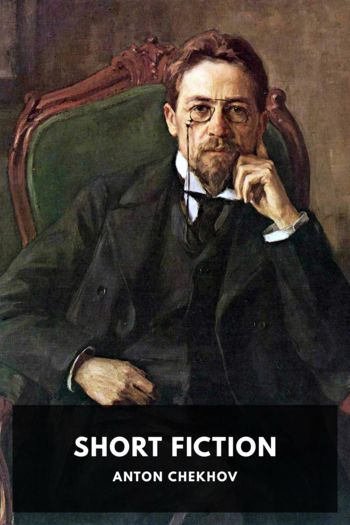
Anton Chekhov is widely considered to be one of the greatest short story writers in history. A physician by day, he’s famously quoted as saying, “Medicine is my lawful wife, and literature is my mistress.” Chekhov wrote nearly 300 short stories in his long writing career; while at first he wrote mainly to make a profit, as his interest in writing—and his skill—grew, he wrote stories that heavily influenced the modern development of the form.
His stories are famous for, among other things, their ambiguous morality and their often inconclusive nature. Chekhov was a firm believer that the role of the artist was to correctly pose a question, but not necessarily to answer it.
This collection contains all of his short stories and two novellas, all translated by Constance Garnett, and arranged by the date they were originally published.
Read free book «Short Fiction by Anton Chekhov (libby ebook reader .txt) 📕» - read online or download for free at americanlibrarybooks.com
- Author: Anton Chekhov
Read book online «Short Fiction by Anton Chekhov (libby ebook reader .txt) 📕». Author - Anton Chekhov
“Mamma, the cat has got pups!” they shout.
Mamma is sitting in the drawing room with some unknown gentleman. Seeing the children unwashed, undressed, with their nightgowns held up high, she is embarrassed, and looks at them severely.
“Let your nightgowns down, disgraceful children,” she says. “Go out of the room, or I will punish you.”
But the children do not notice either mamma’s threats or the presence of a stranger. They put the kittens down on the carpet, and go off into deafening squeals. The mother walks round them, mewing imploringly. When, a little afterwards, the children are dragged off to the nursery, dressed, made to say their prayers, and given their breakfast, they are full of a passionate desire to get away from these prosaic duties as quickly as possible, and to run to the kitchen again.
Their habitual pursuits and games are thrown completely into the background.
The kittens throw everything into the shade by making their appearance in the world, and supply the great sensation of the day. If Nina or Vanya had been offered forty pounds of sweets or ten thousand kopecks for each kitten, they would have rejected such a barter without the slightest hesitation. In spite of the heated protests of the nurse and the cook, the children persist in sitting by the cat’s box in the kitchen, busy with the kittens till dinnertime. Their faces are earnest and concentrated and express anxiety. They are worried not so much by the present as by the future of the kittens. They decide that one kitten shall remain at home with the old cat to be a comfort to her mother, while the second shall go to their summer villa, and the third shall live in the cellar, where there are ever so many rats.
“But why don’t they look at us?” Nina wondered. “Their eyes are blind like the beggars’.”
Vanya, too, is perturbed by this question. He tries to open one kitten’s eyes, and spends a long time puffing and breathing hard over it, but his operation is unsuccessful. They are a good deal troubled, too, by the circumstance that the kittens obstinately refuse the milk and the meat that is offered to them. Everything that is put before their little noses is eaten by their grey mamma.
“Let’s build the kittens little houses,” Vanya suggests. “They shall live in different houses, and the cat shall come and pay them visits. …”
Cardboard hatboxes are put in the different corners of the kitchen and the kittens are installed in them. But this division turns out to be premature; the cat, still wearing an imploring and sentimental expression on her face, goes the round of all the hatboxes, and carries off her children to their original position.
“The cat’s their mother,” observed Vanya, “but who is their father?”
“Yes, who is their father?” repeats Nina.
“They must have a father.”
Vanya and Nina are a long time deciding who is to be the kittens’ father, and, in the end, their choice falls on a big dark-red horse without a tail, which is lying in the store-cupboard under the stairs, together with other relics of toys that have outlived their day. They drag him up out of the store-cupboard and stand him by the box.
“Mind now!” they admonish him, “stand here and see they behave themselves properly.”
All this is said and done in the gravest way, with an expression of anxiety on their faces. Vanya and Nina refuse to recognise the existence of any world but the box of kittens. Their joy knows no bounds. But they have to pass through bitter, agonising moments, too.
Just before dinner, Vanya is sitting in his father’s study, gazing dreamily at the table. A kitten is moving about by the lamp, on stamped note paper. Vanya is watching its movements, and thrusting first a pencil, then a match into its little mouth. … All at once, as though he has sprung out of the floor, his father is beside the table.
“What’s this?” Vanya hears, in an angry voice.
“It’s … it’s the kitty, papa. …”
“I’ll give it you; look what you have done, you naughty boy! You’ve dirtied all my paper!”
To Vanya’s great surprise his papa does not share his partiality for the kittens, and, instead of being moved to enthusiasm and delight, he pulls Vanya’s ear and shouts:
“Stepan, take away this horrid thing.”
At dinner, too, there is a scene. … During the second course there is suddenly the sound of a shrill mew. They begin to investigate its origin, and discover a kitten under Nina’s pinafore.
“Nina, leave the table!” cries her father angrily. “Throw the kittens in the cesspool! I won’t have the nasty things in the house! …”
Vanya and Nina are horrified. Death in the cesspool, apart from its cruelty, threatens to rob the cat and the wooden horse of their children, to lay waste the cat’s box, to destroy their plans for the future, that fair future in which one cat will be a comfort to its old mother, another will live in the country, while the third will catch rats in the cellar. The children begin to cry and entreat that the kittens may be spared. Their father consents, but on the condition that the children do not go into the kitchen and touch the kittens.
After dinner, Vanya and Nina slouch about the rooms, feeling depressed. The prohibition of visits to the kitchen has reduced them to dejection. They refuse sweets, are naughty, and are rude to their mother. When their uncle Petrusha comes in the evening, they draw him aside, and complain to him of their father, who wanted to throw the kittens into the cesspool.
“Uncle Petrusha, tell mamma to have the kittens taken to the nursery,” the children beg their uncle, “do-o tell her.”
“There, there … very well,” says their uncle, waving them off. “All right.”
Uncle Petrusha does not usually come alone. He is accompanied by Nero, a big black dog of Danish breed, with drooping ears, and a tail as hard as a stick. The dog is silent,



Comments (0)