Short Fiction by Anton Chekhov (libby ebook reader .txt) 📕
Description
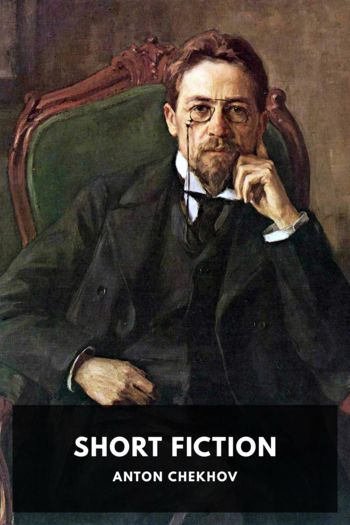
Anton Chekhov is widely considered to be one of the greatest short story writers in history. A physician by day, he’s famously quoted as saying, “Medicine is my lawful wife, and literature is my mistress.” Chekhov wrote nearly 300 short stories in his long writing career; while at first he wrote mainly to make a profit, as his interest in writing—and his skill—grew, he wrote stories that heavily influenced the modern development of the form.
His stories are famous for, among other things, their ambiguous morality and their often inconclusive nature. Chekhov was a firm believer that the role of the artist was to correctly pose a question, but not necessarily to answer it.
This collection contains all of his short stories and two novellas, all translated by Constance Garnett, and arranged by the date they were originally published.
Read free book «Short Fiction by Anton Chekhov (libby ebook reader .txt) 📕» - read online or download for free at americanlibrarybooks.com
- Author: Anton Chekhov
Read book online «Short Fiction by Anton Chekhov (libby ebook reader .txt) 📕». Author - Anton Chekhov
Zapoikin continued while his listeners began whispering together. His speech pleased everyone and drew some tears, but a good many things in it seemed strange. In the first place they could not make out why the orator called the deceased Prokofy Osipitch when his name was Kirill Ivanovitch. In the second, everyone knew that the deceased had spent his whole life quarelling with his lawful wife, and so consequently could not be called a bachelor; in the third, he had a thick red beard and had never been known to shave, and so no one could understand why the orator spoke of his shaven face. The listeners were perplexed; they glanced at each other and shrugged their shoulders.
“Prokofy Osipitch,” continued the orator, looking with an air of inspiration into the grave, “your face was plain, even hideous, you were morose and austere, but we all know that under that outer husk there beat an honest, friendly heart!”
Soon the listeners began to observe something strange in the orator himself. He gazed at one point, shifted about uneasily and began to shrug his shoulders too. All at once he ceased speaking, and gaping with astonishment, turned to Poplavsky.
“I say! he’s alive,” he said, staring with horror.
“Who’s alive?”
“Why, Prokofy Osipitch, there he stands, by that tombstone!”
“He never died! It’s Kirill Ivanovitch who’s dead.”
“But you told me yourself your secretary was dead.”
“Kirill Ivanovitch was our secretary. You’ve muddled it, you queer fish. Prokofy Osipitch was our secretary before, that’s true, but two years ago he was transferred to the second division as head clerk.”
“How the devil is one to tell?”
“Why are you stopping? Go on, it’s awkward.”
Zapoikin turned to the grave, and with the same eloquence continued his interrupted speech. Prokofy Osipitch, an old clerk with a clean-shaven face, was in fact standing by a tombstone. He looked at the orator and frowned angrily.
“Well, you have put your foot into it, haven’t you!” laughed his fellow-clerks as they returned from the funeral with Zapoikin. “Burying a man alive!”
“It’s unpleasant, young man,” grumbled Prokofy Osipitch. “Your speech may be all right for a dead man, but in reference to a living one it is nothing but sarcasm! Upon my soul what have you been saying? Disinterested, incorruptible, won’t take bribes! Such things can only be said of the living in sarcasm. And no one asked you, sir, to expatiate on my face. Plain, hideous, so be it, but why exhibit my countenance in that public way! It’s insulting.”
A Work of ArtSasha Smirnov, the only son of his mother, holding under his arm, something wrapped up in No. 223 of the Financial News, assumed a sentimental expression, and went into Dr. Koshelkov’s consulting room.
“Ah, dear lad!” was how the doctor greeted him. “Well! how are we feeling? What good news have you for me?”
Sasha blinked, laid his hand on his heart and said in an agitated voice: “Mamma sends her greetings to you, Ivan Nikolaevitch, and told me to thank you. … I am the only son of my mother and you have saved my life … you have brought me through a dangerous illness and … we do not know how to thank you.”
“Nonsense, lad!” said the doctor, highly delighted. “I only did what anyone else would have done in my place.”
“I am the only son of my mother … we are poor people and cannot of course repay you, and we are quite ashamed, doctor, although, however, mamma and I … the only son of my mother, earnestly beg you to accept in token of our gratitude … this object, which … An object of great value, an antique bronze. … A rare work of art.”
“You shouldn’t!” said the doctor, frowning. “What’s this for!”
“No, please do not refuse,” Sasha went on muttering as he unpacked the parcel. “You will wound mamma and me by refusing. … It’s a fine thing … an antique bronze. … It was left us by my deceased father and we have kept it as a precious souvenir. My father used to buy antique bronzes and sell them to connoisseurs … Mamma and I keep on the business now.”
Sasha undid the object and put it solemnly on the table. It was a not very tall candelabra of old bronze and artistic workmanship. It consisted of a group: on the pedestal stood two female figures in the costume of Eve and in attitudes for the description of which I have neither the courage nor the fitting temperament. The figures were smiling coquettishly and altogether looked as though, had it not been for the necessity of supporting the candlestick, they would have skipped off the pedestal and have indulged in an orgy such as is improper for the reader even to imagine.
Looking at the present, the doctor slowly scratched behind his ear, cleared his throat and blew his nose irresolutely.
“Yes, it certainly is a fine thing,” he muttered, “but … how shall I express it? … it’s … h’m … it’s not quite for family reading. It’s not simply décolleté but beyond anything, dash it all. …”
“How do you mean?”
“The serpent-tempter himself could not have invented anything worse. … Why, to put such a phantasmagoria on the table would be defiling the whole flat.”
“What a strange way of looking at art, doctor!” said Sasha, offended. “Why, it is an artistic thing, look at it! There is so much beauty and elegance that it fills one’s soul with



Comments (0)