Short Fiction by Anton Chekhov (libby ebook reader .txt) 📕
Description
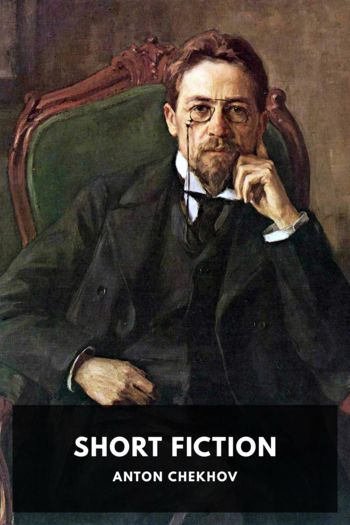
Anton Chekhov is widely considered to be one of the greatest short story writers in history. A physician by day, he’s famously quoted as saying, “Medicine is my lawful wife, and literature is my mistress.” Chekhov wrote nearly 300 short stories in his long writing career; while at first he wrote mainly to make a profit, as his interest in writing—and his skill—grew, he wrote stories that heavily influenced the modern development of the form.
His stories are famous for, among other things, their ambiguous morality and their often inconclusive nature. Chekhov was a firm believer that the role of the artist was to correctly pose a question, but not necessarily to answer it.
This collection contains all of his short stories and two novellas, all translated by Constance Garnett, and arranged by the date they were originally published.
Read free book «Short Fiction by Anton Chekhov (libby ebook reader .txt) 📕» - read online or download for free at americanlibrarybooks.com
- Author: Anton Chekhov
Read book online «Short Fiction by Anton Chekhov (libby ebook reader .txt) 📕». Author - Anton Chekhov
One summer morning Vera Semyonovna, dressed for travelling with a satchel over her shoulder, went in to her brother and coldly kissed him on the forehead.
“Where are you going?” he asked with surprise.
“To the province of N⸺ to do vaccination work.” Her brother went out into the street with her.
“So that’s what you’ve decided upon, you queer girl,” he muttered. “Don’t you want some money?”
“No, thank you. Goodbye.”
The sister shook her brother’s hand and set off.
“Why don’t you have a cab?” cried Vladimir Semyonitch.
She did not answer. Her brother gazed after her, watched her rusty-looking waterproof, the swaying of her figure as she slouched along, forced himself to sigh, but did not succeed in rousing a feeling of regret. His sister had become a stranger to him. And he was a stranger to her. Anyway, she did not once look round.
Going back to his room, Vladimir Semyonitch at once sat down to the table and began to work at his article.
I never saw Vera Semyonovna again. Where she is now I do not know. And Vladimir Semyonitch went on writing his articles, laying wreaths on coffins, singing “Gaudeamus,” busying himself over the Mutual Aid Society of Moscow Journalists.
He fell ill with inflammation of the lungs; he was ill in bed for three months—at first at home, and afterwards in the Golitsyn Hospital. An abscess developed in his knee. People said he ought to be sent to the Crimea, and began getting up a collection for him. But he did not go to the Crimea—he died. We buried him in the Vagankovsky Cemetery, on the left side, where artists and literary men are buried.
One day we writers were sitting in the Tatars’ restaurant. I mentioned that I had lately been in the Vagankovsky Cemetery and had seen Vladimir Semyonitch’s grave there. It was utterly neglected and almost indistinguishable from the rest of the ground, the cross had fallen; it was necessary to collect a few roubles to put it in order.
But they listened to what I said unconcernedly, made no answer, and I could not collect a farthing. No one remembered Vladimir Semyonitch. He was utterly forgotten.
An IncidentMorning. Brilliant sunshine is piercing through the frozen lacework on the windowpanes into the nursery. Vanya, a boy of six, with a cropped head and a nose like a button, and his sister Nina, a short, chubby, curly-headed girl of four, wake up and look crossly at each other through the bars of their cots.
“Oo-oo-oo! naughty children!” grumbles their nurse. “Good people have had their breakfast already, while you can’t get your eyes open.”
The sunbeams frolic over the rugs, the walls, and nurse’s skirts, and seem inviting the children to join in their play, but they take no notice. They have woken up in a bad humour. Nina pouts, makes a grimace, and begins to whine:
“Brea-eakfast, nurse, breakfast!”
Vanya knits his brows and ponders what to pitch upon to howl over. He has already begun screwing up his eyes and opening his mouth, but at that instant the voice of mamma reaches them from the drawing room, saying: “Don’t forget to give the cat her milk, she has a family now!”
The children’s puckered countenances grow smooth again as they look at each other in astonishment. Then both at once begin shouting, jump out of their cots, and filling the air with piercing shrieks, run barefoot, in their nightgowns, to the kitchen.
“The cat has puppies!” they cry. “The cat has got puppies!”
Under the bench in the kitchen there stands a small box, the one in which Stepan brings coal when he lights the fire. The cat is peeping out of the box. There is an expression of extreme exhaustion on her grey face; her green eyes, with their narrow black pupils, have a languid, sentimental look. From her face it is clear that the only thing lacking to complete her happiness is the presence in the box of “him,” the father of her children, to whom she had abandoned herself so recklessly! She wants to mew, and opens her mouth wide, but nothing but a hiss comes from her throat; the squealing of the kittens is audible.
The children squat on their heels before the box, and, motionless, holding their breath, gaze at the cat. … They are surprised, impressed, and do not hear nurse grumbling as she pursues them. The most genuine delight shines in the eyes of both.
Domestic animals play a scarcely noticed but undoubtedly beneficial part in the education and life of children. Which of us does not remember powerful but magnanimous dogs, lazy lapdogs, birds dying in captivity, dull-witted but haughty turkeys, mild old tabby cats, who forgave us when we trod on their tails for fun and caused them agonising pain? I even fancy, sometimes, that the patience, the fidelity, the readiness to forgive, and the sincerity which are characteristic of our domestic animals have a far stronger and more definite effect on the mind of a child than the long exhortations of some dry, pale Karl Karlovitch, or the misty expositions of a governess, trying to prove to children that water is made up of hydrogen and oxygen.
“What little things!” says Nina, opening her eyes wide and going off into a joyous laugh. “They are like mice!”
“One, two, three,” Vanya counts. “Three kittens. So there is one for you, one for me, and one for somebody else, too.”
“Murrm … murrm …” purrs the mother, flattered by their attention. “Murrm.”
After gazing at the kittens, the children take them from under the cat, and begin squeezing them in their hands, then, not satisfied with this, they put them in the skirts of their nightgowns,



Comments (0)