Short Fiction by Anton Chekhov (libby ebook reader .txt) 📕
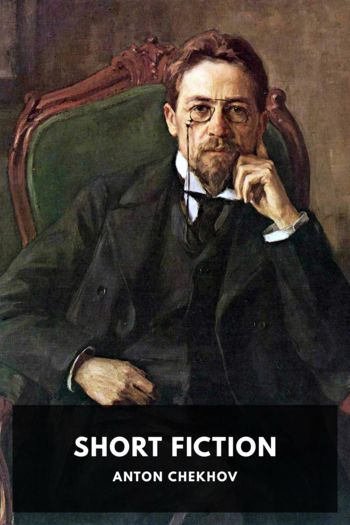
Description
Anton Chekhov is widely considered to be one of the greatest short story writers in history. A physician by day, he’s famously quoted as saying, “Medicine is my lawful wife, and literature is my mistress.” Chekhov wrote nearly 300 short stories in his long writing career; while at first he wrote mainly to make a profit, as his interest in writing—and his skill—grew, he wrote stories that heavily influenced the modern development of the form.
His stories are famous for, among other things, their ambiguous morality and their often inconclusive nature. Chekhov was a firm believer that the role of the artist was to correctly pose a question, but not necessarily to answer it.
This collection contains all of his short stories and two novellas, all translated by Constance Garnett, and arranged by the date they were originally published.
Read free book «Short Fiction by Anton Chekhov (libby ebook reader .txt) 📕» - read online or download for free at americanlibrarybooks.com
- Author: Anton Chekhov
Read book online «Short Fiction by Anton Chekhov (libby ebook reader .txt) 📕». Author - Anton Chekhov
“I have heard of those treasures,” the old man muttered grimly.
“Yes …” Panteley pondered again. “So it is. …”
A silence followed. The overseer looked dreamily into the distance, gave a laugh and pulled the rein, still with the same expression as though he had forgotten something or left something unsaid. The horse reluctantly started at a walking pace. After riding a hundred paces Panteley shook his head resolutely, roused himself from his thoughts and, lashing his horse, set off at a trot.
The shepherds were left alone.
“That was Panteley from Makarov’s estate,” said the old man. “He gets a hundred and fifty a year and provisions found, too. He is a man of education. …”
The sheep, waking up—there were about three thousand of them—began without zest to while away the time, nipping at the low, half-trampled grass. The sun had not yet risen, but by now all the barrows could be seen and, like a cloud in the distance, Saur’s Grave with its peaked top. If one clambered up on that tomb one could see the plain from it, level and boundless as the sky, one could see villages, manor-houses, the settlements of the Germans and of the Molokani, and a long-sighted Kalmuck could even see the town and the railway-station. Only from there could one see that there was something else in the world besides the silent steppe and the ancient barrows, that there was another life that had nothing to do with buried treasure and the thoughts of sheep.
The old man felt beside him for his crook—a long stick with a hook at the upper end—and got up. He was silent and thoughtful. The young shepherd’s face had not lost the look of childish terror and curiosity. He was still under the influence of what he had heard in the night, and impatiently awaiting fresh stories.
“Grandfather,” he asked, getting up and taking his crook, “what did your brother Ilya do with the soldier?”
The old man did not hear the question. He looked absentmindedly at the young man, and answered, mumbling with his lips:
“I keep thinking, Sanka, about that writing that was shown to that soldier at Ivanovka. I didn’t tell Panteley—God be with him—but you know in that writing the place was marked out so that even a woman could find it. Do you know where it is? At Bogata Bylotchka at the spot, you know, where the ravine parts like a goose’s foot into three little ravines; it is the middle one.”
“Well, will you dig?”
“I will try my luck …”
“And, grandfather, what will you do with the treasure when you find it?”
“Do with it?” laughed the old man. “H’m! … If only I could find it then. … I would show them all. … H’m! … I should know what to do. …”
And the old man could not answer what he would do with the treasure if he found it. That question had presented itself to him that morning probably for the first time in his life, and judging from the expression of his face, indifferent and uncritical, it did not seem to him important and deserving of consideration. In Sanka’s brain another puzzled question was stirring: why was it only old men searched for hidden treasure, and what was the use of earthly happiness to people who might die any day of old age? But Sanka could not put this perplexity into words, and the old man could scarcely have found an answer to it.
An immense crimson sun came into view surrounded by a faint haze. Broad streaks of light, still cold, bathing in the dewy grass, lengthening out with a joyous air as though to prove they were not weary of their task, began spreading over the earth. The silvery wormwood, the blue flowers of the pig’s onion, the yellow mustard, the cornflowers—all burst into gay colours, taking the sunlight for their own smile.
The old shepherd and Sanka parted and stood at the further sides of the flock. Both stood like posts, without moving, staring at the ground and thinking. The former was haunted by thoughts of fortune, the latter was pondering on what had been said in the night; what interested him was not the fortune itself, which he did not want and could not imagine, but the fantastic, fairytale character of human happiness.
A hundred sheep started and, in some inexplicable panic as at a signal, dashed away from the flock; and as though the thoughts of the sheep—tedious and oppressive—had for a moment infected Sanka also, he, too, dashed aside in the same inexplicable animal panic, but at once he recovered himself and shouted:
“You crazy creatures! You’ve gone mad, plague take you!”
When the sun, promising long hours of overwhelming heat, began to bake the earth, all living things that in the night had moved and uttered sounds were sunk in drowsiness. The old shepherd and Sanka stood with their crooks on opposite sides of the flock, stood without stirring, like fakirs at their prayers, absorbed in thought. They did not heed each other; each of them was living in his own life. The sheep were pondering, too.
Bad WeatherBig raindrops were pattering on the dark windows. It was one of those disgusting summer holiday rains which, when they have begun, last a long time—for weeks, till the frozen holiday maker grows used to it, and sinks into complete apathy. It was cold; there was a feeling of raw, unpleasant dampness. The mother-in-law of a lawyer, called Kvashin, and his wife, Nadyezhda Filippovna, dressed in waterproofs and shawls, were sitting over the dinner table in the dining room. It was written on the countenance of the elder lady that she was, thank God, well-fed, well-clothed and in good health, that she had married her only daughter to a good man, and now could play her game of patience with an easy conscience; her daughter, a rather short, plump, fair young woman of twenty, with a gentle anæmic face, was reading a book with her elbows on the table; judging from



Comments (0)