Short Fiction by Anton Chekhov (libby ebook reader .txt) 📕
Description
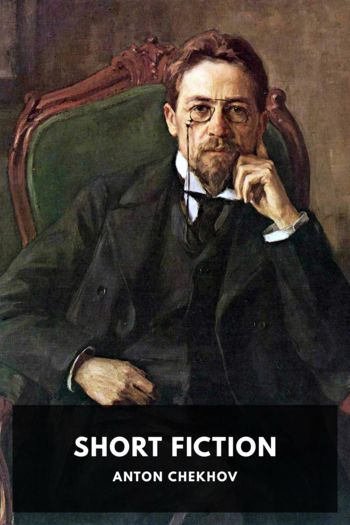
Anton Chekhov is widely considered to be one of the greatest short story writers in history. A physician by day, he’s famously quoted as saying, “Medicine is my lawful wife, and literature is my mistress.” Chekhov wrote nearly 300 short stories in his long writing career; while at first he wrote mainly to make a profit, as his interest in writing—and his skill—grew, he wrote stories that heavily influenced the modern development of the form.
His stories are famous for, among other things, their ambiguous morality and their often inconclusive nature. Chekhov was a firm believer that the role of the artist was to correctly pose a question, but not necessarily to answer it.
This collection contains all of his short stories and two novellas, all translated by Constance Garnett, and arranged by the date they were originally published.
Read free book «Short Fiction by Anton Chekhov (libby ebook reader .txt) 📕» - read online or download for free at americanlibrarybooks.com
- Author: Anton Chekhov
Read book online «Short Fiction by Anton Chekhov (libby ebook reader .txt) 📕». Author - Anton Chekhov
When he came to himself it was daylight, and a voice he knew very well, that had promised him a fair, finches, and a fox, was saying beside him:
“Well, you are an idiot, Pashka! Aren’t you an idiot? You ought to be beaten, but there’s no one to do it.”
A ProblemThe strictest measures were taken that the Uskovs’ family secret might not leak out and become generally known. Half of the servants were sent off to the theatre or the circus; the other half were sitting in the kitchen and not allowed to leave it. Orders were given that no one was to be admitted. The wife of the Colonel, her sister, and the governess, though they had been initiated into the secret, kept up a pretence of knowing nothing; they sat in the dining room and did not show themselves in the drawing room or the hall.
Sasha Uskov, the young man of twenty-five who was the cause of all the commotion, had arrived some time before, and by the advice of kindhearted Ivan Markovitch, his uncle, who was taking his part, he sat meekly in the hall by the door leading to the study, and prepared himself to make an open, candid explanation.
The other side of the door, in the study, a family council was being held. The subject under discussion was an exceedingly disagreeable and delicate one. Sasha Uskov had cashed at one of the banks a false promissory note, and it had become due for payment three days before, and now his two paternal uncles and Ivan Markovitch, the brother of his dead mother, were deciding the question whether they should pay the money and save the family honour, or wash their hands of it and leave the case to go for trial.
To outsiders who have no personal interest in the matter such questions seem simple; for those who are so unfortunate as to have to decide them in earnest they are extremely difficult. The uncles had been talking for a long time, but the problem seemed no nearer decision.
“My friends!” said the uncle who was a colonel, and there was a note of exhaustion and bitterness in his voice. “Who says that family honour is a mere convention? I don’t say that at all. I am only warning you against a false view; I am pointing out the possibility of an unpardonable mistake. How can you fail to see it? I am not speaking Chinese; I am speaking Russian!”
“My dear fellow, we do understand,” Ivan Markovitch protested mildly.
“How can you understand if you say that I don’t believe in family honour? I repeat once more: fa-mil-y ho-nour fal-sely un-der-stood is a prejudice! Falsely understood! That’s what I say: whatever may be the motives for screening a scoundrel, whoever he may be, and helping him to escape punishment, it is contrary to law and unworthy of a gentleman. It’s not saving the family honour; it’s civic cowardice! Take the army, for instance. … The honour of the army is more precious to us than any other honour, yet we don’t screen our guilty members, but condemn them. And does the honour of the army suffer in consequence? Quite the opposite!”
The other paternal uncle, an official in the Treasury, a taciturn, dull-witted, and rheumatic man, sat silent, or spoke only of the fact that the Uskovs’ name would get into the newspapers if the case went for trial. His opinion was that the case ought to be hushed up from the first and not become public property; but, apart from publicity in the newspapers, he advanced no other argument in support of this opinion.
The maternal uncle, kindhearted Ivan Markovitch, spoke smoothly, softly, and with a tremor in his voice. He began with saying that youth has its rights and its peculiar temptations. Which of us has not been young, and who has not been led astray? To say nothing of ordinary mortals, even great men have not escaped errors and mistakes in their youth. Take, for instance, the biography of great writers. Did not every one of them gamble, drink, and draw down upon himself the anger of right-thinking people in his young days? If Sasha’s error bordered upon crime, they must remember that Sasha had received practically no education; he had been expelled from the high school in the fifth class; he had lost his parents in early childhood, and so had been left at the tenderest age without guidance and good, benevolent influences. He was nervous, excitable, had no firm ground under his feet, and, above all, he had been unlucky. Even if he were guilty, anyway he deserved indulgence and the sympathy of all compassionate souls. He ought, of course, to be punished, but he was punished as it was by his conscience and the agonies he was enduring now while awaiting the sentence of his relations. The comparison with the army made by the Colonel was delightful, and did credit to his lofty intelligence; his appeal to their feeling of public duty spoke for the chivalry of his soul, but they must not forget that in each individual the citizen is closely linked with the Christian. …
“Shall we be false to civic duty,” Ivan Markovitch exclaimed passionately, “if instead of punishing an erring boy we hold out to him a helping hand?”
Ivan Markovitch talked further of family honour. He had not the honour to belong to the Uskov family himself, but he knew their distinguished family went back to the thirteenth century; he did not forget for




Comments (0)