Short Fiction by Anton Chekhov (libby ebook reader .txt) 📕
Description
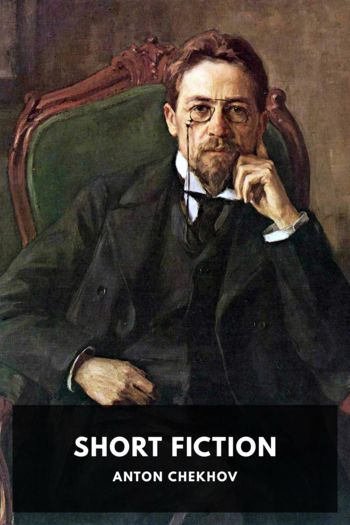
Anton Chekhov is widely considered to be one of the greatest short story writers in history. A physician by day, he’s famously quoted as saying, “Medicine is my lawful wife, and literature is my mistress.” Chekhov wrote nearly 300 short stories in his long writing career; while at first he wrote mainly to make a profit, as his interest in writing—and his skill—grew, he wrote stories that heavily influenced the modern development of the form.
His stories are famous for, among other things, their ambiguous morality and their often inconclusive nature. Chekhov was a firm believer that the role of the artist was to correctly pose a question, but not necessarily to answer it.
This collection contains all of his short stories and two novellas, all translated by Constance Garnett, and arranged by the date they were originally published.
Read free book «Short Fiction by Anton Chekhov (libby ebook reader .txt) 📕» - read online or download for free at americanlibrarybooks.com
- Author: Anton Chekhov
Read book online «Short Fiction by Anton Chekhov (libby ebook reader .txt) 📕». Author - Anton Chekhov
“Ivan Markovitch,” said the Colonel, in a voice of entreaty, “we are talking seriously about an important matter, and you bring in Lombroso, you clever fellow. Think a little, what are you saying all this for? Can you imagine that all your thunderings and rhetoric will furnish an answer to the question?”
Sasha Uskov sat at the door and listened. He felt neither terror, shame, nor depression, but only weariness and inward emptiness. It seemed to him that it made absolutely no difference to him whether they forgave him or not; he had come here to hear his sentence and to explain himself simply because kindhearted Ivan Markovitch had begged him to do so. He was not afraid of the future. It made no difference to him where he was: here in the hall, in prison, or in Siberia.
“If Siberia, then let it be Siberia, damn it all!”
He was sick of life and found it insufferably hard. He was inextricably involved in debt; he had not a farthing in his pocket; his family had become detestable to him; he would have to part from his friends and his women sooner or later, as they had begun to be too contemptuous of his sponging on them. The future looked black.
Sasha was indifferent, and was only disturbed by one circumstance; the other side of the door they were calling him a scoundrel and a criminal. Every minute he was on the point of jumping up, bursting into the study and shouting in answer to the detestable metallic voice of the Colonel:
“You are lying!”
“Criminal” is a dreadful word—that is what murderers, thieves, robbers are; in fact, wicked and morally hopeless people. And Sasha was very far from being all that. … It was true he owed a great deal and did not pay his debts. But debt is not a crime, and it is unusual for a man not to be in debt. The Colonel and Ivan Markovitch were both in debt. …
“What have I done wrong besides?” Sasha wondered.
He had discounted a forged note. But all the young men he knew did the same. Handrikov and Von Burst always forged I.O.U.s from their parents or friends when their allowances were not paid at the regular time, and then when they got their money from home they redeemed them before they became due. Sasha had done the same, but had not redeemed the I.O.U. because he had not got the money which Handrikov had promised to lend him. He was not to blame; it was the fault of circumstances. It was true that the use of another person’s signature was considered reprehensible; but, still, it was not a crime but a generally accepted dodge, an ugly formality which injured no one and was quite harmless, for in forging the Colonel’s signature Sasha had had no intention of causing anybody damage or loss.
“No, it doesn’t mean that I am a criminal …” thought Sasha. “And it’s not in my character to bring myself to commit a crime. I am soft, emotional. … When I have the money I help the poor. …”
Sasha was musing after this fashion while they went on talking the other side of the door.
“But, my friends, this is endless,” the Colonel declared, getting excited. “Suppose we were to forgive him and pay the money. You know he would not give up leading a dissipated life, squandering money, making debts, going to our tailors and ordering suits in our names! Can you guarantee that this will be his last prank? As far as I am concerned, I have no faith whatever in his reforming!”
The official of the Treasury muttered something in reply; after him Ivan Markovitch began talking blandly and suavely again. The Colonel moved his chair impatiently and drowned the other’s words with his detestable metallic voice. At last the door opened and Ivan Markovitch came out of the study; there were patches of red on his lean shaven face.
“Come along,” he said, taking Sasha by the hand. “Come and speak frankly from your heart. Without pride, my dear boy, humbly and from your heart.”
Sasha went into the study. The official of the Treasury was sitting down; the Colonel was standing before the table with one hand in his pocket and one knee on a chair. It was smoky and stifling in the study. Sasha did not look at the official or the Colonel; he felt suddenly ashamed and uncomfortable. He looked uneasily at Ivan Markovitch and muttered:
“I’ll pay it … I’ll give it back. …”
“What did you expect when you discounted the I.O.U.?” he heard a metallic voice.
“I … Handrikov promised to lend me the money before now.”
Sasha could say no more. He went out of the study and sat down again on the chair near the door.
He would have been glad to go away altogether at once, but he was choking with hatred and he awfully wanted to remain, to tear the Colonel to pieces, to say something rude to him. He sat trying to think of something violent and effective to say to his hated uncle, and at that moment a woman’s figure, shrouded



Comments (0)