Short Fiction by Anton Chekhov (libby ebook reader .txt) 📕
Description
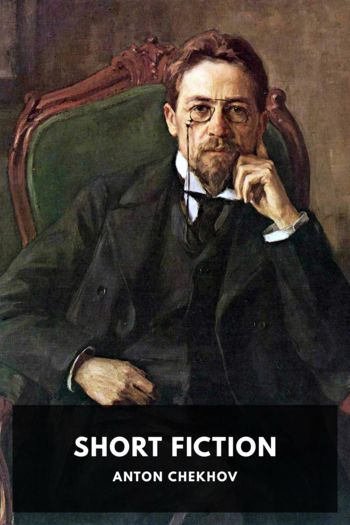
Anton Chekhov is widely considered to be one of the greatest short story writers in history. A physician by day, he’s famously quoted as saying, “Medicine is my lawful wife, and literature is my mistress.” Chekhov wrote nearly 300 short stories in his long writing career; while at first he wrote mainly to make a profit, as his interest in writing—and his skill—grew, he wrote stories that heavily influenced the modern development of the form.
His stories are famous for, among other things, their ambiguous morality and their often inconclusive nature. Chekhov was a firm believer that the role of the artist was to correctly pose a question, but not necessarily to answer it.
This collection contains all of his short stories and two novellas, all translated by Constance Garnett, and arranged by the date they were originally published.
Read free book «Short Fiction by Anton Chekhov (libby ebook reader .txt) 📕» - read online or download for free at americanlibrarybooks.com
- Author: Anton Chekhov
Read book online «Short Fiction by Anton Chekhov (libby ebook reader .txt) 📕». Author - Anton Chekhov
“You jailbird!” he cried in a hollow wailing voice. “What have you killed a grass snake for? What had he done to you, you damned brute? Look, he has killed a grass snake; how would you like to be treated so?”
“Grass snakes ought not to be killed, that’s true,” Panteley muttered placidly, “they ought not … They are not vipers; though it looks like a snake, it is a gentle, innocent creature. … It’s friendly to man, the grass snake is.”
Dymov and the man with the black beard were probably ashamed, for they laughed loudly, and not answering, slouched lazily back to their wagons. When the hindmost wagon was level with the spot where the dead snake lay, the man with his face tied up standing over it turned to Panteley and asked in a tearful voice:
“Grandfather, what did he want to kill the grass snake for?”
His eyes, as Yegorushka saw now, were small and dingy looking; his face was grey, sickly and looked somehow dingy too while his chin was red and seemed very much swollen.
“Grandfather, what did he kill it for?” he repeated, striding along beside Panteley.
“A stupid fellow. His hands itch to kill, and that is why he does it,” answered the old man; “but he oughtn’t to kill a grass snake, that’s true. … Dymov is a ruffian, we all know, he kills everything he comes across, and Kiruha did not interfere. He ought to have taken its part, but instead of that, he goes off into ‘Ha-ha-ha!’ and ‘Ho-ho-ho!’ … But don’t be angry, Vassya. … Why be angry? They’ve killed it—well, never mind them. Dymov is a ruffian and Kiruha acted from foolishness—never mind. … They are foolish people without understanding—but there, don’t mind them. Emelyan here never touches what he shouldn’t; he never does; … that is true, … because he is a man of education, while they are stupid. … Emelyan, he doesn’t touch things.”
The wagoner in the reddish-brown coat and the spongy swelling on his face, who was conducting an unseen choir, stopped. Hearing his name, and waiting till Panteley and Vassya came up to him, he walked beside them.
“What are you talking about?” he asked in a husky muffled voice.
“Why, Vassya here is angry,” said Panteley. “So I have been saying things to him to stop his being angry. … Oh, how my swollen feet hurt! Oh, oh! They are more inflamed than ever for Sunday, God’s holy day!”
“It’s from walking,” observed Vassya.
“No, lad, no. It’s not from walking. When I walk it seems easier; when I lie down and get warm, … it’s deadly. Walking is easier for me.”
Emelyan, in his reddish-brown coat, walked between Panteley and Vassya and waved his arms, as though they were going to sing. After waving them a little while he dropped them, and croaked out hopelessly:
“I have no voice. It’s a real misfortune. All last night and this morning I have been haunted by the trio ‘Lord, have Mercy’ that we sang at the wedding at Marionovsky’s. It’s in my head and in my throat. It seems as though I could sing it, but I can’t; I have no voice.”
He paused for a minute, thinking, then went on:
“For fifteen years I was in the choir. In all the Lugansky works there was, maybe, no one with a voice like mine. But, confound it, I bathed two years ago in the Donets, and I can’t get a single note true ever since. I took cold in my throat. And without a voice I am like a workman without hands.”
“That’s true,” Panteley agreed.
“I think of myself as a ruined man and nothing more.”
At that moment Vassya chanced to catch sight of Yegorushka. His eyes grew moist and smaller than ever.
“There’s a little gentleman driving with us,” and he covered his nose with his sleeve as though he were bashful. “What a grand driver! Stay with us and you shall drive the wagons and sell wool.”
The incongruity of one person being at once a little gentleman and a wagon driver seemed to strike him as very queer and funny, for he burst into a loud guffaw, and went on enlarging upon the idea. Emelyan glanced upwards at Yegorushka, too, but coldly and cursorily. He was absorbed in his own thoughts, and had it not been for Vassya, would not have noticed Yegorushka’s presence. Before five minutes had passed he was waving his arms again, then describing to his companions the beauties of the wedding anthem, “Lord, have Mercy,” which he had remembered in the night. He put the whip under his arm and waved both hands.
A mile from the village the wagons stopped by a well with a crane. Letting his pail down into the well, black-bearded Kiruha lay on his stomach on the framework and thrust his shaggy head, his shoulders, and part of his chest into the black hole, so that Yegorushka could see nothing but his short legs, which scarcely touched the ground. Seeing the reflection of his head far down at the bottom of the well, he was delighted and went off into his deep bass stupid laugh, and the echo from the well answered him. When he got up his neck and face were as red as beetroot. The first to run up and drink was Dymov. He drank laughing, often turning from the pail to tell Kiruha something funny, then he turned round, and uttered aloud, to be heard all over the steppe, five very bad words. Yegorushka did not understand the meaning of such words, but he knew very well they were bad words. He knew the repulsion his friends and relations silently felt for such words. He himself, without knowing why, shared that feeling and was accustomed to think that only drunk and disorderly people enjoy the privilege of uttering such words aloud. He remembered the murder of the grass snake, listened to Dymov’s laughter, and felt something like hatred



Comments (0)