Short Fiction by Anton Chekhov (libby ebook reader .txt) 📕
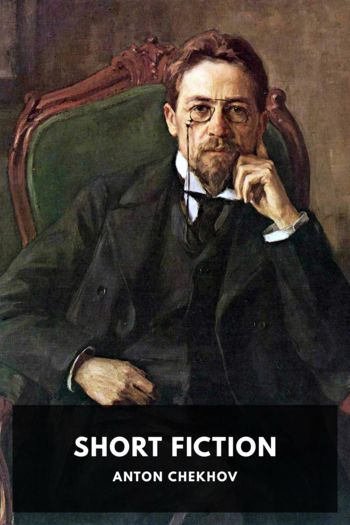
Description
Anton Chekhov is widely considered to be one of the greatest short story writers in history. A physician by day, he’s famously quoted as saying, “Medicine is my lawful wife, and literature is my mistress.” Chekhov wrote nearly 300 short stories in his long writing career; while at first he wrote mainly to make a profit, as his interest in writing—and his skill—grew, he wrote stories that heavily influenced the modern development of the form.
His stories are famous for, among other things, their ambiguous morality and their often inconclusive nature. Chekhov was a firm believer that the role of the artist was to correctly pose a question, but not necessarily to answer it.
This collection contains all of his short stories and two novellas, all translated by Constance Garnett, and arranged by the date they were originally published.
Read free book «Short Fiction by Anton Chekhov (libby ebook reader .txt) 📕» - read online or download for free at americanlibrarybooks.com
- Author: Anton Chekhov
Read book online «Short Fiction by Anton Chekhov (libby ebook reader .txt) 📕». Author - Anton Chekhov
“Just wait a minute; I will give it you.”
“Give me a farthing’s worth of sunflower seeds,” Yegorushka said, addressing him.
The shopkeeper raised his eyebrows, came out from behind the counter, and poured a farthing’s worth of sunflower seeds into Yegorushka’s pocket, using an empty pomatum pot as a measure. Yegorushka did not want to go away. He spent a long time in examining the box of cakes, thought a little and asked, pointing to some little cakes covered with the mildew of age:
“How much are these cakes?”
“Two for a farthing.”
Yegorushka took out of his pocket the cake given him the day before by the Jewess, and asked him:
“And how much do you charge for cakes like this?”
The shopman took the cake in his hands, looked at it from all sides, and raised one eyebrow.
“Like that?” he asked.
Then he raised the other eyebrow, thought a minute, and answered:
“Two for three farthings. …”
A silence followed.
“Whose boy are you?” the shopman asked, pouring himself out some tea from a red copper teapot.
“The nephew of Ivan Ivanitch.”
“There are all sorts of Ivan Ivanitchs,” the shopkeeper sighed. He looked over Yegorushka’s head towards the door, paused a minute and asked:
“Would you like some tea?”
“Please. …” Yegorushka assented not very readily, though he felt an intense longing for his usual morning tea.
The shopkeeper poured him out a glass and gave him with it a bit of sugar that looked as though it had been nibbled. Yegorushka sat down on the folding chair and began drinking it. He wanted to ask the price of a pound of sugar almonds, and had just broached the subject when a customer walked in, and the shopkeeper, leaving his glass of tea, attended to his business. He led the customer into the other half, where there was a smell of tar, and was there a long time discussing something with him. The customer, a man apparently very obstinate and pigheaded, was continually shaking his head to signify his disapproval, and retreating towards the door. The shopkeeper tried to persuade him of something and began pouring some oats into a big sack for him.
“Do you call those oats?” the customer said gloomily. “Those are not oats, but chaff. It’s a mockery to give that to the hens; enough to make the hens laugh. … No, I will go to Bondarenko.”
When Yegorushka went back to the river a small camp fire was smoking on the bank. The wagoners were cooking their dinner. Styopka was standing in the smoke, stirring the cauldron with a big notched spoon. A little on one side Kiruha and Vassya, with eyes reddened from the smoke, were sitting cleaning the fish. Before them lay the net covered with slime and water weeds, and on it lay gleaming fish and crawling crayfish.
Emelyan, who had not long been back from the church, was sitting beside Panteley, waving his arm and humming just audibly in a husky voice: “To Thee we sing. …” Dymov was moving about by the horses.
When they had finished cleaning them, Kiruha and Vassya put the fish and the living crayfish together in the pail, rinsed them, and from the pail poured them all into the boiling water.
“Shall I put in some fat?” asked Styopka, skimming off the froth.
“No need. The fish will make its own gravy,” answered Kiruha.
Before taking the cauldron off the fire Styopka scattered into the water three big handfuls of millet and a spoonful of salt; finally he tried it, smacked his lips, licked the spoon, and gave a self-satisfied grunt, which meant that the grain was done.
All except Panteley sat down near the cauldron and set to work with their spoons.
“You there! Give the little lad a spoon!” Panteley observed sternly. “I dare say he is hungry too!”
“Ours is peasant fare,” sighed Kiruha.
“Peasant fare is welcome, too, when one is hungry.”
They gave Yegorushka a spoon. He began eating, not sitting, but standing close to the cauldron and looking down into it as in a hole. The grain smelt of fish and fish-scales were mixed up with the millet. The crayfish could not be hooked out with a spoon, and the men simply picked them out of the cauldron with their hands; Vassya did so particularly freely, and wetted his sleeves as well as his hands in the mess. But yet the stew seemed to Yegorushka very nice, and reminded him of the crayfish soup which his mother used to make at home on fast-days. Panteley was sitting apart munching bread.
“Grandfather, why aren’t you eating?” Emelyan asked him.
“I don’t eat crayfish. … Nasty things,” the old man said, and turned away with disgust.
While they were eating they all talked. From this conversation Yegorushka gathered that all his new acquaintances, in spite of the differences of their ages and their characters, had one point in common which made them all alike: they were all people with a splendid past and a very poor present. Of their past they all—every one of them—spoke with enthusiasm; their attitude to the present was almost one of contempt. The Russian loves recalling life, but he does not love living. Yegorushka did not yet know that, and before the stew had been all eaten he firmly believed that the men sitting round the cauldron were the injured victims of fate. Panteley told them that in the past, before there were railways, he used to go with trains of wagons to Moscow and to Nizhni, and used to earn so much that he did not know what to do with his money; and what merchants there used to be in those days! what fish! how cheap



Comments (0)