Short Fiction by Anton Chekhov (libby ebook reader .txt) 📕
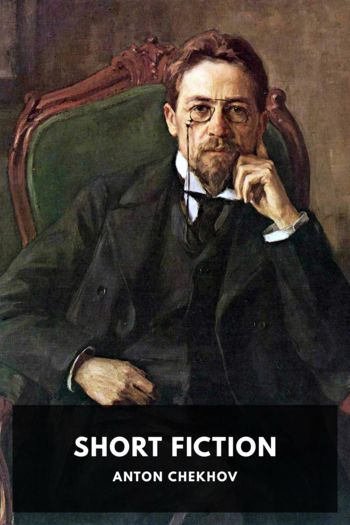
Description
Anton Chekhov is widely considered to be one of the greatest short story writers in history. A physician by day, he’s famously quoted as saying, “Medicine is my lawful wife, and literature is my mistress.” Chekhov wrote nearly 300 short stories in his long writing career; while at first he wrote mainly to make a profit, as his interest in writing—and his skill—grew, he wrote stories that heavily influenced the modern development of the form.
His stories are famous for, among other things, their ambiguous morality and their often inconclusive nature. Chekhov was a firm believer that the role of the artist was to correctly pose a question, but not necessarily to answer it.
This collection contains all of his short stories and two novellas, all translated by Constance Garnett, and arranged by the date they were originally published.
Read free book «Short Fiction by Anton Chekhov (libby ebook reader .txt) 📕» - read online or download for free at americanlibrarybooks.com
- Author: Anton Chekhov
Read book online «Short Fiction by Anton Chekhov (libby ebook reader .txt) 📕». Author - Anton Chekhov
All sat silent, thinking. After the terrible stories there was no inclination to speak of ordinary things. All at once in the midst of the silence Vassya drew himself up and, fixing his lustreless eyes on one point, pricked up his ears.
“What is it?” Dymov asked him.
“Someone is coming,” answered Vassya.
“Where do you see him?”
“Yo-on-der! There’s something white …”
There was nothing to be seen but darkness in the direction in which Vassya was looking; everyone listened, but they could hear no sound of steps.
“Is he coming by the highroad?” asked Dymov.
“No, over the open country. … He is coming this way.”
A minute passed in silence.
“And maybe it’s the merchant who was buried here walking over the steppe,” said Dymov.
All looked askance at the cross, exchanged glances and suddenly broke into a laugh. They felt ashamed of their terror.
“Why should he walk?” asked Panteley. “It’s only those walk at night whom the earth will not take to herself. And the merchants were all right. … The merchants have received the crown of martyrs.”
But all at once they heard the sound of steps; someone was coming in haste.
“He’s carrying something,” said Vassya.
They could hear the grass rustling and the dry twigs crackling under the feet of the approaching wayfarer. But from the glare of the camp fire nothing could be seen. At last the steps sounded close by, and someone coughed. The flickering light seemed to part; a veil dropped from the wagoners’ eyes, and they saw a man facing them.
Whether it was due to the flickering light or because everyone wanted to make out the man’s face first of all, it happened, strangely enough, that at the first glance at him they all saw, first of all, not his face nor his clothes, but his smile. It was an extraordinarily good-natured, broad, soft smile, like that of a baby on waking, one of those infectious smiles to which it is difficult not to respond by smiling too. The stranger, when they did get a good look at him, turned out to be a man of thirty, ugly and in no way remarkable. He was a tall Little Russian, with a long nose, long arms and long legs; everything about him seemed long except his neck, which was so short that it made him seem stooping. He was wearing a clean white shirt with an embroidered collar, white trousers, and new high boots, and in comparison with the wagoners he looked quite a dandy. In his arms he was carrying something big, white, and at the first glance strange-looking, and the stock of a gun also peeped out from behind his shoulder.
Coming from the darkness into the circle of light, he stopped short as though petrified, and for half a minute looked at the wagoners as though he would have said: “Just look what a smile I have!”
Then he took a step towards the fire, smiled still more radiantly and said:
“Bread and salt, friends!”
“You are very welcome!” Panteley answered for them all.
The stranger put down by the fire what he was carrying in his arms—it was a dead bustard—and greeted them once more.
They all went up to the bustard and began examining it.
“A fine big bird; what did you kill it with?” asked Dymov.
“Grapeshot. You can’t get him with small shot, he won’t let you get near enough. Buy it, friends! I will let you have it for twenty kopecks.”
“What use would it be to us? It’s good roast, but I bet it would be tough boiled; you could not get your teeth into it. …”
“Oh, what a pity! I would take it to the gentry at the farm; they would give me half a rouble for it. But it’s a long way to go—twelve miles!”
The stranger sat down, took off his gun and laid it beside him.
He seemed sleepy and languid; he sat smiling, and, screwing up his eyes at the firelight, apparently thinking of something very agreeable. They gave him a spoon; he began eating.
“Who are you?” Dymov asked him.
The stranger did not hear the question; he made no answer, and did not even glance at Dymov. Most likely this smiling man did not taste the flavour of the porridge either, for he seemed to eat it mechanically, lifting the spoon to his lips sometimes very full and sometimes quite empty. He was not drunk, but he seemed to have something nonsensical in his head.
“I ask you who you are?” repeated Dymov.
“I?” said the unknown, starting. “Konstantin Zvonik from Rovno. It’s three miles from here.”
And anxious to show straight off that he was not quite an ordinary peasant, but something better, Konstantin hastened to add:
“We keep bees and fatten pigs.”
“Do you live with your father or in a house of your own?”
“No; now I am living in a house of my own. I have parted. This month, just after St. Peter’s Day, I got married. I am a married man now! … It’s eighteen days since the wedding.”
“That’s a good thing,” said Panteley. “Marriage is a good thing. … God’s blessing is on it.”
“His young wife sits at home while he rambles about the steppe,” laughed Kiruha. “Queer chap!”
As though he had been pinched on the tenderest spot, Konstantin started, laughed and flushed crimson.
“But, Lord, she is not at home!” he said quickly, taking the spoon out of his mouth and looking round at everyone with an expression of delight and wonder. “She is not; she has gone to her mother’s for three days! Yes, indeed, she has gone away, and I feel as though I were not married. …”
Konstantin waved his hand and turned his head; he wanted to go on thinking, but the joy which beamed in his face prevented him. As though he were not comfortable, he changed his attitude, laughed, and again waved his hand. He was ashamed to share his happy thoughts with strangers, but at the same time he had an irresistible longing to communicate his joy.
“She



Comments (0)