Short Fiction by Anton Chekhov (libby ebook reader .txt) 📕
Description
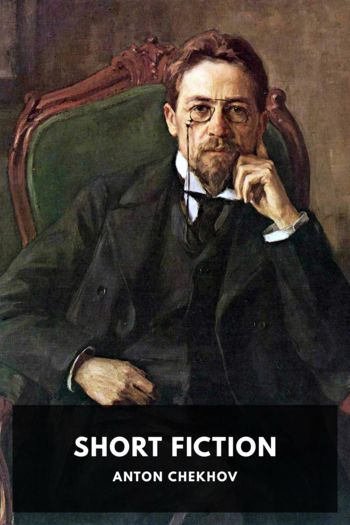
Anton Chekhov is widely considered to be one of the greatest short story writers in history. A physician by day, he’s famously quoted as saying, “Medicine is my lawful wife, and literature is my mistress.” Chekhov wrote nearly 300 short stories in his long writing career; while at first he wrote mainly to make a profit, as his interest in writing—and his skill—grew, he wrote stories that heavily influenced the modern development of the form.
His stories are famous for, among other things, their ambiguous morality and their often inconclusive nature. Chekhov was a firm believer that the role of the artist was to correctly pose a question, but not necessarily to answer it.
This collection contains all of his short stories and two novellas, all translated by Constance Garnett, and arranged by the date they were originally published.
Read free book «Short Fiction by Anton Chekhov (libby ebook reader .txt) 📕» - read online or download for free at americanlibrarybooks.com
- Author: Anton Chekhov
Read book online «Short Fiction by Anton Chekhov (libby ebook reader .txt) 📕». Author - Anton Chekhov
“Lads,” he said in an imploring voice, “let’s sing something sacred!” Tears came into his eyes. “Lads,” he repeated, pressing his hands on his heart, “let’s sing something sacred!”
“I don’t know anything,” said Konstantin.
Everyone refused, then Emelyan sang alone. He waved both arms, nodded his head, opened his mouth, but nothing came from his throat but a discordant gasp. He sang with his arms, with his head, with his eyes, even with the swelling on his face; he sang passionately with anguish, and the more he strained his chest to extract at least one note from it, the more discordant were his gasps.
Yegorushka, like the rest, was overcome with depression. He went to his wagon, clambered up on the bales and lay down. He looked at the sky, and thought of happy Konstantin and his wife. Why did people get married? What were women in the world for? Yegorushka put the vague questions to himself, and thought that a man would certainly be happy if he had an affectionate, merry and beautiful woman continually living at his side. For some reason he remembered the Countess Dranitsky, and thought it would probably be very pleasant to live with a woman like that; he would perhaps have married her with pleasure if that idea had not been so shameful. He recalled her eyebrows, the pupils of her eyes, her carriage, the clock with the horseman. … The soft warm night moved softly down upon him and whispered something in his ear, and it seemed to him that it was that lovely woman bending over him, looking at him with a smile and meaning to kiss him. …
Nothing was left of the fire but two little red eyes, which kept on growing smaller and smaller. Konstantin and the wagoners were sitting by it, dark motionless figures, and it seemed as though there were many more of them than before. The twin crosses were equally visible, and far, far away, somewhere by the highroad there gleamed a red light—other people cooking their porridge, most likely.
“Our Mother Russia is the he-ad of all the world!” Kiruha sang out suddenly in a harsh voice, choked and subsided. The steppe echo caught up his voice, carried it on, and it seemed as though stupidity itself were rolling on heavy wheels over the steppe.
“It’s time to go,” said Panteley. “Get up, lads.”
While they were putting the horses in, Konstantin walked by the wagons and talked rapturously of his wife.
“Goodbye, mates!” he cried when the wagons started. “Thank you for your hospitality. I shall go on again towards that light. It’s more than I can stand.”
And he quickly vanished in the mist, and for a long time they could hear him striding in the direction of the light to tell those other strangers of his happiness.
When Yegorushka woke up next day it was early morning; the sun had not yet risen. The wagons were at a standstill. A man in a white cap and a suit of cheap grey material, mounted on a little Cossack stallion, was talking to Dymov and Kiruha beside the foremost wagon. A mile and a half ahead there were long low white barns and little houses with tiled roofs; there were neither yards nor trees to be seen beside the little houses.
“What village is that, Grandfather?” asked Yegorushka.
“That’s the Armenian Settlement, youngster,” answered Panteley. “The Armenians live there. They are a good sort of people, … the Arnienians are.”
The man in grey had finished talking to Dymov and Kiruha; he pulled up his little stallion and looked across towards the settlement.
“What a business, only think!” sighed Panteley, looking towards the settlement, too, and shuddering at the morning freshness. “He has sent a man to the settlement for some papers, and he doesn’t come. … He should have sent Styopka.”
“Who is that, Grandfather?” asked Yegorushka.
“Varlamov.”
My goodness! Yegorushka jumped up quickly, getting upon his knees, and looked at the white cap. It was hard to recognize the mysterious elusive Varlamov, who was sought by everyone, who was always “on his rounds,” and who had far more money than Countess Dranitsky, in the short, grey little man in big boots, who was sitting on an ugly little nag and talking to peasants at an hour when all decent people were asleep.
“He is all right, a good man,” said Panteley, looking towards the settlement. “God give him health—a splendid gentleman, Semyon Alexandritch. … It’s people like that the earth rests upon. That’s true. … The cocks are not crowing yet, and he is already up and about. … Another man would be asleep, or gallivanting with visitors at home, but he is on the steppe all day, … on his rounds. … He does not let things slip. … No-o! He’s a fine fellow …”
Varlamov was talking about something, while he kept his eyes fixed. The little stallion shifted from one leg to another impatiently.
“Semyon Alexandritch!” cried Panteley, taking off his hat. “Allow us to send Styopka! Emelyan, call out that Styopka should be sent.”
But now at last a man on horseback could be seen coming from the settlement. Bending very much to one side and brandishing his whip above his head like a gallant young Caucasian, and wanting to astonish everyone by his horsemanship, he flew towards the wagons with the swiftness of a bird.
“That must be one of his circuit men,” said Panteley. “He must have a hundred such horsemen or maybe more.”
Reaching the first wagon, he pulled up his horse, and taking off his hat, handed Varlamov a little book. Varlamov took several papers out of the book, read them and cried:
“And where is Ivantchuk’s letter?”
The horseman took the book back, looked at the papers and shrugged his shoulders. He began saying something, probably justifying himself and asking to be allowed to ride back to the settlement again. The little stallion suddenly stirred as though Varlamov had grown heavier. Varlamov stirred too.
“Go along!” he cried angrily, and he waved his whip at the man.
Then he turned his horse round and, looking through the papers



Comments (0)