Short Fiction by Anton Chekhov (libby ebook reader .txt) 📕
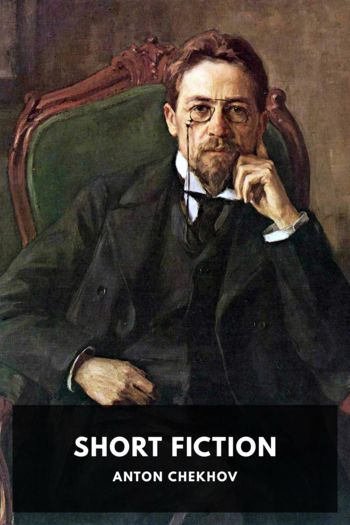
Description
Anton Chekhov is widely considered to be one of the greatest short story writers in history. A physician by day, he’s famously quoted as saying, “Medicine is my lawful wife, and literature is my mistress.” Chekhov wrote nearly 300 short stories in his long writing career; while at first he wrote mainly to make a profit, as his interest in writing—and his skill—grew, he wrote stories that heavily influenced the modern development of the form.
His stories are famous for, among other things, their ambiguous morality and their often inconclusive nature. Chekhov was a firm believer that the role of the artist was to correctly pose a question, but not necessarily to answer it.
This collection contains all of his short stories and two novellas, all translated by Constance Garnett, and arranged by the date they were originally published.
Read free book «Short Fiction by Anton Chekhov (libby ebook reader .txt) 📕» - read online or download for free at americanlibrarybooks.com
- Author: Anton Chekhov
Read book online «Short Fiction by Anton Chekhov (libby ebook reader .txt) 📕». Author - Anton Chekhov
An old woman passed by with a wallet on her back. The princess thought that it would be nice to stop the old woman and to say something friendly and cordial to her, to help her. … But the old woman turned the corner without once looking round.
Not long afterwards a tall man with a grey beard and a straw hat came along the walk. When he came up to the princess, he took off his hat and bowed. From the bald patch on his head and his sharp, hooked nose the princess recognised him as the doctor, Mihail Ivanovitch, who had been in her service at Dubovki. She remembered that someone had told her that his wife had died the year before, and she wanted to sympathise with him, to console him.
“Doctor, I expect you don’t recognise me?” she said with an affable smile.
“Yes, Princess, I recognised you,” said the doctor, taking off his hat again.
“Oh, thank you; I was afraid that you, too, had forgotten your princess. People only remember their enemies, but they forget their friends. Have you, too, come to pray?”
“I am the doctor here, and I have to spend the night at the monastery every Saturday.”
“Well, how are you?” said the princess, sighing. “I hear that you have lost your wife. What a calamity!”
“Yes, Princess, for me it is a great calamity.”
“There’s nothing for it! We must bear our troubles with resignation. Not one hair of a man’s head is lost without the Divine Will.”
“Yes, Princess.”
To the princess’s friendly, gentle smile and her sighs the doctor responded coldly and dryly: “Yes, Princess.” And the expression of his face was cold and dry.
“What else can I say to him?” she wondered.
“How long it is since we met!” she said. “Five years! How much water has flowed under the bridge, how many changes in that time; it quite frightens one to think of it! You know, I am married. … I am not a countess now, but a princess. And by now I am separated from my husband too.”
“Yes, I heard so.”
“God has sent me many trials. No doubt you have heard, too, that I am almost ruined. My Dubovki, Sofyino, and Kiryakovo have all been sold for my unhappy husband’s debts. And I have only Baranovo and Mihaltsevo left. It’s terrible to look back: how many changes and misfortunes of all kinds, how many mistakes!”
“Yes, Princess, many mistakes.”
The princess was a little disconcerted. She knew her mistakes; they were all of such a private character that no one but she could think or speak of them. She could not resist asking:
“What mistakes are you thinking about?”
“You referred to them, so you know them …” answered the doctor, and he smiled. “Why talk about them!”
“No; tell me, doctor. I shall be very grateful to you. And please don’t stand on ceremony with me. I love to hear the truth.”
“I am not your judge, Princess.”
“Not my judge! What a tone you take! You must know something about me. Tell me!”
“If you really wish it, very well. Only I regret to say I’m not clever at talking, and people can’t always understand me.”
The doctor thought a moment and began:
“A lot of mistakes; but the most important of them, in my opinion, was the general spirit that prevailed on all your estates. You see, I don’t know how to express myself. I mean chiefly the lack of love, the aversion for people that was felt in absolutely everything. Your whole system of life was built upon that aversion. Aversion for the human voice, for faces, for heads, steps … in fact, for everything that makes up a human being. At all the doors and on the stairs there stand sleek, rude, and lazy grooms in livery to prevent badly dressed persons from entering the house; in the hall there are chairs with high backs so that the footmen waiting there, during balls and receptions, may not soil the walls with their heads; in every room there are thick carpets that no human step may be heard; everyone who comes in is infallibly warned to speak as softly and as little as possible, and to say nothing that might have a disagreeable effect on the nerves or the imagination. And in your room you don’t shake hands with anyone or ask him to sit down—just as you didn’t shake hands with me or ask me to sit down. …”
“By all means, if you like,” said the princess, smiling and holding out her hand. “Really, to be cross about such trifles. …”
“But I am not cross,” laughed the doctor, but at once he flushed, took off his hat, and waving it about, began hotly: “To be candid, I’ve long wanted an opportunity to tell you all I think. … That is, I want to tell you that you look upon the mass of mankind



Comments (0)