Short Fiction by Anton Chekhov (libby ebook reader .txt) 📕
Description
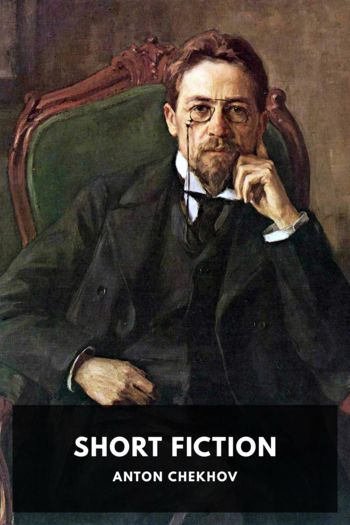
Anton Chekhov is widely considered to be one of the greatest short story writers in history. A physician by day, he’s famously quoted as saying, “Medicine is my lawful wife, and literature is my mistress.” Chekhov wrote nearly 300 short stories in his long writing career; while at first he wrote mainly to make a profit, as his interest in writing—and his skill—grew, he wrote stories that heavily influenced the modern development of the form.
His stories are famous for, among other things, their ambiguous morality and their often inconclusive nature. Chekhov was a firm believer that the role of the artist was to correctly pose a question, but not necessarily to answer it.
This collection contains all of his short stories and two novellas, all translated by Constance Garnett, and arranged by the date they were originally published.
Read free book «Short Fiction by Anton Chekhov (libby ebook reader .txt) 📕» - read online or download for free at americanlibrarybooks.com
- Author: Anton Chekhov
Read book online «Short Fiction by Anton Chekhov (libby ebook reader .txt) 📕». Author - Anton Chekhov
The bearer of that name, that is I, see myself as a man of sixty-two, with a bald head, with false teeth, and with an incurable tic douloureux. I am myself as dingy and unsightly as my name is brilliant and splendid. My head and my hands tremble with weakness; my neck, as Turgenev says of one of his heroines, is like the handle of a double bass; my chest is hollow; my shoulders narrow; when I talk or lecture, my mouth turns down at one corner; when I smile, my whole face is covered with aged-looking, deathly wrinkles. There is nothing impressive about my pitiful figure; only, perhaps, when I have an attack of tic douloureux my face wears a peculiar expression, the sight of which must have roused in everyone the grim and impressive thought, “Evidently that man will soon die.”
I still, as in the past, lecture fairly well; I can still, as in the past, hold the attention of my listeners for a couple of hours. My fervour, the literary skill of my exposition, and my humour, almost efface the defects of my voice, though it is harsh, dry, and monotonous as a praying beggar’s. I write poorly. That bit of my brain which presides over the faculty of authorship refuses to work. My memory has grown weak; there is a lack of sequence in my ideas, and when I put them on paper it always seems to me that I have lost the instinct for their organic connection; my construction is monotonous; my language is poor and timid. Often I write what I do not mean; I have forgotten the beginning when I am writing the end. Often I forget ordinary words, and I always have to waste a great deal of energy in avoiding superfluous phrases and unnecessary parentheses in my letters, both unmistakable proofs of a decline in mental activity. And it is noteworthy that the simpler the letter the more painful the effort to write it. At a scientific article I feel far more intelligent and at ease than at a letter of congratulation or a minute of proceedings. Another point: I find it easier to write German or English than to write Russian.
As regards my present manner of life, I must give a foremost place to the insomnia from which I have suffered of late. If I were asked what constituted the chief and fundamental feature of my existence now, I should answer, Insomnia. As in the past, from habit I undress and go to bed exactly at midnight. I fall asleep quickly, but before two o’clock I wake up and feel as though I had not slept at all. Sometimes I get out of bed and light a lamp. For an hour or two I walk up and down the room looking at the familiar photographs and pictures. When I am weary of walking about, I sit down to my table. I sit motionless, thinking of nothing, conscious of no inclination; if a book is lying before me, I mechanically move it closer and read it without any interest—in that way not long ago I mechanically read through in one night a whole novel, with the strange title The Song the Lark Was Singing; or to occupy my attention I force myself to count to a thousand; or I imagine the face of one of my colleagues and begin trying to remember in what year and under what circumstances he entered the service. I like listening to sounds. Two rooms away from me my daughter Liza says something rapidly in her sleep, or my wife crosses the drawing room with a candle and invariably drops the matchbox; or a warped cupboard creaks; or the burner of the lamp suddenly begins to hum—and all these sounds, for some reason, excite me.
To lie awake at night means to be at every moment conscious of being abnormal, and so I look forward with impatience to the morning and the day when I have a right to be awake. Many wearisome hours pass before the cock crows in the yard. He is my first bringer of good tidings. As soon as he crows I know that within an hour the porter will wake up below, and, coughing angrily, will go upstairs to fetch something. And then a pale light will begin gradually glimmering at the windows, voices will sound in the street. …
The day begins for me with the entrance of my wife. She comes in to me in her petticoat, before she has done her hair, but after she has washed, smelling of flower-scented eau de cologne, looking as though she had come in by chance. Every time she says exactly the same thing: “Excuse me, I have just come in for a minute. … Have you had a bad night again?”
Then she puts out the lamp, sits down near the table, and begins talking. I am no prophet,




Comments (0)