Short Fiction by Anton Chekhov (libby ebook reader .txt) 📕
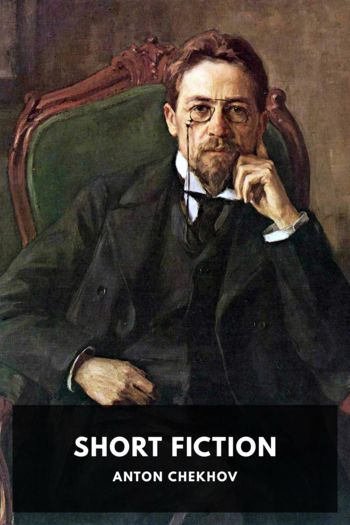
Description
Anton Chekhov is widely considered to be one of the greatest short story writers in history. A physician by day, he’s famously quoted as saying, “Medicine is my lawful wife, and literature is my mistress.” Chekhov wrote nearly 300 short stories in his long writing career; while at first he wrote mainly to make a profit, as his interest in writing—and his skill—grew, he wrote stories that heavily influenced the modern development of the form.
His stories are famous for, among other things, their ambiguous morality and their often inconclusive nature. Chekhov was a firm believer that the role of the artist was to correctly pose a question, but not necessarily to answer it.
This collection contains all of his short stories and two novellas, all translated by Constance Garnett, and arranged by the date they were originally published.
Read free book «Short Fiction by Anton Chekhov (libby ebook reader .txt) 📕» - read online or download for free at americanlibrarybooks.com
- Author: Anton Chekhov
Read book online «Short Fiction by Anton Chekhov (libby ebook reader .txt) 📕». Author - Anton Chekhov
“Of course it is difficult for us,” my wife would sigh, “but until he is completely on his own feet it is our duty to help him. The boy is among strangers, his pay is small. … However, if you like, next month we won’t send him fifty, but forty. What do you think?”
Daily experience might have taught my wife that constantly talking of our expenses does not reduce them, but my wife refuses to learn by experience, and regularly every morning discusses our officer son, and tells me that bread, thank God, is cheaper, while sugar is a halfpenny dearer—with a tone and an air as though she were communicating interesting news.
I listen, mechanically assent, and probably because I have had a bad night, strange and inappropriate thoughts intrude themselves upon me. I gaze at my wife and wonder like a child. I ask myself in perplexity, is it possible that this old, very stout, ungainly woman, with her dull expression of petty anxiety and alarm about daily bread, with eyes dimmed by continual brooding over debts and money difficulties, who can talk of nothing but expenses and who smiles at nothing but things getting cheaper—is it possible that this woman is no other than the slender Varya whom I fell in love with so passionately for her fine, clear intelligence, for her pure soul, her beauty, and, as Othello his Desdemona, for her “sympathy” for my studies? Could that woman be no other than the Varya who had once borne me a son?
I look with strained attention into the face of this flabby, spiritless, clumsy old woman, seeking in her my Varya, but of her past self nothing is left but her anxiety over my health and her manner of calling my salary “our salary,” and my cap “our cap.” It is painful for me to look at her, and, to give her what little comfort I can, I let her say what she likes, and say nothing even when she passes unjust criticisms on other people or pitches into me for not having a private practice or not publishing textbooks.
Our conversation always ends in the same way. My wife suddenly remembers with dismay that I have not had my tea.
“What am I thinking about, sitting here?” she says, getting up. “The samovar has been on the table ever so long, and here I stay gossiping. My goodness! how forgetful I am growing!”
She goes out quickly, and stops in the doorway to say:
“We owe Yegor five months’ wages. Did you know it? You mustn’t let the servants’ wages run on; how many times I have said it! It’s much easier to pay ten roubles a month than fifty roubles every five months!”
As she goes out, she stops to say:
“The person I am sorriest for is our Liza. The girl studies at the Conservatoire, always mixes with people of good position, and goodness knows how she is dressed. Her fur coat is in such a state she is ashamed to show herself in the street. If she were somebody else’s daughter it wouldn’t matter, but of course everyone knows that her father is a distinguished professor, a privy councillor.”
And having reproached me with my rank and reputation, she goes away at last. That is how my day begins. It does not improve as it goes on.
As I am drinking my tea, my Liza comes in wearing her fur coat and her cap, with her music in her hand, already quite ready to go to the Conservatoire. She is two-and-twenty. She looks younger, is pretty, and rather like my wife in her young days. She kisses me tenderly on my forehead and on my hand, and says:
“Good morning, papa; are you quite well?”
As a child she was very fond of ice-cream, and I used often to take her to a confectioner’s. Ice-cream was for her the type of everything delightful. If she wanted to praise me she would say: “You are as nice as cream, papa.” We used to call one of her little fingers “pistachio ice,” the next, “cream ice,” the third “raspberry,” and so on. Usually when she came in to say good morning to me I used to sit her on my knee, kiss her little fingers, and say:
“Creamy ice … pistachio … lemon. …”
And now, from old habit, I kiss Liza’s fingers and mutter: “Pistachio … cream … lemon …” but the effect is utterly different. I am cold as ice and I am ashamed. When my daughter comes in to me and touches my forehead with her lips I start as though a bee had stung me on the head, give a forced smile, and turn my face away. Ever since I have been suffering from sleeplessness, a question sticks in my brain like a nail. My daughter often sees me, an old man and a distinguished man, blush painfully at being in debt to my footman; she sees how often anxiety over petty debts forces me to lay aside my work and to walk up and down the room for hours together, thinking; but why is it she never comes to me in secret to whisper in my ear: “Father, here is my watch, here are my bracelets, my earrings, my dresses. … Pawn them all; you want money …”? How is it that, seeing how her mother and I are placed in a false position and do our utmost to hide our poverty from people, she does not give up her expensive pleasure of music lessons? I would not accept her watch nor her bracelets, nor the sacrifice of her lessons—God forbid! That isn’t what I want.
I think at the same time of my son, the officer



Comments (0)