Short Fiction by Anton Chekhov (libby ebook reader .txt) 📕
Description
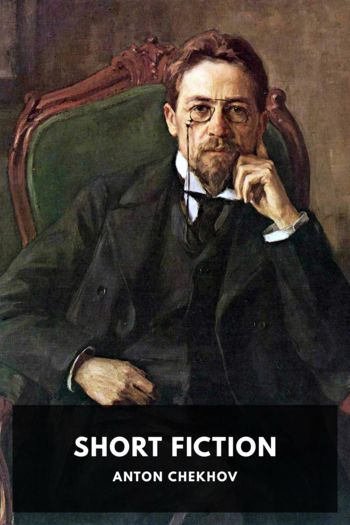
Anton Chekhov is widely considered to be one of the greatest short story writers in history. A physician by day, he’s famously quoted as saying, “Medicine is my lawful wife, and literature is my mistress.” Chekhov wrote nearly 300 short stories in his long writing career; while at first he wrote mainly to make a profit, as his interest in writing—and his skill—grew, he wrote stories that heavily influenced the modern development of the form.
His stories are famous for, among other things, their ambiguous morality and their often inconclusive nature. Chekhov was a firm believer that the role of the artist was to correctly pose a question, but not necessarily to answer it.
This collection contains all of his short stories and two novellas, all translated by Constance Garnett, and arranged by the date they were originally published.
Read free book «Short Fiction by Anton Chekhov (libby ebook reader .txt) 📕» - read online or download for free at americanlibrarybooks.com
- Author: Anton Chekhov
Read book online «Short Fiction by Anton Chekhov (libby ebook reader .txt) 📕». Author - Anton Chekhov
It is not easy to get through such moments.
IIAfter my lecture I sit at home and work. I read journals and monographs, or prepare my next lecture; sometimes I write something. I work with interruptions, as I have from time to time to see visitors.
There is a ring at the bell. It is a colleague come to discuss some business matter with me. He comes in to me with his hat and his stick, and, holding out both these objects to me, says:
“Only for a minute! Only for a minute! Sit down, collega! Only a couple of words.”
To begin with, we both try to show each other that we are extraordinarily polite and highly delighted to see each other. I make him sit down in an easy-chair, and he makes me sit down; as we do so, we cautiously pat each other on the back, touch each other’s buttons, and it looks as though we were feeling each other and afraid of scorching our fingers. Both of us laugh, though we say nothing amusing. When we are seated we bow our heads towards each other and begin talking in subdued voices. However affectionately disposed we may be to one another, we cannot help adorning our conversation with all sorts of Chinese mannerisms, such as “As you so justly observed,” or “I have already had the honour to inform you”; we cannot help laughing if one of us makes a joke, however unsuccessfully. When we have finished with business my colleague gets up impulsively and, waving his hat in the direction of my work, begins to say goodbye. Again we paw one another and laugh. I see him into the hall; when I assist my colleague to put on his coat, while he does all he can to decline this high honour. Then when Yegor opens the door my colleague declares that I shall catch cold, while I make a show of being ready to go even into the street with him. And when at last I go back into my study my face still goes on smiling, I suppose from inertia.
A little later another ring at the bell. Somebody comes into the hall, and is a long time coughing and taking off his things. Yegor announces a student. I tell him to ask him in. A minute later a young man of agreeable appearance comes in. For the last year he and I have been on strained relations; he answers me disgracefully at the examinations, and I mark him one. Every year I have some seven such hopefuls whom, to express it in the students’ slang, I “chivy” or “floor.” Those of them who fail in their examination through incapacity or illness usually bear their cross patiently and do not haggle with me; those who come to the house and haggle with me are always youths of sanguine temperament, broad natures, whose failure at examinations spoils their appetites and hinders them from visiting the opera with their usual regularity. I let the first class off easily, but the second I chivy through a whole year.
“Sit down,” I say to my visitor; “what have you to tell me?”
“Excuse me, professor, for troubling you,” he begins, hesitating, and not looking me in the face. “I would not have ventured to trouble you if it had not been … I have been up for your examination five times, and have been ploughed. … I beg you, be so good as to mark me for a pass, because …”
The argument which all the sluggards bring forward on their own behalf is always the same; they have passed well in all their subjects and have only come to grief in mine, and that is the more surprising because they have always been particularly interested in my subject and knew it so well; their failure has always been entirely owing to some incomprehensible misunderstanding.
“Excuse me, my friend,” I say to the visitor; “I cannot mark you for a pass. Go and read up the lectures and come to me again. Then we shall see.”
A pause. I feel an impulse to torment the student a little for liking beer and the opera better than science, and I say, with a sigh:
“To my mind, the best thing you can do now is to give up medicine altogether. If, with your abilities, you cannot succeed in passing the examination, it’s evident that you have neither the desire nor the vocation for a doctor’s calling.”
The sanguine youth’s face lengthens.
“Excuse me, professor,” he laughs, “but that would be odd of me, to say the least of it. After studying for five years, all at once to give it up.”
“Oh, well! Better to have lost your five years than have to spend the rest of your life in doing work you do not care for.”
But at once I feel sorry for him, and I hasten to add:
“However, as you think best. And so read a little more and come again.”
“When?” the idle youth asks in a hollow voice.
“When you like. Tomorrow if you like.”
And in his good-natured eyes I read:
“I can come all right, but of course you will plough me again, you beast!”
“Of course,” I say, “you won’t know more science for going in for my examination another fifteen times, but it is training your character, and you must be thankful for that.”
Silence follows. I get up and wait for my visitor to go, but he stands and looks towards the window, fingers his beard, and thinks. It grows boring.
The sanguine youth’s voice is pleasant and mellow, his eyes are clever and ironical, his face is genial, though a little bloated from frequent indulgence in beer and overlong lying on the sofa; he looks as though he could tell me a lot of interesting things about the opera, about his affairs of the heart, and about comrades whom he



Comments (0)