Short Fiction by Anton Chekhov (libby ebook reader .txt) 📕
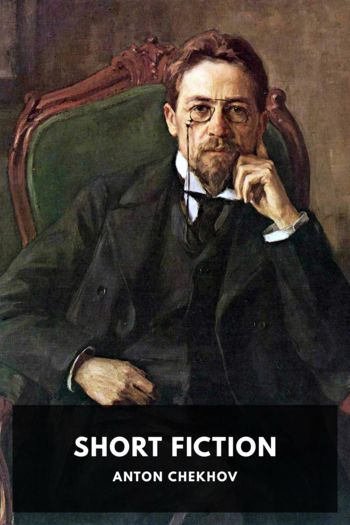
Description
Anton Chekhov is widely considered to be one of the greatest short story writers in history. A physician by day, he’s famously quoted as saying, “Medicine is my lawful wife, and literature is my mistress.” Chekhov wrote nearly 300 short stories in his long writing career; while at first he wrote mainly to make a profit, as his interest in writing—and his skill—grew, he wrote stories that heavily influenced the modern development of the form.
His stories are famous for, among other things, their ambiguous morality and their often inconclusive nature. Chekhov was a firm believer that the role of the artist was to correctly pose a question, but not necessarily to answer it.
This collection contains all of his short stories and two novellas, all translated by Constance Garnett, and arranged by the date they were originally published.
Read free book «Short Fiction by Anton Chekhov (libby ebook reader .txt) 📕» - read online or download for free at americanlibrarybooks.com
- Author: Anton Chekhov
Read book online «Short Fiction by Anton Chekhov (libby ebook reader .txt) 📕». Author - Anton Chekhov
After lying for a while he got up and, wringing his hands, walked about the room, not as usual from corner to corner, but round the room beside the walls. As he passed he glanced at himself in the looking-glass. His face looked pale and sunken, his temples looked hollow, his eyes were bigger, darker, more staring, as though they belonged to someone else, and they had an expression of insufferable mental agony.
At midday the artist knocked at the door.
“Grigory, are you at home?” he asked.
Getting no answer, he stood for a minute, pondered, and answered himself in Little Russian: “Nay. The confounded fellow has gone to the University.”
And he went away. Vassilyev lay down on the bed and, thrusting his head under the pillow, began crying with agony, and the more freely his tears flowed the more terrible his mental anguish became. As it began to get dark, he thought of the agonizing night awaiting him, and was overcome by a horrible despair. He dressed quickly, ran out of his room, and, leaving his door wide open, for no object or reason, went out into the street. Without asking himself where he should go, he walked quickly along Sadovoy Street.
Snow was falling as heavily as the day before; it was thawing. Thrusting his hands into his sleeves, shuddering and frightened at the noises, at the trambells, and at the passersby, Vassilyev walked along Sadovoy Street as far as Suharev Tower; then to the Red Gate; from there he turned off to Basmannya Street. He went into a tavern and drank off a big glass of vodka, but that did not make him feel better. When he reached Razgulya he turned to the right, and strode along side streets in which he had never been before in his life. He reached the old bridge by which the Yauza runs gurgling, and from which one can see long rows of lights in the windows of the Red Barracks. To distract his spiritual anguish by some new sensation or some other pain, Vassilyev, not knowing what to do, crying and shuddering, undid his greatcoat and jacket and exposed his bare chest to the wet snow and the wind. But that did not lessen his suffering either. Then he bent down over the rail of the bridge and looked down into the black, yeasty Yauza, and he longed to plunge down head foremost; not from loathing for life, not for the sake of suicide, but in order to bruise himself at least, and by one pain to ease the other. But the black water, the darkness, the deserted banks covered with snow were terrifying. He shivered and walked on. He walked up and down by the Red Barracks, then turned back and went down to a copse, from the copse back to the bridge again.
“No, home, home!” he thought. “At home I believe it’s better …”
And he went back. When he reached home he pulled off his wet coat and cap, began pacing round the room, and went on pacing round and round without stopping till morning.
VIIWhen next morning the artist and the medical student went in to him, he was moving about the room with his shirt torn, biting his hands and moaning with pain.
“For God’s sake!” he sobbed when he saw his friends, “take me where you please, do what you can; but for God’s sake, save me quickly! I shall kill myself!”
The artist turned pale and was helpless. The medical student, too, almost shed tears, but considering that doctors ought to be cool and composed in every emergency said coldly:
“It’s a nervous breakdown. But it’s nothing. Let us go at once to the doctor.”
“Wherever you like, only for God’s sake, make haste!”
“Don’t excite yourself. You must try and control yourself.”
The artist and the medical student with trembling hands put Vassilyev’s coat and hat on and led him out into the street.
“Mihail Sergeyitch has been wanting to make your acquaintance for a long time,” the medical student said on the way. “He is a very nice man and thoroughly good at his work. He took his degree in 1882, and he has an immense practice already. He treats students as though he were one himself.”
“Make haste, make haste! …” Vassilyev urged.
Mihail Sergeyitch, a stout, fair-haired doctor, received the friends with politeness and frigid dignity, and smiled only on one side of his face.
“Rybnikov and Mayer have spoken to me of your illness already,” he said. “Very glad to be of service to you. Well? Sit down, I beg. …”
He made Vassilyev sit down in a big armchair near the table, and moved a box of cigarettes towards him.
“Now then!” he began, stroking his knees. “Let us get to work. … How old are you?”
He asked questions and the medical student answered them. He asked whether Vassilyev’s father had suffered from certain special diseases, whether he drank to excess, whether he were remarkable for cruelty or any peculiarities. He made similar inquiries about his grandfather, mother, sisters, and brothers. On learning that his mother had a beautiful voice and sometimes acted on the stage, he grew more animated at once, and asked:
“Excuse me, but don’t you remember, perhaps, your mother had a passion for the stage?”
Twenty minutes passed. Vassilyev was annoyed by the way the doctor kept stroking his knees and talking of the same thing.
“So far as I understand your questions, doctor,” he said, “you want to know whether my illness is hereditary or not. It is not.”
The doctor proceeded to ask Vassilyev whether he had had any secret vices as a boy, or had received injuries to his head; whether he had had any aberrations, any peculiarities, or exceptional propensities. Half the questions usually asked by doctors of their patients can be left unanswered without the slightest ill effect on the health, but Mihail Sergeyitch, the medical student, and the artist all looked as though if Vassilyev failed to answer one



Comments (0)