Short Fiction by Anton Chekhov (libby ebook reader .txt) 📕
Description
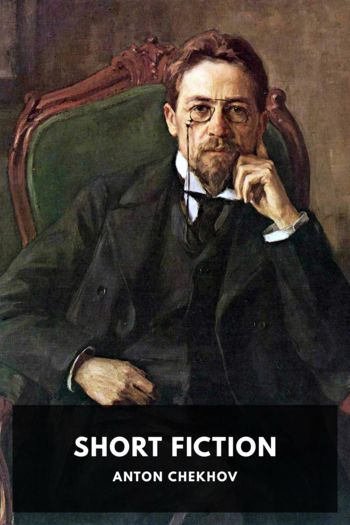
Anton Chekhov is widely considered to be one of the greatest short story writers in history. A physician by day, he’s famously quoted as saying, “Medicine is my lawful wife, and literature is my mistress.” Chekhov wrote nearly 300 short stories in his long writing career; while at first he wrote mainly to make a profit, as his interest in writing—and his skill—grew, he wrote stories that heavily influenced the modern development of the form.
His stories are famous for, among other things, their ambiguous morality and their often inconclusive nature. Chekhov was a firm believer that the role of the artist was to correctly pose a question, but not necessarily to answer it.
This collection contains all of his short stories and two novellas, all translated by Constance Garnett, and arranged by the date they were originally published.
Read free book «Short Fiction by Anton Chekhov (libby ebook reader .txt) 📕» - read online or download for free at americanlibrarybooks.com
- Author: Anton Chekhov
Read book online «Short Fiction by Anton Chekhov (libby ebook reader .txt) 📕». Author - Anton Chekhov
“But it is impossible!” Vassilyev said aloud, and he sank upon his bed. “I, to begin with, could not marry one! To do that one must be a saint and be unable to feel hatred or repulsion. But supposing that I, the medical student, and the artist mastered ourselves and did marry them—suppose they were all married. What would be the result? The result would be that while here in Moscow they were being married, some Smolensk accountant would be debauching another lot, and that lot would be streaming here to fill the vacant places, together with others from Saratov, Nizhni-Novgorod, Warsaw. … And what is one to do with the hundred thousand in London? What’s one to do with those in Hamburg?”
The lamp in which the oil had burnt down began to smoke. Vassilyev did not notice it. He began pacing to and fro again, still thinking. Now he put the question differently: what must be done that fallen women should not be needed? For that, it was essential that the men who buy them and do them to death should feel all the immorality of their share in enslaving them and should be horrified. One must save the men.
“One won’t do anything by art and science, that is clear …” thought Vassilyev. “The only way out of it is missionary work.”
And he began to dream how he would the next evening stand at the corner of the street and say to every passerby: “Where are you going and what for? Have some fear of God!”
He would turn to the apathetic cabmen and say to them: “Why are you staying here? Why aren’t you revolted? Why aren’t you indignant? I suppose you believe in God and know that it is a sin, that people go to hell for it? Why don’t you speak? It is true that they are strangers to you, but you know even they have fathers, brothers like yourselves. …”
One of Vassilyev’s friends had once said of him that he was a talented man. There are all sorts of talents—talent for writing, talent for the stage, talent for art; but he had a peculiar talent—a talent for humanity. He possessed an extraordinarily fine delicate scent for pain in general. As a good actor reflects in himself the movements and voice of others, so Vassilyev could reflect in his soul the sufferings of others. When he saw tears, he wept; beside a sick man, he felt sick himself and moaned; if he saw an act of violence, he felt as though he himself were the victim of it, he was frightened as a child, and in his fright ran to help. The pain of others worked on his nerves, excited him, roused him to a state of frenzy, and so on.
Whether this friend were right I don’t know, but what Vassilyev experienced when he thought this question was settled was something like inspiration. He cried and laughed, spoke aloud the words that he should say next day, felt a fervent love for those who would listen to him and would stand beside him at the corner of the street to preach; he sat down to write letters, made vows to himself. …
All this was like inspiration also from the fact that it did not last long. Vassilyev was soon tired. The cases in London, in Hamburg, in Warsaw, weighed upon him by their mass as a mountain weighs upon the earth; he felt dispirited, bewildered, in the face of this mass; he remembered that he had not a gift for words, that he was cowardly and timid, that indifferent people would not be willing to listen and understand him, a law student in his third year, a timid and insignificant person; that genuine missionary work included not only teaching but deeds …
When it was daylight and carriages were already beginning to rumble in the street, Vassilyev was lying motionless on the sofa, staring into space. He was no longer thinking of the women, nor of the men, nor of missionary work. His whole attention was turned upon the spiritual agony which was torturing him. It was a dull, vague, undefined anguish akin to misery, to an extreme form of terror and to despair. He could point to the place where the pain was, in his breast under his heart; but he could not compare it with anything. In the past he had had acute toothache, he had had pleurisy and neuralgia, but all that was insignificant compared with this spiritual anguish. In the presence of that pain life seemed loathsome. The dissertation, the excellent work he had written already, the people he loved, the salvation of fallen women—everything that only the day before he had cared about or been indifferent to, now when he thought of them irritated him in the same way as the noise of the carriages, the scurrying footsteps of the waiters in the passage, the daylight. … If at that moment someone had performed a great deed of mercy or had committed a revolting outrage, he would have felt the same repulsion for both actions. Of all the thoughts that strayed through his mind only two did not irritate him: one was that at every moment he had the power to kill himself, the other that this agony would not last




Comments (0)