Short Fiction by Anton Chekhov (libby ebook reader .txt) 📕
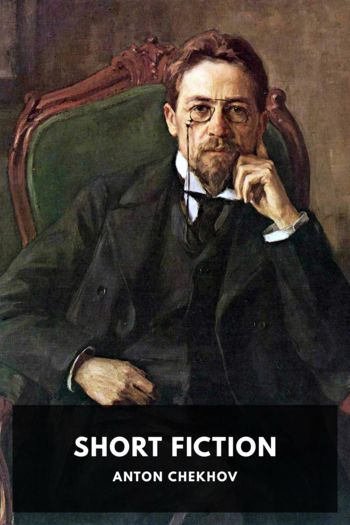
Description
Anton Chekhov is widely considered to be one of the greatest short story writers in history. A physician by day, he’s famously quoted as saying, “Medicine is my lawful wife, and literature is my mistress.” Chekhov wrote nearly 300 short stories in his long writing career; while at first he wrote mainly to make a profit, as his interest in writing—and his skill—grew, he wrote stories that heavily influenced the modern development of the form.
His stories are famous for, among other things, their ambiguous morality and their often inconclusive nature. Chekhov was a firm believer that the role of the artist was to correctly pose a question, but not necessarily to answer it.
This collection contains all of his short stories and two novellas, all translated by Constance Garnett, and arranged by the date they were originally published.
Read free book «Short Fiction by Anton Chekhov (libby ebook reader .txt) 📕» - read online or download for free at americanlibrarybooks.com
- Author: Anton Chekhov
Read book online «Short Fiction by Anton Chekhov (libby ebook reader .txt) 📕». Author - Anton Chekhov
Having drunk two glasses of porter, the artist became suddenly tipsy and grew unnaturally lively.
“Let’s go to another!” he said peremptorily, waving his hands. “I will take you to the best one.”
When he had brought his friends to the house which in his opinion was the best, he declared his firm intention of dancing a quadrille. The medical student grumbled something about their having to pay the musicians a rouble, but agreed to be his vis-à-vis. They began dancing.
It was just as nasty in the best house as in the worst. Here there were just the same looking-glasses and pictures, the same styles of coiffure and dress. Looking round at the furnishing of the rooms and the costumes, Vassilyev realized that this was not lack of taste, but something that might be called the taste, and even the style, of S⸺ Street, which could not be found elsewhere—something intentional in its ugliness, not accidental, but elaborated in the course of years. After he had been in eight houses he was no longer surprised at the color of the dresses, at the long trains, the gaudy ribbons, the sailor dresses, and the thick purplish rouge on the cheeks; he saw that it all had to be like this, that if a single one of the women had been dressed like a human being, or if there had been one decent engraving on the wall, the general tone of the whole street would have suffered.
“How unskillfully they sell themselves!” he thought. “How can they fail to understand that vice is only alluring when it is beautiful and hidden, when it wears the mask of virtue? Modest black dresses, pale faces, mournful smiles, and darkness would be far more effective than this clumsy tawdriness. Stupid things! If they don’t understand it of themselves, their visitors might surely have taught them. …”
A young lady in a Polish dress edged with white fur came up to him and sat down beside him.
“You nice dark man, why aren’t you dancing?” she asked. “Why are you so dull?”
“Because it is dull.”
“Treat me to some Lafitte. Then it won’t be dull.”
Vassilyev made no answer. He was silent for a little, and then asked:
“What time do you get to sleep?”
“At six o’clock.”
“And what time do you get up?”
“Sometimes at two and sometimes at three.”
“And what do you do when you get up?”
“We have coffee, and at six o’clock we have dinner.”
“And what do you have for dinner?”
“Usually soup, beefsteak, and dessert. Our madam keeps the girls well. But why do you ask all this?”
“Oh, just to talk. …”
Vassilyev longed to talk to the young lady about many things. He felt an intense desire to find out where she came from, whether her parents were living, and whether they knew that she was here; how she had come into this house; whether she were cheerful and satisfied, or sad and oppressed by gloomy thoughts; whether she hoped some day to get out of her present position. … But he could not think how to begin or in what shape to put his questions so as not to seem impertinent. He thought for a long time, and asked:
“How old are you?”
“Eighty,” the young lady jested, looking with a laugh at the antics of the artist as he danced.
All at once she burst out laughing at something, and uttered a long cynical sentence loud enough to be heard by everyone. Vassilyev was aghast, and not knowing how to look, gave a constrained smile. He was the only one who smiled; all the others, his friends, the musicians, the women, did not even glance towards his neighbor, but seemed not to have heard her.
“Stand me some Lafitte,” his neighbor said again.
Vassilyev felt a repulsion for her white fur and for her voice, and walked away from her. It seemed to him hot and stifling, and his heart began throbbing slowly but violently, like a hammer—one! two! three!
“Let us go away!” he said, pulling the artist by his sleeve.
“Wait a little; let me finish.”
While the artist and the medical student were finishing the quadrille, to avoid looking at the women, Vassilyev scrutinized the musicians. A respectable-looking old man in spectacles, rather like Marshal Bazaine, was playing the piano; a young man with a fair beard, dressed in the latest fashion, was playing the violin. The young man had a face that did not look stupid nor exhausted, but intelligent, youthful, and fresh. He was dressed fancifully and with taste; he played with feeling. It was a mystery how he and the respectable-looking old man had come here. How was it they were not ashamed to sit here? What were they thinking about when they looked at the women?
If the violin and the



Comments (0)