Short Fiction by Anton Chekhov (libby ebook reader .txt) 📕
Description
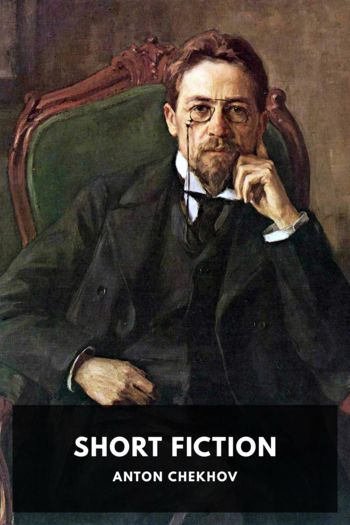
Anton Chekhov is widely considered to be one of the greatest short story writers in history. A physician by day, he’s famously quoted as saying, “Medicine is my lawful wife, and literature is my mistress.” Chekhov wrote nearly 300 short stories in his long writing career; while at first he wrote mainly to make a profit, as his interest in writing—and his skill—grew, he wrote stories that heavily influenced the modern development of the form.
His stories are famous for, among other things, their ambiguous morality and their often inconclusive nature. Chekhov was a firm believer that the role of the artist was to correctly pose a question, but not necessarily to answer it.
This collection contains all of his short stories and two novellas, all translated by Constance Garnett, and arranged by the date they were originally published.
Read free book «Short Fiction by Anton Chekhov (libby ebook reader .txt) 📕» - read online or download for free at americanlibrarybooks.com
- Author: Anton Chekhov
Read book online «Short Fiction by Anton Chekhov (libby ebook reader .txt) 📕». Author - Anton Chekhov
The friends turned out of Trubnoy Square into Gratchevka, and soon reached the side street which Vassilyev only knew by reputation. Seeing two rows of houses with brightly lighted windows and wide-open doors, and hearing gay strains of pianos and violins, sounds which floated out from every door and mingled in a strange chaos, as though an unseen orchestra were tuning up in the darkness above the roofs, Vassilyev was surprised and said:
“What a lot of houses!”
“That’s nothing,” said the medical student. “In London there are ten times as many. There are about a hundred thousand such women there.”
The cabmen were sitting on their boxes as calmly and indifferently as in any other side street; the same passersby were walking along the pavement as in other streets. No one was hurrying, no one was hiding his face in his coat-collar, no one shook his head reproachfully. … And in this indifference to the noisy chaos of pianos and violins, to the bright windows and wide-open doors, there was a feeling of something very open, insolent, reckless, and devil-may-care. Probably it was as gay and noisy at the slave-markets in their day, and people’s faces and movements showed the same indifference.
“Let us begin from the beginning,” said the artist.
The friends went into a narrow passage lighted by a lamp with a reflector. When they opened the door a man in a black coat, with an unshaven face like a flunkey’s, and sleepy-looking eyes, got up lazily from a yellow sofa in the hall. The place smelt like a laundry with an odor of vinegar in addition. A door from the hall led into a brightly lighted room. The medical student and the artist stopped at this door and, craning their necks, peeped into the room.
“Buona sera, signori, rigolleto—hugenotti—traviata!” began the artist, with a theatrical bow.
“Havanna—tarakano—pistoleto!” said the medical student, pressing his cap to his breast and bowing low.
Vassilyev was standing behind them. He would have liked to make a theatrical bow and say something silly, too, but he only smiled, felt an awkwardness that was like shame, and waited impatiently for what would happen next.
A little fair girl of seventeen or eighteen, with short hair, in a short light-blue frock with a bunch of white ribbon on her bosom, appeared in the doorway.
“Why do you stand at the door?” she said. “Take off your coats and come into the drawing room.”
The medical student and the artist, still talking Italian, went into the drawing room. Vassilyev followed them irresolutely.
“Gentlemen, take off your coats!” the flunkey said sternly; “you can’t go in like that.”
In the drawing room there was, besides the girl, another woman, very stout and tall, with a foreign face and bare arms. She was sitting near the piano, laying out a game of patience on her lap. She took no notice whatever of the visitors.
“Where are the other young ladies?” asked the medical student.
“They are having their tea,” said the fair girl. “Stepan,” she called, “go and tell the young ladies some students have come!”
A little later a third young lady came into the room. She was wearing a bright red dress with blue stripes. Her face was painted thickly and unskillfully, her brow was hidden under her hair, and there was an unblinking, frightened stare in her eyes. As she came in, she began at once singing some song in a coarse, powerful contralto. After her a fourth appeared, and after her a fifth. …
In all this Vassilyev saw nothing new or interesting. It seemed to him that that room, the piano, the looking-glass in its cheap gilt frame, the bunch of white ribbon, the dress with the blue stripes, and the blank indifferent faces, he had seen before and more than once. Of the darkness, the silence, the secrecy, the guilty smile, of all that he had expected to meet here and had dreaded, he saw no trace.
Everything was ordinary, prosaic, and uninteresting. Only one thing faintly stirred his curiosity—the terrible, as it were intentionally designed, bad taste which was visible in the cornices, in the absurd pictures, in the dresses, in the bunch of ribbons. There was something characteristic and peculiar in this bad taste.
“How poor and stupid it all is!” thought Vassilyev. “What is there in all this trumpery I see now that can tempt a normal man and excite him to commit the horrible sin of buying a human being for a rouble? I understand any sin for the sake of splendor, beauty, grace, passion, taste; but what is there here? What is there here worth sinning for? But … one mustn’t think!”
“Beardy, treat me to some porter!” said the fair girl, addressing him.
Vassilyev was at once overcome with confusion.
“With pleasure,” he said, bowing politely. “Only excuse me, madam, I. … I won’t drink with you. I don’t drink.”
Five minutes later the friends went off into another house.
“Why did you ask for porter?” said the medical student angrily. “What a millionaire! You have thrown away six roubles for no reason whatever—simply waste!”
“If she wants it, why not let her have the pleasure?” said Vassilyev, justifying himself.
“You did not give pleasure to her, but to the ‘Madam.’ They are told to ask the visitors to stand them treat because it is a profit to the keeper.”
“Behold the mill …” hummed the artist, “in ruins now. …”
Going into the next house, the friends stopped in the hall and did not go into the drawing room. Here, as in the first house, a figure in a black coat, with a sleepy




Comments (0)