Short Fiction by Anton Chekhov (libby ebook reader .txt) 📕
Description
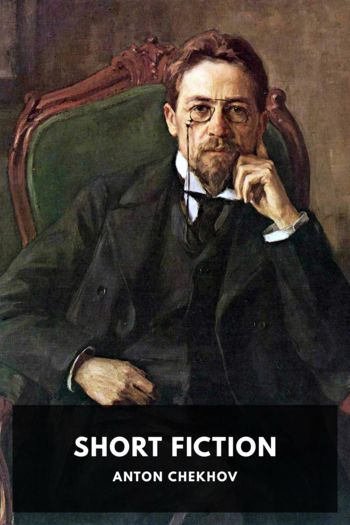
Anton Chekhov is widely considered to be one of the greatest short story writers in history. A physician by day, he’s famously quoted as saying, “Medicine is my lawful wife, and literature is my mistress.” Chekhov wrote nearly 300 short stories in his long writing career; while at first he wrote mainly to make a profit, as his interest in writing—and his skill—grew, he wrote stories that heavily influenced the modern development of the form.
His stories are famous for, among other things, their ambiguous morality and their often inconclusive nature. Chekhov was a firm believer that the role of the artist was to correctly pose a question, but not necessarily to answer it.
This collection contains all of his short stories and two novellas, all translated by Constance Garnett, and arranged by the date they were originally published.
Read free book «Short Fiction by Anton Chekhov (libby ebook reader .txt) 📕» - read online or download for free at americanlibrarybooks.com
- Author: Anton Chekhov
Read book online «Short Fiction by Anton Chekhov (libby ebook reader .txt) 📕». Author - Anton Chekhov
“ ‘Nobody can understand!’ she muttered afterwards, lying on the old nurse’s bed in a back room. ‘Nobody, nobody! My God, nobody can understand!’
“But everyone understood very well that she was four years older than her sister Masha, and still unmarried, and that she was crying, not from envy, but from the melancholy consciousness that her time was passing, and perhaps had passed. When they danced the quadrille, she was back in the drawing room with a tear-stained and heavily powdered face, and I saw Captain Polyansky holding a plate of ice before her while she ate it with a spoon.
“It is past five o’clock in the morning. I took up my diary to describe my complete and perfect happiness, and thought I would write a good six pages, and read it tomorrow to Masha; but, strange to say, everything is muddled in my head and as misty as a dream, and I can remember vividly nothing but that episode with Varya, and I want to write, ‘Poor Varya!’ I could go on sitting here and writing ‘Poor Varya!’ By the way, the trees have begun rustling; it will rain. The crows are cawing, and my Masha, who has just gone to sleep, has for some reason a sorrowful face.”
For a long while afterwards Nikitin did not write his diary. At the beginning of August he had the school examinations, and after the fifteenth the classes began. As a rule he set off for school before nine in the morning, and before ten o’clock he was looking at his watch and pining for his Masha and his new house. In the lower forms he would set some boy to dictate, and while the boys were writing, would sit in the window with his eyes shut, dreaming; whether he dreamed of the future or recalled the past, everything seemed to him equally delightful, like a fairy tale. In the senior classes they were reading aloud Gogol or Pushkin’s prose works, and that made him sleepy; people, trees, fields, horses, rose before his imagination, and he would say with a sigh, as though fascinated by the author:
“How lovely!”
At the midday recess Masha used to send him lunch in a snow-white napkin, and he would eat it slowly, with pauses, to prolong the enjoyment of it; and Ippolit Ippolititch, whose lunch as a rule consisted of nothing but bread, looked at him with respect and envy, and gave expression to some familiar fact, such as:
“Men cannot live without food.”
After school Nikitin went straight to give his private lessons, and when at last by six o’clock he got home, he felt excited and anxious, as though he had been away for a year. He would run upstairs breathless, find Masha, throw his arms round her, and kiss her and swear that he loved her, that he could not live without her, declare that he had missed her fearfully, and ask her in trepidation how she was and why she looked so depressed. Then they would dine together. After dinner he would lie on the sofa in his study and smoke, while she sat beside him and talked in a low voice.
His happiest days now were Sundays and holidays, when he was at home from morning till evening. On those days he took part in the naive but extraordinarily pleasant life which reminded him of a pastoral idyl. He was never weary of watching how his sensible and practical Masha was arranging her nest, and anxious to show that he was of some use in the house, he would do something useless—for instance, bring the chaise out of the stable and look at it from every side. Masha had installed a regular dairy with three cows, and in her cellar she had many jugs of milk and pots of sour cream, and she kept it all for butter. Sometimes, by way of a joke, Nikitin would ask her for a glass of milk, and she would be quite upset because it was against her rules; but he would laugh and throw his arms round her, saying:
“There, there; I was joking, my darling! I was joking!”
Or he would laugh at her strictness when, finding in the cupboard some stale bit of cheese or sausage as hard as a stone, she would say seriously:
“They will eat that in the kitchen.”
He would observe that such a scrap was only fit for a mousetrap, and she would reply warmly that men knew nothing about housekeeping, and that it was just the same to the servants if you were to send down a hundredweight of savouries to the kitchen. He would agree, and embrace her enthusiastically. Everything that was just in what she said seemed to him extraordinary and amazing; and what did not fit in with his convictions seemed to him naive and touching.
Sometimes he was in a philosophical mood, and he would begin to discuss some abstract subject while she listened and looked at his face with curiosity.
“I am immensely happy with you, my joy,” he used to say, playing with her fingers or plaiting and unplaiting her hair. “But I don’t look upon this



Comments (0)