Short Fiction by Anton Chekhov (libby ebook reader .txt) 📕
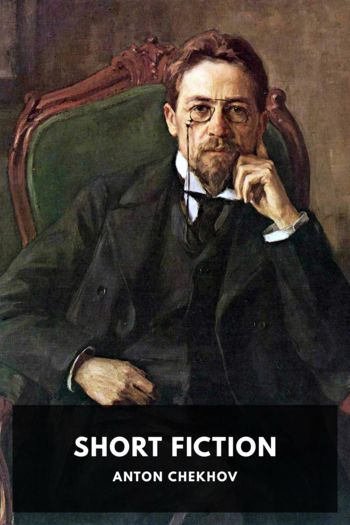
Description
Anton Chekhov is widely considered to be one of the greatest short story writers in history. A physician by day, he’s famously quoted as saying, “Medicine is my lawful wife, and literature is my mistress.” Chekhov wrote nearly 300 short stories in his long writing career; while at first he wrote mainly to make a profit, as his interest in writing—and his skill—grew, he wrote stories that heavily influenced the modern development of the form.
His stories are famous for, among other things, their ambiguous morality and their often inconclusive nature. Chekhov was a firm believer that the role of the artist was to correctly pose a question, but not necessarily to answer it.
This collection contains all of his short stories and two novellas, all translated by Constance Garnett, and arranged by the date they were originally published.
Read free book «Short Fiction by Anton Chekhov (libby ebook reader .txt) 📕» - read online or download for free at americanlibrarybooks.com
- Author: Anton Chekhov
Read book online «Short Fiction by Anton Chekhov (libby ebook reader .txt) 📕». Author - Anton Chekhov
“Why does she look at me like that?” was the question that fretted him. “It’s awkward. People may notice it. Oh, how young, how naive she is!”
The party broke up at midnight. When Nikitin went out at the gate, a window opened on the first-floor, and Masha showed herself at it.
“Sergey Vassilitch!” she called.
“What is it?”
“I tell you what …” said Masha, evidently thinking of something to say. “I tell you what … Polyansky said he would come in a day or two with his camera and take us all. We must meet here.”
“Very well.”
Masha vanished, the window was slammed, and someone immediately began playing the piano in the house.
“Well, it is a house!” thought Nikitin while he crossed the street. “A house in which there is no moaning except from Egyptian pigeons, and they only do it because they have no other means of expressing their joy!”
But the Shelestovs were not the only festive household. Nikitin had not gone two hundred paces before he heard the strains of a piano from another house. A little further he met a peasant playing the balalaika at the gate. In the gardens the band struck up a potpourri of Russian songs.
Nikitin lived nearly half a mile from the Shelestoys’ in a flat of eight rooms at the rent of three hundred roubles a year, which he shared with his colleague Ippolit Ippolititch, a teacher of geography and history. When Nikitin went in this Ippolit Ippolititch, a snub-nosed, middle-aged man with a reddish beard, with a coarse, good-natured, unintellectual face like a workman’s, was sitting at the table correcting his pupils’ maps. He considered that the most important and necessary part of the study of geography was the drawing of maps, and of the study of history the learning of dates: he would sit for nights together correcting in blue pencil the maps drawn by the boys and girls he taught, or making chronological tables.
“What a lovely day it has been!” said Nikitin, going in to him. “I wonder at you—how can you sit indoors?”
Ippolit Ippolititch was not a talkative person; he either remained silent or talked of things which everybody knew already. Now what he answered was:
“Yes, very fine weather. It’s May now; we soon shall have real summer. And summer’s a very different thing from winter. In the winter you have to heat the stoves, but in summer you can keep warm without. In summer you have your window open at night and still are warm, and in winter you are cold even with the double frames in.”
Nikitin had not sat at the table for more than one minute before he was bored.
“Goodnight!” he said, getting up and yawning. “I wanted to tell you something romantic concerning myself, but you are—geography! If one talks to you of love, you will ask one at once, ‘What was the date of the Battle of Kalka?’ Confound you, with your battles and your capes in Siberia!”
“What are you cross about?”
“Why, it is vexatious!”
And vexed that he had not spoken to Masha, and that he had no one to talk to of his love, he went to his study and lay down upon the sofa. It was dark and still in the study. Lying gazing into the darkness, Nikitin for some reason began thinking how in two or three years he would go to Petersburg, how Masha would see him off at the station and would cry; in Petersburg he would get a long letter from her in which she would entreat him to come home as quickly as possible. And he would write to her. … He would begin his letter like that: “My dear little rat!”
“Yes, my dear little rat!” he said, and he laughed.
He was lying in an uncomfortable position. He put his arms under his head and put his left leg over the back of the sofa. He felt more comfortable. Meanwhile a pale light was more and more perceptible at the windows, sleepy cocks crowed in the yard. Nikitin went on thinking how he would come back from Petersburg, how Masha would meet him at the station, and with a shriek of delight would fling herself on his neck; or, better still, he would cheat her and come home by stealth late at night: the cook would open the door, then he would go on tiptoe to the bedroom, undress noiselessly, and jump into bed! And she would wake up and be overjoyed.
It was beginning to get quite light. By now there were no windows, no study. On the steps of the brewery by which they had ridden that day Masha was sitting, saying something. Then she took Nikitin by the arm and went with him to the suburban garden. There he saw the oaks and, the crows’ nests like hats. One of the nests rocked; out of it peeped Shebaldin, shouting loudly: “You have not read Lessing!”
Nikitin shuddered all over and opened his eyes. Ippolit Ippolititch was standing before the sofa, and throwing back his head, was putting on his cravat.
“Get up; it’s time for school,” he said. “You shouldn’t sleep in your clothes; it spoils your clothes. You should sleep in your bed, undressed.”
And as usual he began slowly and emphatically saying what everybody knew.
Nikitin’s first lesson was on Russian language in the second class. When at nine o’clock punctually he went into the classroom, he saw written on the blackboard two large letters—M. S. That, no doubt, meant Masha Shelestov.
“They’ve scented it out already, the rascals …” thought Nikitin. “How is it they know everything?”
The second lesson was in the fifth class. And there two letters, M. S., were written on the blackboard; and when



Comments (0)