Short Fiction by Anton Chekhov (libby ebook reader .txt) 📕
Description
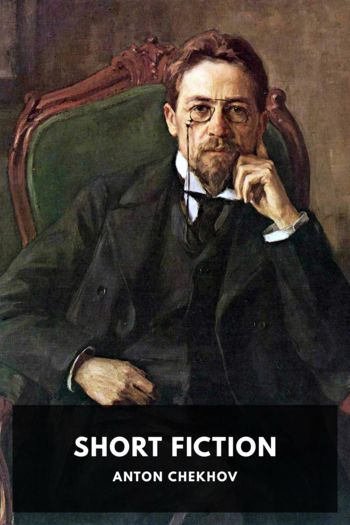
Anton Chekhov is widely considered to be one of the greatest short story writers in history. A physician by day, he’s famously quoted as saying, “Medicine is my lawful wife, and literature is my mistress.” Chekhov wrote nearly 300 short stories in his long writing career; while at first he wrote mainly to make a profit, as his interest in writing—and his skill—grew, he wrote stories that heavily influenced the modern development of the form.
His stories are famous for, among other things, their ambiguous morality and their often inconclusive nature. Chekhov was a firm believer that the role of the artist was to correctly pose a question, but not necessarily to answer it.
This collection contains all of his short stories and two novellas, all translated by Constance Garnett, and arranged by the date they were originally published.
Read free book «Short Fiction by Anton Chekhov (libby ebook reader .txt) 📕» - read online or download for free at americanlibrarybooks.com
- Author: Anton Chekhov
Read book online «Short Fiction by Anton Chekhov (libby ebook reader .txt) 📕». Author - Anton Chekhov
And if there is not that, then there is nothing.
In a state so poverty-stricken, a serious ailment, the fear of death, the influences of circumstance and men were enough to turn upside down and scatter in fragments all which I had once looked upon as my theory of life, and in which I had seen the meaning and joy of my existence. So there is nothing surprising in the fact that I have overshadowed the last months of my life with thoughts and feelings only worthy of a slave and barbarian, and that now I am indifferent and take no heed of the dawn. When a man has not in him what is loftier and mightier than all external impressions a bad cold is really enough to upset his equilibrium and make him begin to see an owl in every bird, to hear a dog howling in every sound. And all his pessimism or optimism with his thoughts great and small have at such times significance as symptoms and nothing more.
I am vanquished. If it is so, it is useless to think, it is useless to talk. I will sit and wait in silence for what is to come.
In the morning the corridor attendant brings me tea and a copy of the local newspaper. Mechanically I read the advertisements on the first page, the leading article, the extracts from the newspapers and journals, the chronicle of events. … In the latter I find, among other things, the following paragraph: “Our distinguished savant, Professor Nikolay Stepanovitch So-and-so, arrived yesterday in Harkov, and is staying in the So-and-so Hotel.”
Apparently, illustrious names are created to live on their own account, apart from those that bear them. Now my name is promenading tranquilly about Harkov; in another three months, printed in gold letters on my monument, it will shine bright as the sun itself, while I shall be already under the moss.
A light tap at the door. Somebody wants me.
“Who is there? Come in.”
The door opens, and I step back surprised and hurriedly wrap my dressing-gown round me. Before me stands Katya.
“How do you do?” she says, breathless with running upstairs. “You didn’t expect me? I have come here, too. … I have come, too!”
She sits down and goes on, hesitating and not looking at me.
“Why don’t you speak to me? I have come, too … today. … I found out that you were in this hotel, and have come to you.”
“Very glad to see you,” I say, shrugging my shoulders, “but I am surprised. You seem to have dropped from the skies. What have you come for?”
“Oh … I’ve simply come.”
Silence. Suddenly she jumps up impulsively and comes to me.
“Nikolay Stepanovitch,” she says, turning pale and pressing her hands on her bosom—“Nikolay Stepanovitch, I cannot go on living like this! I cannot! For God’s sake tell me quickly, this minute, what I am to do! Tell me, what am I to do?”
“What can I tell you?” I ask in perplexity. “I can do nothing.”
“Tell me, I beseech you,” she goes on, breathing hard and trembling all over. “I swear that I cannot go on living like this. It’s too much for me!”
She sinks on a chair and begins sobbing. She flings her head back, wrings her hands, taps with her feet; her hat falls off and hangs bobbing on its elastic; her hair is ruffled.
“Help me! help me!” she implores me. “I cannot go on!”
She takes her handkerchief out of her travelling-bag, and with it pulls out several letters, which fall from her lap to the floor. I pick them up, and on one of them I recognize the handwriting of Mihail Fyodorovitch and accidentally read a bit of a word “passionat …”
“There is nothing I can tell you, Katya,” I say.
“Help me!” she sobs, clutching at my hand and kissing it. “You are my father, you know, my only friend! You are clever, educated; you have lived so long; you have been a teacher! Tell me, what am I to do?”
“Upon my word, Katya, I don’t know. …”
I am utterly at a loss and confused, touched by her sobs, and hardly able to stand.
“Let us have lunch, Katya,” I say, with a forced smile. “Give over crying.”
And at once I add in a sinking voice:
“I shall soon be gone, Katya. …”
“Only one word, only one word!” she weeps, stretching out her hands to me.
“What am I to do?”
“You are a queer girl, really …” I mutter. “I don’t understand it! So sensible, and all at once crying your eyes out. …”
A silence follows. Katya straightens her hair, puts on her hat, then crumples up the letters and stuffs them in her bag—and all this deliberately, in silence. Her face, her bosom, and her gloves are wet with tears, but her expression now is cold and forbidding. … I look at her, and feel ashamed that I am happier than she. The absence of what my philosophic colleagues call a general idea I have detected in myself only just before death, in



Comments (0)