Short Fiction by Anton Chekhov (libby ebook reader .txt) 📕
Description
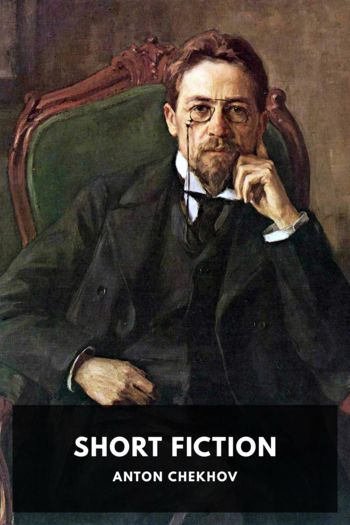
Anton Chekhov is widely considered to be one of the greatest short story writers in history. A physician by day, he’s famously quoted as saying, “Medicine is my lawful wife, and literature is my mistress.” Chekhov wrote nearly 300 short stories in his long writing career; while at first he wrote mainly to make a profit, as his interest in writing—and his skill—grew, he wrote stories that heavily influenced the modern development of the form.
His stories are famous for, among other things, their ambiguous morality and their often inconclusive nature. Chekhov was a firm believer that the role of the artist was to correctly pose a question, but not necessarily to answer it.
This collection contains all of his short stories and two novellas, all translated by Constance Garnett, and arranged by the date they were originally published.
Read free book «Short Fiction by Anton Chekhov (libby ebook reader .txt) 📕» - read online or download for free at americanlibrarybooks.com
- Author: Anton Chekhov
Read book online «Short Fiction by Anton Chekhov (libby ebook reader .txt) 📕». Author - Anton Chekhov
“The old chap is in his dotage; what’s the use of talking to him?”
Or he makes fun of me good-naturedly. It is wonderful how petty a man may become! I am capable of dreaming all dinnertime of how Gnekker will turn out to be an adventurer, how my wife and Liza will come to see their mistake, and how I will taunt them—and such absurd thoughts at the time when I am standing with one foot in the grave!
There are now, too, misunderstandings of which in the old days I had no idea except from hearsay. Though I am ashamed of it, I will describe one that occurred the other day after dinner.
I was sitting in my room smoking a pipe; my wife came in as usual, sat down, and began saying what a good thing it would be for me to go to Harkov now while it is warm and I have free time, and there find out what sort of person our Gnekker is.
“Very good; I will go,” I assented.
My wife, pleased with me, got up and was going to the door, but turned back and said:
“By the way, I have another favour to ask of you. I know you will be angry, but it is my duty to warn you. … Forgive my saying it, Nikolay Stepanovitch, but all our neighbours and acquaintances have begun talking about your being so often at Katya’s. She is clever and well-educated; I don’t deny that her company may be agreeable; but at your age and with your social position it seems strange that you should find pleasure in her society. … Besides, she has such a reputation that …”
All the blood suddenly rushed to my brain, my eyes flashed fire, I leaped up and, clutching at my head and stamping my feet, shouted in a voice unlike my own:
“Let me alone! let me alone! let me alone!”
Probably my face was terrible, my voice was strange, for my wife suddenly turned pale and began shrieking aloud in a despairing voice that was utterly unlike her own. Liza, Gnekker, then Yegor, came running in at our shouts. …
“Let me alone!” I cried; “let me alone! Go away!”
My legs turned numb as though they had ceased to exist; I felt myself falling into someone’s arms; for a little while I still heard weeping, then sank into a swoon which lasted two or three hours.
Now about Katya; she comes to see me every day towards evening, and of course neither the neighbours nor our acquaintances can avoid noticing it. She comes in for a minute and carries me off for a drive with her. She has her own horse and a new chaise bought this summer. Altogether she lives in an expensive style; she has taken a big detached villa with a large garden, and has taken all her town retinue with her—two maids, a coachman … I often ask her:
“Katya, what will you live on when you have spent your father’s money?”
“Then we shall see,” she answers.
“That money, my dear, deserves to be treated more seriously. It was earned by a good man, by honest labour.”
“You have told me that already. I know it.”
At first we drive through the open country, then through the pine-wood which is visible from my window. Nature seems to me as beautiful as it always has been, though some evil spirit whispers to me that these pines and fir trees, birds, and white clouds on the sky, will not notice my absence when in three or four months I am dead. Katya loves driving, and she is pleased that it is fine weather and that I am sitting beside her. She is in good spirits and does not say harsh things.
“You are a very good man, Nikolay Stepanovitch,” she says. “You are a rare specimen, and there isn’t an actor who would understand how to play you. Me or Mihail Fyodorovitch, for instance, any poor actor could do, but not you. And I envy you, I envy you horribly! Do you know what I stand for? What?”
She ponders for a minute, and then asks me:
“Nikolay Stepanovitch, I am a negative phenomenon! Yes?”
“Yes,” I answer.
“H’m! what am I to do?”
What answer was I to make her? It is easy to say “work,” or “give your possessions to the poor,” or “know yourself,” and because it is so easy to say that, I don’t know what to answer.
My colleagues when they teach therapeutics advise “the individual study of each separate case.” One has but to obey this advice to gain the conviction that the methods recommended in the textbooks as the best and as providing a safe basis for treatment turn out to be quite unsuitable in individual cases. It is just the same in moral ailments.
But I must make some answer, and I say:
“You have too much free time, my dear; you absolutely must take up some occupation. After all, why shouldn’t you be an actress again if it is your vocation?”
“I cannot!”
“Your tone and manner suggest that you are a victim. I don’t like that, my dear; it is your own fault. Remember, you began with falling out with people and methods, but you have done nothing to make either better. You did not struggle with evil, but were cast down by it, and you are not the victim of the struggle, but of your own impotence. Well, of course you were young and inexperienced then; now it may all be different. Yes, really, go on the stage. You will work, you will serve a sacred art.”
“Don’t pretend, Nikolay Stepanovitch,” Katya interrupts me. “Let us make a compact once for all; we will talk about actors, actresses, and authors, but we will let art alone. You are a splendid and rare person, but you don’t know enough about art sincerely to think it sacred. You have no instinct or feeling for art. You have been hard at work all your life, and



Comments (0)