Short Fiction by Anton Chekhov (libby ebook reader .txt) 📕
Description
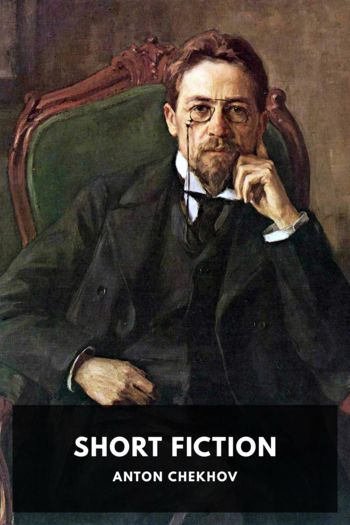
Anton Chekhov is widely considered to be one of the greatest short story writers in history. A physician by day, he’s famously quoted as saying, “Medicine is my lawful wife, and literature is my mistress.” Chekhov wrote nearly 300 short stories in his long writing career; while at first he wrote mainly to make a profit, as his interest in writing—and his skill—grew, he wrote stories that heavily influenced the modern development of the form.
His stories are famous for, among other things, their ambiguous morality and their often inconclusive nature. Chekhov was a firm believer that the role of the artist was to correctly pose a question, but not necessarily to answer it.
This collection contains all of his short stories and two novellas, all translated by Constance Garnett, and arranged by the date they were originally published.
Read free book «Short Fiction by Anton Chekhov (libby ebook reader .txt) 📕» - read online or download for free at americanlibrarybooks.com
- Author: Anton Chekhov
Read book online «Short Fiction by Anton Chekhov (libby ebook reader .txt) 📕». Author - Anton Chekhov
Over our patience we settle various questions, principally of the higher order, and what we care for most of all—that is, science and learning—is more roughly handled than anything.
“Science, thank God, has outlived its day,” says Mihail Fyodorovitch emphatically. “Its song is sung. Yes, indeed. Mankind begins to feel impelled to replace it by something different. It has grown on the soil of superstition, been nourished by superstition, and is now just as much the quintessence of superstition as its defunct granddames, alchemy, metaphysics, and philosophy. And, after all, what has it given to mankind? Why, the difference between the learned Europeans and the Chinese who have no science is trifling, purely external. The Chinese know nothing of science, but what have they lost thereby?”
“Flies know nothing of science, either,” I observe, “but what of that?”
“There is no need to be angry, Nikolay Stepanovitch. I only say this here between ourselves … I am more careful than you think, and I am not going to say this in public—God forbid! The superstition exists in the multitude that the arts and sciences are superior to agriculture, commerce, superior to handicrafts. Our sect is maintained by that superstition, and it is not for you and me to destroy it. God forbid!”
After patience the younger generation comes in for a dressing too.
“Our audiences have degenerated,” sighs Mihail Fyodorovitch. “Not to speak of ideals and all the rest of it, if only they were capable of work and rational thought! In fact, it’s a case of ‘I look with mournful eyes on the young men of today.’ ”
“Yes; they have degenerated horribly,” Katya agrees. “Tell me, have you had one man of distinction among them for the last five or ten years?”
“I don’t know how it is with the other professors, but I can’t remember any among mine.”
“I have seen in my day many of your students and young scientific men and many actors—well, I have never once been so fortunate as to meet—I won’t say a hero or a man of talent, but even an interesting man. It’s all the same grey mediocrity, puffed up with self-conceit.”
All this talk of degeneration always affects me as though I had accidentally overheard offensive talk about my own daughter. It offends me that these charges are wholesale, and rest on such worn-out commonplaces, on such wordy vapourings as degeneration and absence of ideals, or on references to the splendours of the past. Every accusation, even if it is uttered in ladies’ society, ought to be formulated with all possible definiteness, or it is not an accusation, but idle disparagement, unworthy of decent people.
I am an old man, I have been lecturing for thirty years, but I notice neither degeneration nor lack of ideals, and I don’t find that the present is worse than the past. My porter Nikolay, whose experience of this subject has its value, says that the students of today are neither better nor worse than those of the past.
If I were asked what I don’t like in my pupils of today, I should answer the question, not straight off and not at length, but with sufficient definiteness. I know their failings, and so have no need to resort to vague generalities. I don’t like their smoking, using spirituous beverages, marrying late, and often being so irresponsible and careless that they will let one of their number be starving in their midst while they neglect to pay their subscriptions to the Students’ Aid Society. They don’t know modern languages, and they don’t express themselves correctly in Russian; no longer ago than yesterday my colleague, the professor of hygiene, complained to me that he had to give twice as many lectures, because the students had a very poor knowledge of physics and were utterly ignorant of meteorology. They are readily carried away by the influence of the last new writers, even when they are not first-rate, but they take absolutely no interest in classics such as Shakespeare, Marcus Aurelius, Epictetus, or Pascal, and this inability to distinguish the great from the small betrays their ignorance of practical life more than anything. All difficult questions that have more or less a social character (for instance the migration question) they settle by studying monographs on the subject, but not by way of scientific investigation or experiment, though that method is at their disposal and is more in keeping with their calling. They gladly become ward-surgeons, assistants, demonstrators, external teachers, and are ready to fill such posts until they are forty, though independence, a sense of freedom and personal initiative, are no less necessary in science than, for instance, in art or commerce. I have pupils and listeners, but no successors and helpers, and so I love them and am touched by them, but am not proud of them. And so on, and so on. …
Such shortcomings, however numerous they may be, can only give rise to a pessimistic or faultfinding temper in a fainthearted and timid man. All these failings have a casual, transitory character, and are completely dependent on conditions of life; in some ten years they will have disappeared or given place to other fresh defects, which are all inevitable and will in their turn alarm the



Comments (0)