Short Fiction by Anton Chekhov (libby ebook reader .txt) 📕
Description
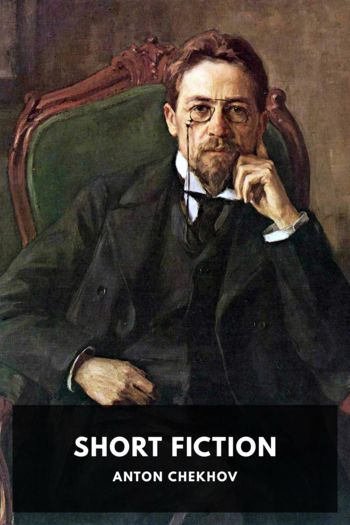
Anton Chekhov is widely considered to be one of the greatest short story writers in history. A physician by day, he’s famously quoted as saying, “Medicine is my lawful wife, and literature is my mistress.” Chekhov wrote nearly 300 short stories in his long writing career; while at first he wrote mainly to make a profit, as his interest in writing—and his skill—grew, he wrote stories that heavily influenced the modern development of the form.
His stories are famous for, among other things, their ambiguous morality and their often inconclusive nature. Chekhov was a firm believer that the role of the artist was to correctly pose a question, but not necessarily to answer it.
This collection contains all of his short stories and two novellas, all translated by Constance Garnett, and arranged by the date they were originally published.
Read free book «Short Fiction by Anton Chekhov (libby ebook reader .txt) 📕» - read online or download for free at americanlibrarybooks.com
- Author: Anton Chekhov
Read book online «Short Fiction by Anton Chekhov (libby ebook reader .txt) 📕». Author - Anton Chekhov
A medical student called Mayer, and a pupil of the Moscow School of Painting, Sculpture, and Architecture called Rybnikov, went one evening to see their friend Vassilyev, a law student, and suggested that he should go with them to S⸺ Street. For a long time Vassilyev would not consent to go, but in the end he put on his greatcoat and went with them.
He knew nothing of fallen women except by hearsay and from books, and he had never in his life been in the houses in which they live. He knew that there are immoral women who, under the pressure of fatal circumstances—environment, bad education, poverty, and so on—are forced to sell their honor for money. They know nothing of pure love, have no children, have no civil rights; their mothers and sisters weep over them as though they were dead, science treats of them as an evil, men address them with contemptuous familiarity. But in spite of all that, they do not lose the semblance and image of God. They all acknowledge their sin and hope for salvation. Of the means that lead to salvation they can avail themselves to the fullest extent. Society, it is true, will not forgive people their past, but in the sight of God St. Mary of Egypt is no lower than the other saints. When it had happened to Vassilyev in the street to recognize a fallen woman as such, by her dress or her manners, or to see a picture of one in a comic paper, he always remembered a story he had once read: a young man, pure and self-sacrificing, loves a fallen woman and urges her to become his wife; she, considering herself unworthy of such happiness, takes poison.
Vassilyev lived in one of the side streets turning out of Tverskoy Boulevard. When he came out of the house with his two friends it was about eleven o’clock. The first snow had not long fallen, and all nature was under the spell of the fresh snow. There was the smell of snow in the air, the snow crunched softly under the feet; the earth, the roofs, the trees, the seats on the boulevard, everything was soft, white, young, and this made the houses look quite different from the day before; the street lamps burned more brightly, the air was more transparent, the carriages rumbled with a deeper note, and with the fresh, light, frosty air a feeling stirred in the soul akin to the white, youthful, feathery snow. “Against my will an unknown force,” hummed the medical student in his agreeable tenor, “has led me to these mournful shores.”
“Behold the mill …” the artist seconded him, “in ruins now. …”
“Behold the mill … in ruins now,” the medical student repeated, raising his eyebrows and shaking his head mournfully.
He paused, rubbed his forehead, trying to remember the words, and then sang aloud, so well that passersby looked round:
“Here in old days when I was free,
Love, free, unfettered, greeted me.”
The three of them went into a restaurant and, without taking off their greatcoats, drank a couple of glasses of vodka each. Before drinking the second glass, Vassilyev noticed a bit of cork in his vodka, raised the glass to his eyes, and gazed into it for a long time, screwing up his shortsighted eyes. The medical student did not understand his expression, and said:
“Come, why look at it? No philosophizing, please. Vodka is given us to be drunk, sturgeon to be eaten, women to be visited, snow to be walked upon. For one evening anyway live like a human being!”
“But I haven’t said anything …” said Vassilyev, laughing. “Am I refusing to?”
There was a warmth inside him from the vodka. He looked with softened feelings at his friends, admired them and envied them. In these strong, healthy, cheerful people how wonderfully balanced everything is, how finished and smooth is everything in their minds and souls! They sing, and have a passion for the theatre, and draw, and talk a great deal, and drink, and they don’t have headaches the day after; they are both poetical and debauched, both soft and hard; they can work, too, and be indignant, and laugh without reason, and talk nonsense; they are warm, honest, self-sacrificing, and as men are in no way inferior to himself, Vassilyev, who watched over every step he took and every word he uttered, who was fastidious and cautious, and ready to raise every trifle to the level of a problem. And he longed for one evening to live as his friends did, to open out, to let himself loose from his own control. If vodka had to be drunk, he would drink it, though his head would be splitting next morning. If he were taken to the women he would go. He would laugh, play the fool, gaily respond to the passing advances of strangers in the street. …
He went out of the restaurant laughing. He liked his friends—one in a crushed broad-brimmed hat, with an affectation of artistic untidiness; the other in a sealskin cap, a man not poor, though he affected to belong to the Bohemia of learning. He liked the snow, the pale street lamps, the sharp black tracks left in the first snow by the feet of the passersby. He liked the air, and especially that limpid, tender, naive, as it were virginal tone, which can be seen in nature only twice in the year—when everything is covered with snow, and in spring on bright days and moonlight evenings when the ice breaks on the river.
“Against my will an unknown force,
Has led me to these mournful shores,”
he hummed in an undertone.
And the tune for some reason haunted him and his friends all the way, and all three of them hummed it mechanically, not in time with one another.
Vassilyev’s imagination was picturing how, in another ten minutes, he and his friends would knock at a door; how by little dark passages and dark rooms they would steal in to the



Comments (0)