Short Fiction by Anton Chekhov (libby ebook reader .txt) 📕
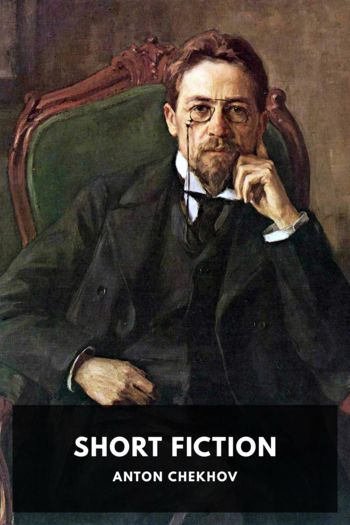
Description
Anton Chekhov is widely considered to be one of the greatest short story writers in history. A physician by day, he’s famously quoted as saying, “Medicine is my lawful wife, and literature is my mistress.” Chekhov wrote nearly 300 short stories in his long writing career; while at first he wrote mainly to make a profit, as his interest in writing—and his skill—grew, he wrote stories that heavily influenced the modern development of the form.
His stories are famous for, among other things, their ambiguous morality and their often inconclusive nature. Chekhov was a firm believer that the role of the artist was to correctly pose a question, but not necessarily to answer it.
This collection contains all of his short stories and two novellas, all translated by Constance Garnett, and arranged by the date they were originally published.
Read free book «Short Fiction by Anton Chekhov (libby ebook reader .txt) 📕» - read online or download for free at americanlibrarybooks.com
- Author: Anton Chekhov
Read book online «Short Fiction by Anton Chekhov (libby ebook reader .txt) 📕». Author - Anton Chekhov
“Go it, Vaska! Beat the thousand roublers! Hey, my kittens!”
And to the accompaniment of loud, malicious laughter from Sobol and his Vaska the doctor’s kittens raced ahead. My Nikanor took it as an affront, and held in his three horses, but when the doctor’s bells had passed out of hearing, he raised his elbows, shouted, and our horses flew like mad in pursuit. We drove into a village, there were glimpses of lights, the silhouettes of huts. Someone shouted:
“Ah, the devils!” We seemed to have galloped a mile and a half, and still it was the village street and there seemed no end to it. When we caught up the doctor and drove more quietly, he asked for matches and said:
“Now try and feed that street! And, you know, there are five streets like that, sir. Stay, stay,” he shouted. “Turn in at the tavern! We must get warm and let the horses rest.”
They stopped at the tavern.
“I have more than one village like that in my district,” said the doctor, opening a heavy door with a squeaky block, and ushering me in front of him. “If you look in broad daylight you can’t see to the end of the street, and there are side-streets, too, and one can do nothing but scratch one’s head. It’s hard to do anything.”
We went into the best room where there was a strong smell of tablecloths, and at our entrance a sleepy peasant in a waistcoat and a shirt worn outside his trousers jumped up from a bench. Sobol asked for some beer and I asked for tea.
“It’s hard to do anything,” said Sobol. “Your wife has faith; I respect her and have the greatest reverence for her, but I have no great faith myself. As long as our relations to the people continue to have the character of ordinary philanthropy, as shown in orphan asylums and almshouses, so long we shall only be shuffling, shamming, and deceiving ourselves, and nothing more. Our relations ought to be businesslike, founded on calculation, knowledge, and justice. My Vaska has been working for me all his life; his crops have failed, he is sick and starving. If I give him fifteen kopecks a day, by so doing I try to restore him to his former condition as a workman; that is, I am first and foremost looking after my own interests, and yet for some reason I call that fifteen kopecks relief, charity, good works. Now let us put it like this. On the most modest computation, reckoning seven kopecks a soul and five souls a family, one needs three hundred and fifty roubles a day to feed a thousand families. That sum is fixed by our practical duty to a thousand families. Meanwhile we give not three hundred and fifty a day, but only ten, and say that that is relief, charity, that that makes your wife and all of us exceptionally good people and hurrah for our humaneness. That is it, my dear soul! Ah! if we would talk less of being humane and calculated more, reasoned, and took a conscientious attitude to our duties! How many such humane, sensitive people there are among us who tear about in all good faith with subscription lists, but don’t pay their tailors or their cooks. There is no logic in our life; that’s what it is! No logic!”
We were silent for a while. I was making a mental calculation and said:
“I will feed a thousand families for two hundred days. Come and see me tomorrow to talk it over.”
I was pleased that this was said quite simply, and was glad that Sobol answered me still more simply:
“Right.”
We paid for what we had and went out of the tavern.
“I like going on like this,” said Sobol, getting into the sledge. “Eccellenza, oblige me with a match. I’ve forgotten mine in the tavern.”
A quarter of an hour later his horses fell behind, and the sound of his bells was lost in the roar of the snowstorm. Reaching home, I walked about my rooms, trying to think things over and to define my position clearly to myself; I had not one word, one phrase, ready for my wife. My brain was not working.
But without thinking of anything, I went downstairs to my wife. She was in her room, in the same pink dressing-gown, and standing in the same attitude as though screening her papers from me. On her face was an expression of perplexity and irony, and it was evident that having heard of my arrival, she had prepared herself not to cry, not to entreat me, not to defend herself, as she had done the day before, but to laugh at me, to answer me contemptuously, and to act with decision. Her face was saying: “If that’s how it is, goodbye.”
“Natalie, I’ve not gone away,” I said, “but it’s not deception. I have gone out of my mind; I’ve grown old, I’m ill, I’ve become a different man—think as you like. … I’ve shaken off my old self with horror, with horror; I despise him and am ashamed of him, and the new man who has been in me since yesterday will not let me go away. Do not drive me away, Natalie!”
She looked intently into my face and believed me, and there was a gleam of uneasiness in her eyes. Enchanted by her presence, warmed by the warmth of her room, I muttered as in delirium, holding out my hands to her:
“I tell you, I have no one near to me but you. I have never for one minute ceased to miss you, and only obstinate vanity prevented me from owning it. The past, when we lived as husband and wife,



Comments (0)