Short Fiction by Anton Chekhov (libby ebook reader .txt) 📕
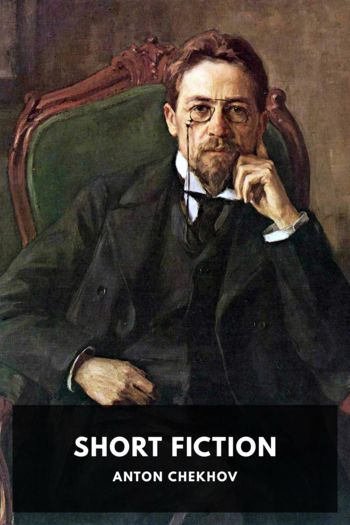
Description
Anton Chekhov is widely considered to be one of the greatest short story writers in history. A physician by day, he’s famously quoted as saying, “Medicine is my lawful wife, and literature is my mistress.” Chekhov wrote nearly 300 short stories in his long writing career; while at first he wrote mainly to make a profit, as his interest in writing—and his skill—grew, he wrote stories that heavily influenced the modern development of the form.
His stories are famous for, among other things, their ambiguous morality and their often inconclusive nature. Chekhov was a firm believer that the role of the artist was to correctly pose a question, but not necessarily to answer it.
This collection contains all of his short stories and two novellas, all translated by Constance Garnett, and arranged by the date they were originally published.
Read free book «Short Fiction by Anton Chekhov (libby ebook reader .txt) 📕» - read online or download for free at americanlibrarybooks.com
- Author: Anton Chekhov
Read book online «Short Fiction by Anton Chekhov (libby ebook reader .txt) 📕». Author - Anton Chekhov
“Come to supper, gentlemen.”
They all went into the dining room, and every time found on the table exactly the same things: a dish of oysters, a piece of ham or veal, sardines, cheese, caviar, mushrooms, vodka, and two decanters of wine.
“My dear maitre d’ hotel!” Olga Ivanovna would say, clasping her hands with enthusiasm, “you are simply fascinating! My friends, look at his forehead! Dymov, turn your profile. Look! he has the face of a Bengal tiger and an expression as kind and sweet as a gazelle. Ah, the darling!”
The visitors ate, and, looking at Dymov, thought, “He really is a nice fellow”; but they soon forgot about him, and went on talking about the theatre, music, and painting.
The young people were happy, and their life flowed on without a hitch.
The third week of their honeymoon was spent, however, not quite happily—sadly, indeed. Dymov caught erysipelas in the hospital, was in bed for six days, and had to have his beautiful black hair cropped. Olga Ivanovna sat beside him and wept bitterly, but when he was better she put a white handkerchief on his shaven head and began to paint him as a Bedouin. And they were both in good spirits. Three days after he had begun to go back to the hospital he had another mischance.
“I have no luck, little mother,” he said one day at dinner. “I had four dissections to do today, and I cut two of my fingers at one. And I did not notice it till I got home.”
Olga Ivanovna was alarmed. He smiled, and told her that it did not matter, and that he often cut his hands when he was dissecting.
“I get absorbed, little mother, and grow careless.”
Olga Ivanovna dreaded symptoms of blood-poisoning, and prayed about it every night, but all went well. And again life flowed on peaceful and happy, free from grief and anxiety. The present was happy, and to follow it spring was at hand, already smiling in the distance, and promising a thousand delights. There would be no end to their happiness. In April, May and June a summer villa a good distance out of town; walks, sketching, fishing, nightingales; and then from July right on to autumn an artist’s tour on the Volga, and in this tour Olga Ivanovna would take part as an indispensable member of the society. She had already had made for her two travelling dresses of linen, had bought paints, brushes, canvases, and a new palette for the journey. Almost every day Ryabovsky visited her to see what progress she was making in her painting; when she showed him her painting, he used to thrust his hands deep into his pockets, compress his lips, sniff, and say:
“Ye—es … ! That cloud of yours is screaming: it’s not in the evening light. The foreground is somehow chewed up, and there is something, you know, not the thing. … And your cottage is weighed down and whines pitifully. That corner ought to have been taken more in shadow, but on the whole it is not bad; I like it.”
And the more incomprehensible he talked, the more readily Olga Ivanovna understood him.
IIIAfter dinner on the second day of Trinity week, Dymov bought some sweets and some savouries and went down to the villa to see his wife. He had not seen her for a fortnight, and missed her terribly. As he sat in the train and afterwards as he looked for his villa in a big wood, he felt all the while hungry and weary, and dreamed of how he would have supper in freedom with his wife, then tumble into bed and to sleep. And he was delighted as he looked at his parcel, in which there was caviar, cheese, and white salmon.
The sun was setting by the time he found his villa and recognized it. The old servant told him that her mistress was not at home, but that most likely she would soon be in. The villa, very uninviting in appearance, with low ceilings papered with writing-paper and with uneven floors full of crevices, consisted only of three rooms. In one there was a bed, in the second there were canvases, brushes, greasy papers, and men’s overcoats and hats lying about on the chairs and in the windows, while in the third Dymov found three unknown men; two were dark-haired and had beards, the other was clean-shaven and fat, apparently an actor. There was a samovar boiling on the table.
“What do you want?” asked the actor in a bass voice, looking at Dymov ungraciously. “Do you want Olga Ivanovna? Wait a minute; she will be here directly.”
Dymov sat down and waited. One of the dark-haired men, looking sleepily and listlessly at him, poured himself out a glass of tea, and asked:
“Perhaps you would like some tea?”
Dymov was both hungry and thirsty, but he refused tea for fear of spoiling his supper. Soon he heard footsteps and a familiar laugh; a door slammed, and Olga Ivanovna ran into the room, wearing a wide-brimmed hat and carrying a box in her hand; she was followed by Ryabovsky, rosy and good-humoured, carrying a big umbrella and a campstool.
“Dymov!” cried Olga Ivanovna, and she flushed crimson with pleasure. “Dymov!” she repeated, laying her head and both arms on his bosom. “Is that you? Why haven’t you come for so long? Why? Why?”
“When could I, little mother? I am always busy, and whenever I am free it always happens somehow that the train does not fit.”
“But how glad I am to see you! I have been dreaming about you the whole night, the whole night, and I was afraid you must be ill. Ah! if you only



Comments (0)