Short Fiction by Anton Chekhov (libby ebook reader .txt) 📕
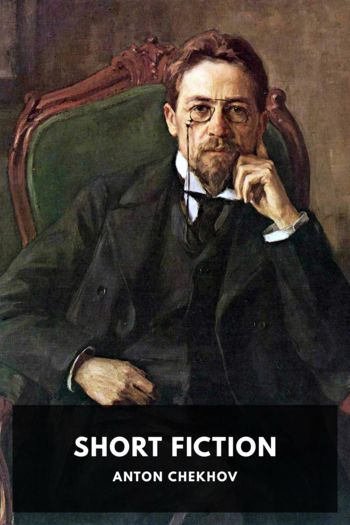
Description
Anton Chekhov is widely considered to be one of the greatest short story writers in history. A physician by day, he’s famously quoted as saying, “Medicine is my lawful wife, and literature is my mistress.” Chekhov wrote nearly 300 short stories in his long writing career; while at first he wrote mainly to make a profit, as his interest in writing—and his skill—grew, he wrote stories that heavily influenced the modern development of the form.
His stories are famous for, among other things, their ambiguous morality and their often inconclusive nature. Chekhov was a firm believer that the role of the artist was to correctly pose a question, but not necessarily to answer it.
This collection contains all of his short stories and two novellas, all translated by Constance Garnett, and arranged by the date they were originally published.
Read free book «Short Fiction by Anton Chekhov (libby ebook reader .txt) 📕» - read online or download for free at americanlibrarybooks.com
- Author: Anton Chekhov
Read book online «Short Fiction by Anton Chekhov (libby ebook reader .txt) 📕». Author - Anton Chekhov
The heavy, clumsy barge moved away from the bank and floated between the willow-bushes, and only the willows slowly moving back showed that the barge was not standing still but moving. The ferrymen swung the oars evenly in time; Semyon lay with his stomach on the tiller and, describing a semicircle in the air, flew from one side to the other. In the darkness it looked as though the men were sitting on some antediluvian animal with long paws, and were moving on it through a cold, desolate land, the land of which one sometimes dreams in nightmares.
They passed beyond the willows and floated out into the open. The creak and regular splash of the oars was heard on the further shore, and a shout came: “Make haste! make haste!”
Another ten minutes passed, and the barge banged heavily against the landing-stage.
“And it keeps sprinkling and sprinkling,” muttered Semyon, wiping the snow from his face; “and where it all comes from God only knows.”
On the bank stood a thin man of medium height in a jacket lined with fox fur and in a white lambskin cap. He was standing at a little distance from his horses and not moving; he had a gloomy, concentrated expression, as though he were trying to remember something and angry with his untrustworthy memory. When Semyon went up to him and took off his cap, smiling, he said:
“I am hastening to Anastasyevka. My daughter’s worse again, and they say that there is a new doctor at Anastasyevka.”
They dragged the carriage on to the barge and floated back. The man whom Semyon addressed as Vassily Sergeyitch stood all the time motionless, tightly compressing his thick lips and staring off into space; when his coachman asked permission to smoke in his presence he made no answer, as though he had not heard. Semyon, lying with his stomach on the tiller, looked mockingly at him and said:
“Even in Siberia people can live—can li-ive!”
There was a triumphant expression on Canny’s face, as though he had proved something and was delighted that things had happened as he had foretold. The unhappy helplessness of the man in the fox-skin coat evidently afforded him great pleasure.
“It’s muddy driving now, Vassily Sergeyitch,” he said when the horses were harnessed again on the bank. “You should have put off going for another fortnight, when it will be drier. Or else not have gone at all. … If any good would come of your going—but as you know yourself, people have been driving about for years and years, day and night, and it’s alway’s been no use. That’s the truth.”
Vassily Sergeyitch tipped him without a word, got into his carriage and drove off.
“There, he has galloped off for a doctor!” said Semyon, shrinking from the cold. “But looking for a good doctor is like chasing the wind in the fields or catching the devil by the tail, plague take your soul! What a queer chap, Lord forgive me a sinner!”
The Tatar went up to Canny, and, looking at him with hatred and repulsion, shivering, and mixing Tatar words with his broken Russian, said: “He is good … good; but you are bad! You are bad! The gentleman is a good soul, excellent, and you are a beast, bad! The gentleman is alive, but you are a dead carcass. … God created man to be alive, and to have joy and grief and sorrow; but you want nothing, so you are not alive, you are stone, clay! A stone wants nothing and you want nothing. You are a stone, and God does not love you, but He loves the gentleman!”
Everyone laughed; the Tatar frowned contemptuously, and with a wave of his hand wrapped himself in his rags and went to the campfire. The ferrymen and Semyon sauntered to the hut.
“It’s cold,” said one ferryman huskily as he stretched himself on the straw with which the damp clay floor was covered.
“Yes, its not warm,” another assented. “It’s a dog’s life. …”
They all lay down. The door was thrown open by the wind and the snow drifted into the hut; nobody felt inclined to get up and shut the door: they were cold, and it was too much trouble.
“I am all right,” said Semyon as he began to doze. “I wouldn’t wish anyone a better life.”
“You are a tough one, we all know. Even the devils won’t take you!”
Sounds like a dog’s howling came from outside.
“What’s that? Who’s there?”
“It’s the Tatar crying.”
“I say. … He’s a queer one!”
“He’ll get u-used to it!” said Semyon, and at once fell asleep.
The others were soon asleep too. The door remained unclosed.
Terror My Friend’s StoryDmitri Petrovitch Silin had taken his degree and entered the government service in Petersburg, but at thirty he gave up his post and went in for agriculture. His farming was fairly successful, and yet it always seemed to me that he was not in his proper place, and that he would do well to go back to Petersburg. When sunburnt, grey with dust, exhausted with toil, he met me near the gates or at the entrance, and then at supper struggled with sleepiness and his wife took him off to bed as though he were a baby; or when, overcoming his sleepiness, he began in his soft, cordial, almost imploring voice, to talk about his really excellent ideas, I saw him not as a farmer nor an agriculturist, but only as a worried and exhausted man, and it was clear to me that he did not really care for farming, but that all he wanted was for the day to be over and “Thank God for it.”
I liked to be with him, and I used to stay on his farm for two or three days at a time. I liked his house, and his park, and his big fruit garden, and the river—and his philosophy, which was clear,



Comments (0)