Short Fiction by Anton Chekhov (libby ebook reader .txt) 📕
Description
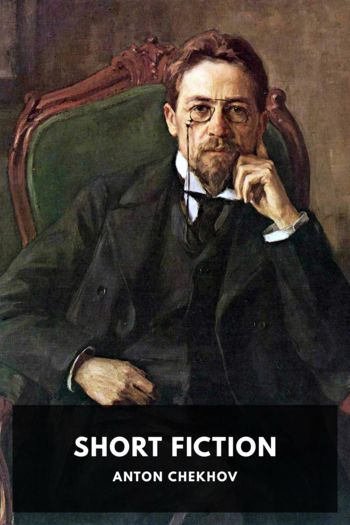
Anton Chekhov is widely considered to be one of the greatest short story writers in history. A physician by day, he’s famously quoted as saying, “Medicine is my lawful wife, and literature is my mistress.” Chekhov wrote nearly 300 short stories in his long writing career; while at first he wrote mainly to make a profit, as his interest in writing—and his skill—grew, he wrote stories that heavily influenced the modern development of the form.
His stories are famous for, among other things, their ambiguous morality and their often inconclusive nature. Chekhov was a firm believer that the role of the artist was to correctly pose a question, but not necessarily to answer it.
This collection contains all of his short stories and two novellas, all translated by Constance Garnett, and arranged by the date they were originally published.
Read free book «Short Fiction by Anton Chekhov (libby ebook reader .txt) 📕» - read online or download for free at americanlibrarybooks.com
- Author: Anton Chekhov
Read book online «Short Fiction by Anton Chekhov (libby ebook reader .txt) 📕». Author - Anton Chekhov
After supper they all went into the drawing room. Genya and Iraida lighted the candles on the piano, got out their music. … But their father still went on talking, and there was no telling when he would leave off. They looked with misery and vexation at their egoist-father, to whom the pleasure of chattering and displaying his intelligence was evidently more precious and important than his daughters’ happiness. Meier, the only young man who ever came to their house, came—they knew—for the sake of their charming, feminine society, but the irrepressible old man had taken possession of him, and would not let him move a step away.
“Just as the knights of the west repelled the invasions of the Mongols, so we, before it is too late, ought to unite and strike together against our foe,” Rashevitch went on in the tone of a preacher, holding up his right hand. “May I appear to the riffraff not as Pavel Ilyitch, but as a mighty, menacing Richard Coeur-de-Lion. Let us give up sloppy sentimentality; enough of it! Let us all make a compact, that as soon as a plebeian comes near us we fling some careless phrase straight in his ugly face: ‘Paws off! Go back to your kennel, you cur!’ straight in his ugly face,” Rashevitch went on gleefully, flicking his crooked finger in front of him. “In his ugly face!”
“I can’t do that,” Meier brought out, turning away.
“Why not?” Rashevitch answered briskly, anticipating a prolonged and interesting argument. “Why not?”
“Because I am of the artisan class myself!”
As he said this Meier turned crimson, and his neck seemed to swell, and tears actually gleamed in his eyes.
“My father was a simple workman,” he said, in a rough, jerky voice, “but I see no harm in that.”
Rashevitch was fearfully confused. Dumbfoundered, as though he had been caught in the act of a crime, he gazed helplessly at Meier, and did not know what to say. Genya and Iraida flushed crimson, and bent over their music; they were ashamed of their tactless father. A minute passed in silence, and there was a feeling of unbearable discomfort, when all at once with a sort of painful stiffness and inappropriateness, there sounded in the air the words:
“Yes, I am of the artisan class, and I am proud of it!”
Thereupon Meier, stumbling awkwardly among the furniture, took his leave, and walked rapidly into the hall, though his carriage was not yet at the door.
“You’ll have a dark drive tonight,” Rashevitch muttered, following him. “The moon does not rise till late tonight.”
They stood together on the steps in the dark, and waited for the horses to be brought. It was cool.
“There’s a falling star,” said Meier, wrapping himself in his overcoat.
“There are a great many in August.”
When the horses were at the door, Rashevitch gazed intently at the sky, and said with a sigh:
“A phenomenon worthy of the pen of Flammarion. …”
After seeing his visitor off, he walked up and down the garden, gesticulating in the darkness, reluctant to believe that such a queer, stupid misunderstanding had only just occurred. He was ashamed and vexed with himself. In the first place it had been extremely incautious and tactless on his part to raise the damnable subject of blue blood, without finding out beforehand what his visitor’s position was. Something of the same sort had happened to him before; he had, on one occasion in a railway carriage, begun abusing the Germans, and it had afterwards appeared that all the persons he had been conversing with were German. In the second place he felt that Meier would never come and see him again. These intellectuals who have risen from the people are morbidly sensitive, obstinate and slow to forgive.
“It’s bad, it’s bad,” muttered Rashevitch, spitting; he had a feeling of discomfort and loathing as though he had eaten soap. “Ah, it’s bad!”
He could see from the garden, through the drawing room window, Genya by the piano, very pale, and looking scared, with her hair down. She was talking very, very rapidly. … Iraida was walking up and down the room, lost in thought; but now she, too, began talking rapidly with her face full of indignation. They were both talking at once. Rashevitch could not hear a word, but he guessed what they were talking about. Genya was probably complaining that her father drove away every decent person from the house with his talk, and today he had driven away from them their one acquaintance, perhaps a suitor, and now the poor young man would not have one place in the whole district where he could find rest for his soul. And judging by the despairing way in which she threw up her arms, Iraida was talking probably on the subject of their dreary existence, their wasted youth. …
When he reached his own room, Rashevitch sat down on his bed and began to undress. He felt oppressed, and he was still haunted by the same feeling as though he had eaten soap. He was ashamed. As he undressed he looked at his long, sinewy, elderly legs, and remembered that in the district they called him the “toad,” and after every long conversation he always felt ashamed. Somehow or other, by some fatality, it always happened that he began mildly, amicably, with good intentions, calling himself an old student, an idealist, a Quixote, but without being himself aware of it, gradually passed into abuse and slander, and what was most surprising, with perfect sincerity criticized science, art and morals, though he had not read




Comments (0)