Short Fiction by Anton Chekhov (libby ebook reader .txt) 📕
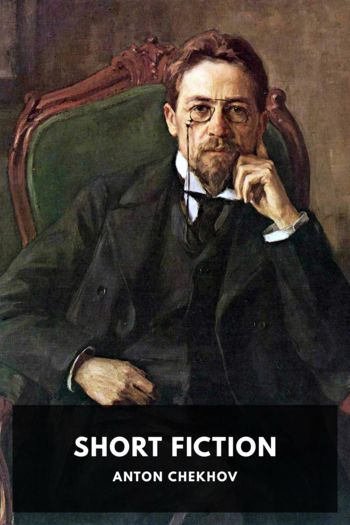
Description
Anton Chekhov is widely considered to be one of the greatest short story writers in history. A physician by day, he’s famously quoted as saying, “Medicine is my lawful wife, and literature is my mistress.” Chekhov wrote nearly 300 short stories in his long writing career; while at first he wrote mainly to make a profit, as his interest in writing—and his skill—grew, he wrote stories that heavily influenced the modern development of the form.
His stories are famous for, among other things, their ambiguous morality and their often inconclusive nature. Chekhov was a firm believer that the role of the artist was to correctly pose a question, but not necessarily to answer it.
This collection contains all of his short stories and two novellas, all translated by Constance Garnett, and arranged by the date they were originally published.
Read free book «Short Fiction by Anton Chekhov (libby ebook reader .txt) 📕» - read online or download for free at americanlibrarybooks.com
- Author: Anton Chekhov
Read book online «Short Fiction by Anton Chekhov (libby ebook reader .txt) 📕». Author - Anton Chekhov
“It’s bad,” he sighed, as he lay down under the quilt. “It’s bad.”
His daughters did not sleep either. There was a sound of laughter and screaming, as though someone was being pursued; it was Genya in hysterics. A little later Iraida was sobbing too. A maidservant ran barefoot up and down the passage several times. …
“What a business! Good Lord! …” muttered Rashevitch, sighing and tossing from side to side. “It’s bad.”
He had a nightmare. He dreamt he was standing naked, as tall as a giraffe, in the middle of the room, and saying, as he flicked his finger before him:
“In his ugly face! his ugly face! his ugly face!”
He woke up in a fright, and first of all remembered that a misunderstanding had happened in the evening, and that Meier would certainly not come again. He remembered, too, that he had to pay the interest at the bank, to find husbands for his daughters, that one must have food and drink, and close at hand were illness, old age, unpleasantnesses, that soon it would be winter, and that there was no wood. …
It was past nine o’clock in the morning. Rashevitch slowly dressed, drank his tea and ate two hunks of bread and butter. His daughters did not come down to breakfast; they did not want to meet him, and that wounded him. He lay down on his sofa in his study, then sat down to his table and began writing a letter to his daughters. His hand shook and his eyes smarted. He wrote that he was old, and no use to anyone and that nobody loved him, and he begged his daughters to forget him, and when he died to bury him in a plain, deal coffin without ceremony, or to send his body to Harkov to the dissecting theatre. He felt that every line he wrote reeked of malice and affectation, but he could not stop, and went on writing and writing.
“The toad!” he suddenly heard from the next room; it was the voice of his elder daughter, a voice with a hiss of indignation. “The toad!”
“The toad!” the younger one repeated like an echo. “The toad!”
The Head-Gardener’s StoryA sale of flowers was taking place in Count N⸺’s greenhouses. The purchasers were few in number—a landowner who was a neighbor of mine, a young timber-merchant, and myself. While the workmen were carrying out our magnificent purchases and packing them into the carts, we sat at the entry of the greenhouse and chatted about one thing and another. It is extremely pleasant to sit in a garden on a still April morning, listening to the birds, and watching the flowers brought out into the open air and basking in the sunshine.
The head-gardener, Mihail Karlovitch, a venerable old man with a full shaven face, wearing a fur waistcoat and no coat, superintended the packing of the plants himself, but at the same time he listened to our conversation in the hope of hearing something new. He was an intelligent, very good-hearted man, respected by everyone. He was for some reason looked upon by everyone as a German, though he was in reality on his father’s side Swedish, on his mother’s side Russian, and attended the Orthodox church. He knew Russian, Swedish, and German. He had read a good deal in those languages, and nothing one could do gave him greater pleasure than lending him some new book or talking to him, for instance, about Ibsen.
He had his weaknesses, but they were innocent ones: he called himself the head gardener, though there were no under-gardeners; the expression of his face was unusually dignified and haughty; he could not endure to be contradicted, and liked to be listened to with respect and attention.
“That young fellow there I can recommend to you as an awful rascal,” said my neighbor, pointing to a laborer with a swarthy, gipsy face, who drove by with the water-barrel. “Last week he was tried in the town for burglary and was acquitted; they pronounced him mentally deranged, and yet look at him, he is the picture of health. Scoundrels are very often acquitted nowadays in Russia on grounds of abnormality and aberration, yet these acquittals, these unmistakable proofs of an indulgent attitude to crime, lead to no good. They demoralize the masses, the sense of justice is blunted in all as they become accustomed to seeing vice unpunished, and you know in our age one may boldly say in the words of Shakespeare that in our evil and corrupt age virtue must ask forgiveness of vice.”
“That’s very true,” the merchant assented. “Owing to these frequent acquittals, murder and arson have become much more common. Ask the peasants.”
Mihail Karlovitch turned towards us and said:
“As far as I am concerned, gentlemen, I am always delighted to meet with these verdicts of not guilty. I am not afraid for morality and justice when they say ‘Not guilty,’ but on the contrary I feel pleased. Even when my conscience tells me the jury have made a mistake in acquitting the criminal, even then I am triumphant. Judge for yourselves, gentlemen; if the judges and the jury have more faith in man than in evidence, material proofs, and speeches for the prosecution, is not that faith in man in itself higher than any ordinary considerations? Such faith is only attainable by those few who understand and feel Christ.”
“A fine thought,” I said.
“But it’s not a new one. I remember a very long time ago I





Comments (0)