Short Fiction by Anton Chekhov (libby ebook reader .txt) 📕
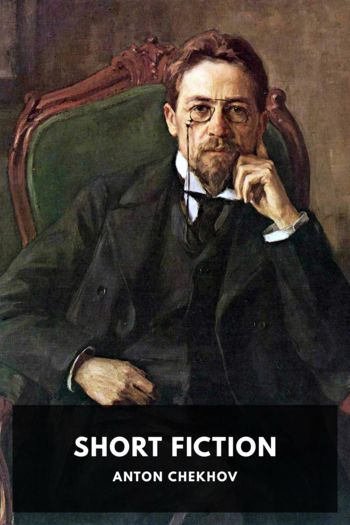
Description
Anton Chekhov is widely considered to be one of the greatest short story writers in history. A physician by day, he’s famously quoted as saying, “Medicine is my lawful wife, and literature is my mistress.” Chekhov wrote nearly 300 short stories in his long writing career; while at first he wrote mainly to make a profit, as his interest in writing—and his skill—grew, he wrote stories that heavily influenced the modern development of the form.
His stories are famous for, among other things, their ambiguous morality and their often inconclusive nature. Chekhov was a firm believer that the role of the artist was to correctly pose a question, but not necessarily to answer it.
This collection contains all of his short stories and two novellas, all translated by Constance Garnett, and arranged by the date they were originally published.
Read free book «Short Fiction by Anton Chekhov (libby ebook reader .txt) 📕» - read online or download for free at americanlibrarybooks.com
- Author: Anton Chekhov
Read book online «Short Fiction by Anton Chekhov (libby ebook reader .txt) 📕». Author - Anton Chekhov
“That was a saving lie,” laughed Ariadne. “They must not know I’m without a chaperone.”
After a moment’s silence she came closer to me and said:
“My dear, my dear, do be friends with Lubkov. He is so unhappy! His wife and mother are simply awful.”
She used the formal mode of address in speaking to Lubkov, and when she was going up to bed she said good night to him exactly as she did to me, and their rooms were on different floors. All this made me hope that it was all nonsense, and that there was no sort of love affair between them, and I felt at ease when I met him. And when one day he asked me for the loan of three hundred roubles, I gave it to him with the greatest pleasure.
Every day we spent in enjoying ourselves and in nothing but enjoying ourselves; we strolled in the park, we ate, we drank. Every day there were conversations with the Russian family. By degrees I got used to the fact that if I went into the park I should be sure to meet the old man with jaundice, the Catholic priest, and the Austrian General, who always carried a pack of little cards, and wherever it was possible sat down and played patience, nervously twitching his shoulders. And the band played the same thing over and over again.
At home in the country I used to feel ashamed to meet the peasants when I was fishing or on a picnic party on a working day; here too I was ashamed at the sight of the footmen, the coachmen, and the workmen who met us. It always seemed to me they were looking at me and thinking: “Why are you doing nothing?” And I was conscious of this feeling of shame every day from morning to night. It was a strange, unpleasant, monotonous time; it was only varied by Lubkov’s borrowing from me now a hundred, now fifty guldens, and being suddenly revived by the money as a morphia-maniac is by morphia, beginning to laugh loudly at his wife, at himself, at his creditors.
At last it began to be rainy and cold. We went to Italy, and I telegraphed to my father begging him for mercy’s sake to send me eight hundred roubles to Rome. We stayed in Venice, in Bologna, in Florence, and in every town invariably put up at an expensive hotel, where we were charged separately for lights, and for service, and for heating, and for bread at lunch, and for the right of having dinner by ourselves. We ate enormously. In the morning they gave us café complet; at one o’clock lunch: meat, fish, some sort of omelette, cheese, fruits, and wine. At six o’clock dinner of eight courses with long intervals, during which we drank beer and wine. At nine o’clock tea. At midnight Ariadne would declare she was hungry, and ask for ham and boiled eggs. We would eat to keep her company.
In the intervals between meals we used to rush about the museums and exhibitions in continual anxiety for fear we should be late for dinner or lunch. I was bored at the sight of the pictures; I longed to be at home to rest; I was exhausted, looked about for a chair and hypocritically repeated after other people: “How exquisite, what atmosphere!” Like overfed boa constrictors, we noticed only the most glaring objects. The shop windows hypnotised us; we went into ecstasies over imitation brooches and bought a mass of useless trumpery.
The same thing happened in Rome, where it rained and there was a cold wind. After a heavy lunch we went to look at St. Peter’s, and thanks to our replete condition and perhaps the bad weather, it made no sort of impression on us, and detecting in each other an indifference to art, we almost quarrelled.
The money came from my father. I went to get it, I remember, in the morning. Lubkov went with me.
“The present cannot be full and happy when one has a past,” said he. “I have heavy burdens left on me by the past. However, if only I get the money, it’s no great matter, but if not, I’m in a fix. Would you believe it, I have only eight francs left, yet I must send my wife a hundred and my mother another. And we must live here too. Ariadne’s like a child; she won’t enter into the position, and flings away money like a duchess. Why did she buy a watch yesterday? And, tell me, what object is there in our going on playing at being good children? Why, our hiding our relations from the servants and our friends costs us from ten to fifteen francs a day, as I have to have a separate room. What’s the object of it?”
I felt as though a sharp stone had been turned round in my chest. There was no uncertainty now; it was all clear to me. I turned cold all over, and at once made a resolution to give up seeing them, to run away from them, to go home at once. …
“To get on terms with a woman is easy enough,” Lubkov went on. “You have only to undress her; but afterwards what a bore it is, what a silly business!”
When I counted over the money I received he said:
“If you don’t lend me a thousand francs, I am faced with complete ruin. Your money is the only resource left to me.”
I gave him the money, and he at once revived and began laughing about his uncle, a queer fish, who could never keep his address secret from his wife. When I reached the hotel I packed and paid my bill. I had still to say goodbye to Ariadne.
I knocked at the door.
“Entrez!”
In her room was the usual morning disorder: tea-things on the table, an unfinished roll, an eggshell; a strong overpowering reek of





Comments (0)