Short Fiction by Anton Chekhov (libby ebook reader .txt) 📕
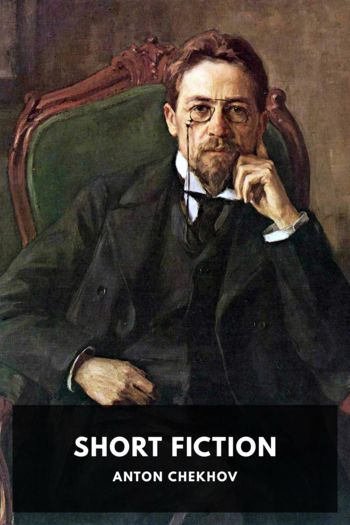
Description
Anton Chekhov is widely considered to be one of the greatest short story writers in history. A physician by day, he’s famously quoted as saying, “Medicine is my lawful wife, and literature is my mistress.” Chekhov wrote nearly 300 short stories in his long writing career; while at first he wrote mainly to make a profit, as his interest in writing—and his skill—grew, he wrote stories that heavily influenced the modern development of the form.
His stories are famous for, among other things, their ambiguous morality and their often inconclusive nature. Chekhov was a firm believer that the role of the artist was to correctly pose a question, but not necessarily to answer it.
This collection contains all of his short stories and two novellas, all translated by Constance Garnett, and arranged by the date they were originally published.
Read free book «Short Fiction by Anton Chekhov (libby ebook reader .txt) 📕» - read online or download for free at americanlibrarybooks.com
- Author: Anton Chekhov
Read book online «Short Fiction by Anton Chekhov (libby ebook reader .txt) 📕». Author - Anton Chekhov
Ariadne herself had only just got out of bed and was now with her hair down in a flannel dressing-jacket.
I said good morning to her, and then sat in silence for a minute while she tried to put her hair tidy, and then I asked her, trembling all over:
“Why … why … did you send for me here?”
Evidently she guessed what I was thinking; she took me by the hand and said:
“I want you to be here, you are so pure.”
I felt ashamed of my emotion, of my trembling. And I was afraid I might begin sobbing, too! I went out without saying another word, and within an hour I was sitting in the train. All the journey, for some reason, I imagined Ariadne with child, and she seemed disgusting to me, and all the women I saw in the trains and at the stations looked to me, for some reason, as if they too were with child, and they too seemed disgusting and pitiable. I was in the position of a greedy, passionate miser who should suddenly discover that all his gold coins were false. The pure, gracious images which my imagination, warmed by love, had cherished for so long, my plans, my hopes, my memories, my ideas of love and of woman—all now were jeering and putting out their tongues at me. “Ariadne,” I kept asking with horror, “that young, intellectual, extraordinarily beautiful girl, the daughter of a senator, carrying on an intrigue with such an ordinary, uninteresting vulgarian? But why should she not love Lubkov?” I answered myself. “In what is he inferior to me? Oh, let her love anyone she likes, but why lie to me? But why is she bound to be open with me?” And so I went on over and over again till I was stupefied.
It was cold in the train; I was travelling first class, but even so there were three on a side, there were no double windows, the outer door opened straight into the compartment, and I felt as though I were in the stocks, cramped, abandoned, pitiful, and my legs were fearfully numb, and at the same time I kept recalling how fascinating she had been that morning in her dressing-jacket and with her hair down, and I was suddenly overcome by such acute jealousy that I leapt up in anguish, so that my neighbours stared at me in wonder and positive alarm.
At home I found deep snow and twenty degrees of frost. I’m fond of the winter; I’m fond of it because at that time, even in the hardest frosts, it’s particularly snug at home. It’s pleasant to put on one’s fur jacket and felt overboots on a clear frosty day, to do something in the garden or in the yard, or to read in a well warmed room, to sit in my father’s study before the open fire, to wash in my country bathhouse. … Only if there is no mother in the house, no sister and no children, it is somehow dreary on winter evenings, and they seem extraordinarily long and quiet. And the warmer and snugger it is, the more acutely is this lack felt. In the winter when I came back from abroad, the evenings were endlessly long, I was intensely depressed, so depressed that I could not even read; in the daytime I was coming and going, clearing away the snow in the garden or feeding the chickens and the calves, but in the evening it was all up with me.
I had never cared for visitors before, but now I was glad of them, for I knew there was sure to be talk of Ariadne. Kotlovitch, the spiritualist, used often to come to talk about his sister, and sometimes he brought with him his friend Prince Maktuev, who was as much in love with Ariadne as I was. To sit in Ariadne’s room, to finger the keys of her piano, to look at her music was a necessity for the prince—he could not live without it; and the spirit of his grandfather Ilarion was still predicting that sooner or later she would be his wife. The prince usually stayed a long time with us, from lunch to midnight, saying nothing all the time; in silence he would drink two or three bottles of beer, and from time to time, to show that he too was taking part in the conversation, he would laugh an abrupt, melancholy, foolish laugh. Before going home he would always take me aside and ask me in an undertone: “When did you see Ariadne Grigoryevna last? Was she quite well? I suppose she’s not tired of being out there?”
Spring came on. There was the harrowing to do and then the sowing of spring corn and clover. I was sad, but there was the feeling of spring. One longed to accept the inevitable. Working in the fields and listening to the larks, I asked myself: “Couldn’t I have done with this question of personal happiness once and for all? Couldn’t I lay aside my fancy and marry a simple peasant girl?”
Suddenly when we were at our very busiest, I got a letter with the Italian stamp, and the clover and the beehives and the calves and the peasant girl all floated away like smoke. This time Ariadne wrote that she was profoundly, infinitely unhappy. She reproached me for not holding out a helping hand to her, for looking down upon her from the heights of my virtue and deserting her at the moment of danger. All this was written in a large, nervous handwriting with blots and smudges, and it was evident that she wrote in haste and distress. In conclusion she besought me to come and save her. Again my anchor was hauled up and I was carried away. Ariadne was in Rome. I arrived late in the evening, and when she saw me, she sobbed





Comments (0)