Short Fiction by Anton Chekhov (libby ebook reader .txt) 📕
Description
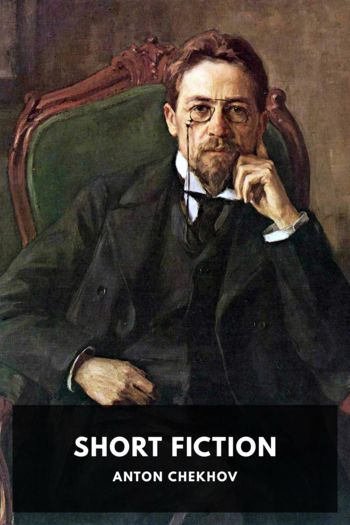
Anton Chekhov is widely considered to be one of the greatest short story writers in history. A physician by day, he’s famously quoted as saying, “Medicine is my lawful wife, and literature is my mistress.” Chekhov wrote nearly 300 short stories in his long writing career; while at first he wrote mainly to make a profit, as his interest in writing—and his skill—grew, he wrote stories that heavily influenced the modern development of the form.
His stories are famous for, among other things, their ambiguous morality and their often inconclusive nature. Chekhov was a firm believer that the role of the artist was to correctly pose a question, but not necessarily to answer it.
This collection contains all of his short stories and two novellas, all translated by Constance Garnett, and arranged by the date they were originally published.
Read free book «Short Fiction by Anton Chekhov (libby ebook reader .txt) 📕» - read online or download for free at americanlibrarybooks.com
- Author: Anton Chekhov
Read book online «Short Fiction by Anton Chekhov (libby ebook reader .txt) 📕». Author - Anton Chekhov
In May the Laptevs moved to a country villa at Sokolniki. By that time Yulia was expecting a baby.
XIIIMore than a year had passed. Yulia and Yartsev were lying on the grass at Sokolniki not far from the embankment of the Yaroslav railway; a little distance away Kotchevoy was lying with hands under his head, looking at the sky. All three had been for a walk, and were waiting for the six o’clock train to pass to go home to tea.
“Mothers see something extraordinary in their children, that is ordained by nature,” said Yulia. “A mother will stand for hours together by the baby’s cot looking at its little ears and eyes and nose, and fascinated by them. If anyone else kisses her baby the poor thing imagines that it gives him immense pleasure. And a mother talks of nothing but her baby. I know that weakness in mothers, and I keep watch over myself, but my Olga really is exceptional. How she looks at me when I’m nursing her! How she laughs! She’s only eight months old, but, upon my word, I’ve never seen such intelligent eyes in a child of three.”
“Tell me, by the way,” asked Yartsev: “which do you love most—your husband or your baby?”
Yulia shrugged her shoulders.
“I don’t know,” she said. “I never was so very fond of my husband, and Olga is in reality my first love. You know that I did not marry Alexey for love. In old days I was foolish and miserable, and thought that I had ruined my life and his, and now I see that love is not necessary—that it is all nonsense.”
“But if it is not love, what feeling is it that binds you to your husband? Why do you go on living with him?”
“I don’t know. … I suppose it must be habit. I respect him, I miss him when he’s away for long, but that’s—not love. He is a clever, honest man, and that’s enough to make me happy. He is very kind and good-hearted. …”
“Alyosha’s intelligent, Alyosha’s good,” said Kostya, raising his head lazily; “but, my dear girl, to find out that he is intelligent, good, and interesting, you have to eat a hundredweight of salt with him. … And what’s the use of his goodness and intelligence? He can fork out money as much as you want, but when character is needed to resist insolence or aggressiveness, he is fainthearted and overcome with nervousness. People like your amiable Alyosha are splendid people, but they are no use at all for fighting. In fact, they are no use for anything.”
At last the train came in sight. Coils of perfectly pink smoke from the funnels floated over the copse, and two windows in the last compartment flashed so brilliantly in the sun, that it hurt their eyes to look at it.
“Teatime!” said Yulia Sergeyevna, getting up.
She had grown somewhat stouter of late, and her movements were already a little matronly, a little indolent.
“It’s bad to be without love though,” said Yartsev, walking behind her. “We talk and read of nothing else but love, but we do very little loving ourselves, and that’s really bad.”
“All that’s nonsense, Ivan Gavrilitch,” said Yulia. “That’s not what gives happiness.”
They had tea in the little garden, where mignonette, stocks, and tobacco plants were in flower, and spikes of early gladiolus were just opening. Yartsev and Kotchevoy could see from Yulia’s face that she was passing through a happy period of inward peace and serenity, that she wanted nothing but what she had, and they, too, had a feeling of peace and comfort in their hearts. Whatever was said sounded apt and clever; the pines were lovely—the fragrance of them was exquisite as it had never been before; and the cream was very nice; and Sasha was a good, intelligent child.
After tea Yartsev sang songs, accompanying himself on the piano, while Yulia and Kotchevoy sat listening in silence, though Yulia got up from time to time, and went softly indoors, to take a look at the baby and at Lida, who had been in bed for the last two days feverish and eating nothing.
“My friend, my tender friend,” sang Yartsev. “No, my friends, I’ll be hanged if I understand why you are all so against love!” he said, flinging back his head. “If I weren’t busy for fifteen hours of the twenty-four, I should certainly fall in love.”
Supper was served on the verandah; it was warm and still, but Yulia wrapped herself in a shawl and complained of the damp. When it got dark, she seemed not quite herself; she kept shivering and begging her visitors to stay a little longer. She regaled them with wine, and after supper ordered brandy to keep them from going. She didn’t want to be left alone with the children and the servants.
“We summer visitors are getting up a performance for the children,” she said. “We have got everything—a stage and actors; we are only at a loss for a play. Two dozen plays of different sorts have been sent us, but there isn’t one that is suitable. Now, you are fond of the theatre, and are so good at history,” she said, addressing Yartsev. “Write an historical play for us.”
“Well, I might.”
The men drank up all the brandy, and prepared to go.
It was past ten, and for summer-villa people




Comments (0)