Short Fiction by Anton Chekhov (libby ebook reader .txt) 📕
Description
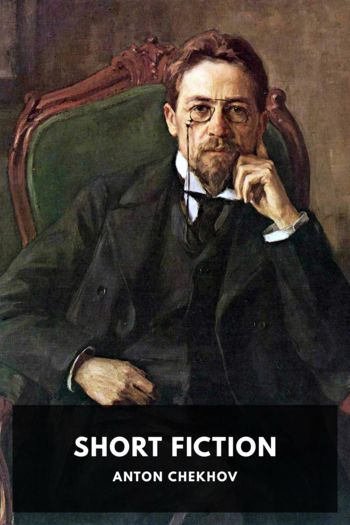
Anton Chekhov is widely considered to be one of the greatest short story writers in history. A physician by day, he’s famously quoted as saying, “Medicine is my lawful wife, and literature is my mistress.” Chekhov wrote nearly 300 short stories in his long writing career; while at first he wrote mainly to make a profit, as his interest in writing—and his skill—grew, he wrote stories that heavily influenced the modern development of the form.
His stories are famous for, among other things, their ambiguous morality and their often inconclusive nature. Chekhov was a firm believer that the role of the artist was to correctly pose a question, but not necessarily to answer it.
This collection contains all of his short stories and two novellas, all translated by Constance Garnett, and arranged by the date they were originally published.
Read free book «Short Fiction by Anton Chekhov (libby ebook reader .txt) 📕» - read online or download for free at americanlibrarybooks.com
- Author: Anton Chekhov
Read book online «Short Fiction by Anton Chekhov (libby ebook reader .txt) 📕». Author - Anton Chekhov
The friends dined together. Then Laptev lay on the sofa while Yartsev sat near and lighted a cigar. It got dark.
“I must be getting old,” said Laptev. “Ever since my sister Nina died, I’ve taken to constantly thinking of death.”
They began talking of death, of the immortality of the soul, of how nice it would be to rise again and fly off somewhere to Mars, to be always idle and happy, and, above all, to think in a new special way, not as on earth.
“One doesn’t want to die,” said Yartsev softly. “No sort of philosophy can reconcile me to death, and I look on it simply as annihilation. One wants to live.”
“You love life, Gavrilitch?”
“Yes, I love it.”
“Do you know, I can never understand myself about that. I’m always in a gloomy mood or else indifferent. I’m timid, without self-confidence; I have a cowardly conscience; I never can adapt myself to life, or become its master. Some people talk nonsense or cheat, and even so enjoy life, while I consciously do good, and feel nothing but uneasiness or complete indifference. I explain all that, Gavrilitch, by my being a slave, the grandson of a serf. Before we plebeians fight our way into the true path, many of our sort will perish on the way.”
“That’s all quite right, my dear fellow,” said Yartsev, and he sighed. “That only proves once again how rich and varied Russian life is. Ah, how rich it is! Do you know, I feel more convinced every day that we are on the eve of the greatest triumph, and I should like to live to take part in it. Whether you like to believe it or not, to my thinking a remarkable generation is growing up. It gives me great enjoyment to teach the children, especially the girls. They are wonderful children!”
Yartsev went to the piano and struck a chord.
“I’m a chemist, I think in chemical terms, and I shall die a chemist,” he went on. “But I am greedy, and I am afraid of dying unsatisfied; and chemistry is not enough for me, and I seize upon Russian history, history of art, the science of teaching music. … Your wife asked me in the summer to write an historical play, and now I’m longing to write and write. I feel as though I could sit for three days and three nights without moving, writing all the time. I am worn out with ideas—my brain’s crowded with them, and I feel as though there were a pulse throbbing in my head. I don’t in the least want to become anything special, to create something great. I simply want to live, to dream, to hope, to be in the midst of everything. … Life is short, my dear fellow, and one must make the most of everything.”
After this friendly talk, which was not over till midnight, Laptev took to coming to see Yartsev almost every day. He felt drawn to him. As a rule he came towards evening, lay down on the sofa, and waited patiently for Yartsev to come in, without feeling in the least bored. When Yartsev came back from his work, he had dinner, and sat down to work; but Laptev would ask him a question, a conversation would spring up, and there was no more thought of work and at midnight the friends parted very well pleased with one another.
But this did not last long. Arriving one day at Yartsev’s, Laptev found no one there but Polina, who was sitting at the piano practising her exercises. She looked at him with a cold, almost hostile expression, and asked without shaking hands:
“Tell me, please: how much longer is this going on?”
“This? What?” asked Laptev, not understanding.
“You come here every day and hinder Yartsev from working. Yartsev is not a tradesman; he is a scientific man, and every moment of his life is precious. You ought to understand and to have some little delicacy!”
“If you think that I hinder him,” said Laptev, mildly, disconcerted, “I will give up my visits.”
“Quite right, too. You had better go, or he may be home in a minute and find you here.”
The tone in which this was said, and the indifference in Polina’s eyes, completely disconcerted him. She had absolutely no sort of feeling for him now, except the desire that he should go as soon as possible—and what a contrast it was to her old love for him! He went out without shaking hands with her, and he fancied she would call out to him, bring him back, but he heard the scales again, and as he slowly went down the stairs he realised that he had become a stranger to her now.
Three days later Yartsev came to spend the evening with him.
“I have news,” he said, laughing. “Polina Nikolaevna has moved into my rooms altogether.” He was a little confused, and went on in a low voice: “Well, we are not in love with each other, of course, but I suppose that … that doesn’t matter. I am glad I can give her a refuge and peace and quiet, and make it possible for her not to work if she’s ill. She fancies that her coming to live with me will make things more orderly, and that under her influence I shall become a great scientist. That’s what she fancies. And let her fancy it. In the South they have a saying: ‘Fancy makes the fool a rich man.’ Ha, ha, ha!”
Laptev said nothing. Yartsev walked up and down the study, looking at the pictures he had seen so many times before, and said with a sigh:
“Yes, my dear fellow, I am three years older than you are, and it’s too late for me to think of real love, and in reality a woman like Polina Nikolaevna is a godsend to me, and, of course, I shall get on capitally with her till we’re both old people; but, goodness knows why, one still



Comments (0)